

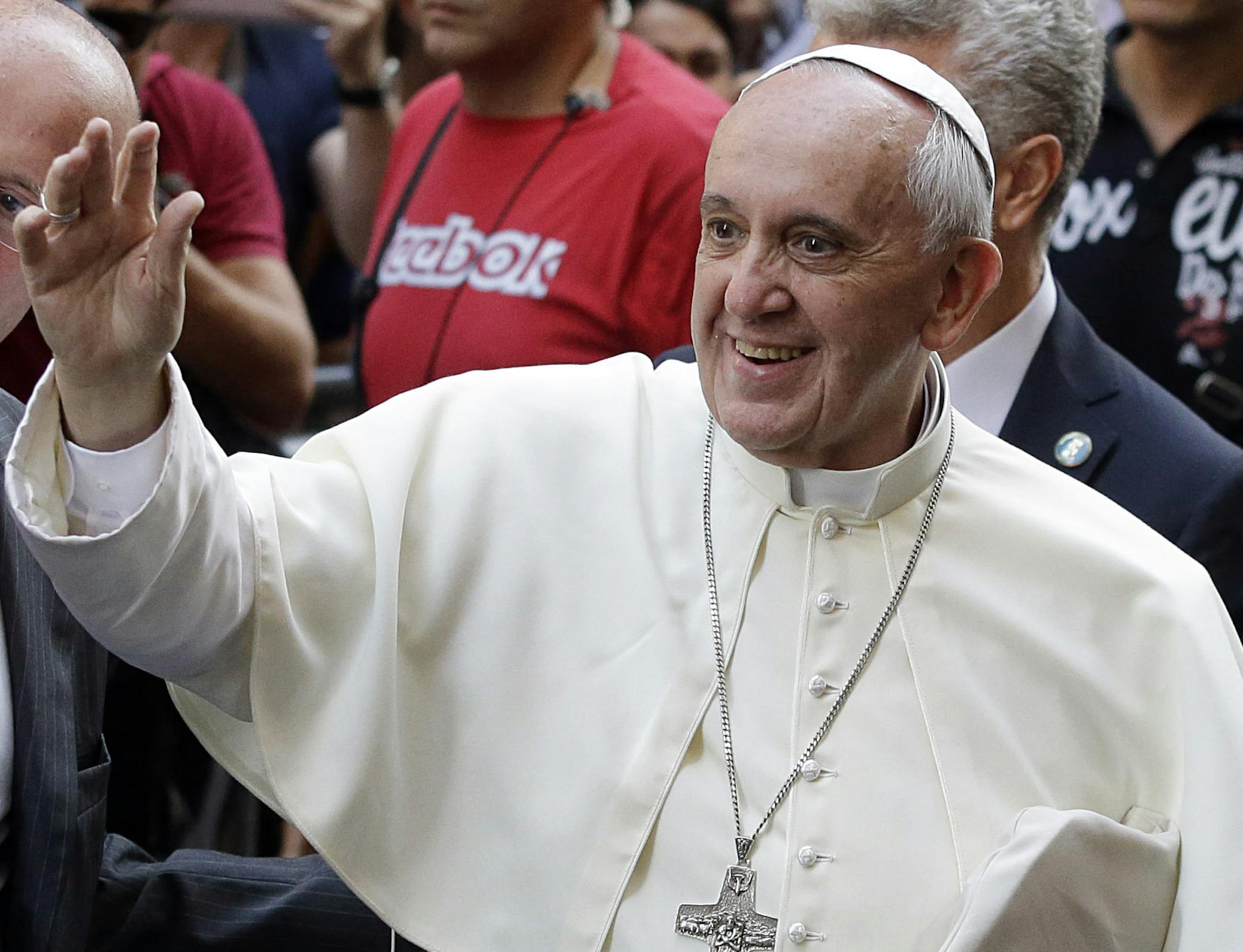
The new head of the Catholic Church, Pope Francis, has given his first long interview. In three sessions with Father Antonio Spadaro, editor of the Jesuit publication La Civilt Cattolica, Francis outlines his thinking on a series of issues, from poverty to homosexuality to women in the church.
What does the interview tell us? It tells us the pope is a liberal. He'll pull the church to the left, not just on sexuality, but on every issue that pits tradition against freedom or progress. Here's a breakdown of the English translation of the interview, published by the Catholic journal America.
1) Reform. Spadaro tosses Francis a vague question about "Ignatian spirituality." Francis uses this question as an opportunity to talk about spearheading change. "Many think that changes and reforms can take place in a short time," he says. "I believe that we always need time to lay the foundations for real, effective change." It's not clear exactly what Francis is referring to. But evidently he's been thinking about what needs to be changed and how to go about it.
2) Authoritarianism. Spadaro asks Francis how his experience as a Jesuit superior affected him. Francis tells him, "My authoritarian and quick manner of making decisions led me to have serious problems and to be accused of being ultraconservative." The pope insists, "I have never been a right-winger. It was my authoritarian way of making decisions that created problems." You can argue about the translation here, but no matter which term you use — ultraconservative, right-wing, authoritarian — it's pretty obvious what kind of attitude Francis is rejecting.
3) Infallibility. Spadaro asks Francis what it means to "think with the church," in the words of St. Ignatius. At this, Francis launches into a discussion of infallibility. "All the faithful, considered as a whole, are infallible in matters of belief," he argues. "When the dialogue among the people and the bishops and the pope goes down this road and is genuine, then it is assisted by the Holy Spirit. … We should not even think, therefore, that 'thinking with the church' means only thinking with the hierarchy of the church."
Francis cautions that he's not endorsing pure "populism." But he's manifestly rejecting the conventional understanding of infallibility. He interprets infallibility not as a present attribute — the rightness of what a pope or a college of cardinals decrees — but as a collective process. Together, through dialogue with the people, we get the right answer down the road. This notion of dynamic, collective infallibility presumes the fallibility of today's popes and cardinals.
4) Small-minded rules. Spadaro asks Francis whether the church needs reform. Francis replies, "The church sometimes has locked itself up in small things, in small-minded rules. The most important thing is the first proclamation: Jesus Christ has saved you." Francis talks about mercy and love, conventional themes. But his slap at "small-minded rules" goes further. It signals that he doesn't much like these rules at all. That's a big shift from Pope Benedict.
5) The church's opinion. At this point, Spadaro brings up the problem of people who are gay or remarried. He asks, "What kind of pastoral work can we do in these cases?" Far from ducking the topic, Francis plunges into it. "During the return flight from Rio de Janeiro I said that if a homosexual person is of good will and is in search of God, I am no one to judge," Francis recalls. "By saying this, I said what the catechism says. Religion has the right to express its opinion in the service of the people, but God in creation has set us free: it is not possible to interfere spiritually in the life of a person."


