

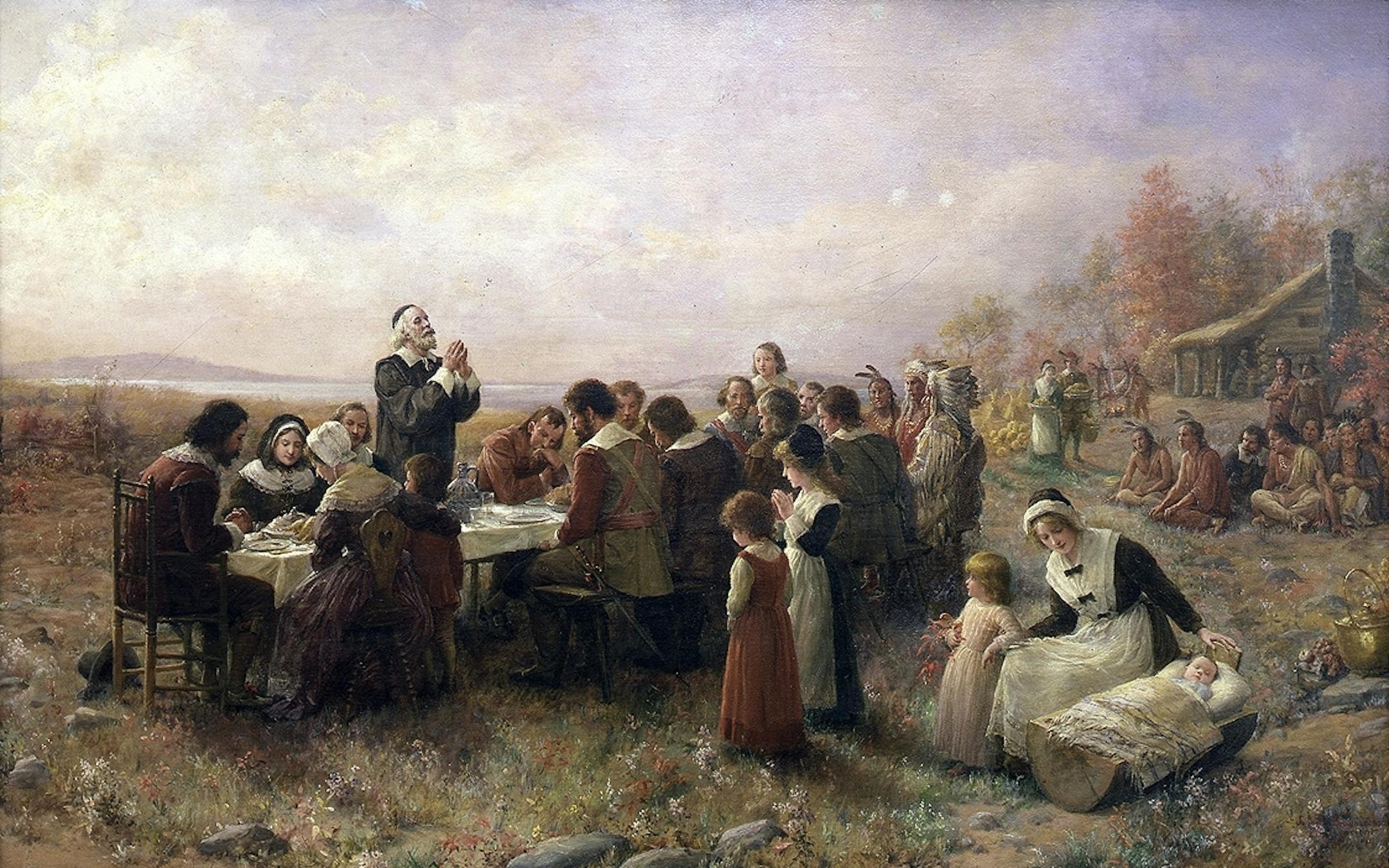
Depending on when you start counting, the American tradition of Thanksgiving is celebrating its 400th birthday this year. If you had to explain the Thursday holiday to a visiting anthropologist from Proxima Centauri, you might not find it easy.
Thanksgiving is explicitly designed to express gratitude to a deity who, according to our laws, cannot be presumed to exist — at least, not presumed by the government.
And if the alien observer conducted a survey of public opinion, he/she/they would get an earful (assuming the presence of ears) of different ideas about the holiday's origins. Did it start with the Pilgrims' three-day feast in 1621? Or George Washington's proclamation in 1789? Or Abraham Lincoln's establishment of the official holiday in 1863?
And what does football have to do with it?
One needn't be an extraterrestrial to be perplexed. Some components of the traditional Thanksgiving observance are head-scratchers (assuming heads).
For starters, we can no longer claim consensus — and probably shouldn't have claimed it, at least not since the First Amendment became law in 1791 — that we are a religious nation, or that we share any sort of common ideas about the nature of God.
True, our currency asserts that we trust in God, and our political leaders invoke God on a daily basis. Before he was president, Ronald Reagan went so far as to say he believed "that there was some divine plan that placed this great continent between two oceans to be sought out by those who were possessed of an abiding love of freedom and a special kind of courage."
That vision is what used to be known as Manifest Destiny, now rightly discredited. Maybe the people Reagan talked about loved freedom, but they were selective about who should get to enjoy it. Slavery has been a part of this country's heritage since the beginning. And when he praised those who "sought out" this continent, he was excluding people who had been here for many thousands of years before the Pilgrims, before Columbus, before even the Vikings.


