

Politicians and corporate leaders: Prepare to be punk'd.
Last week, National Public Radio's chief executive and senior fundraiser resigned after off-the-cuff remarks were made to conservative activists posing as potential donors. Two weeks ago a left-leaning blogger made the ultimate prank call when he mimicked the voice of an influential billionaire and connected with an all-too-informal Wisconsin Gov. Scott Walker.
Pranksters and public-relations experts agree the antics are just getting started.
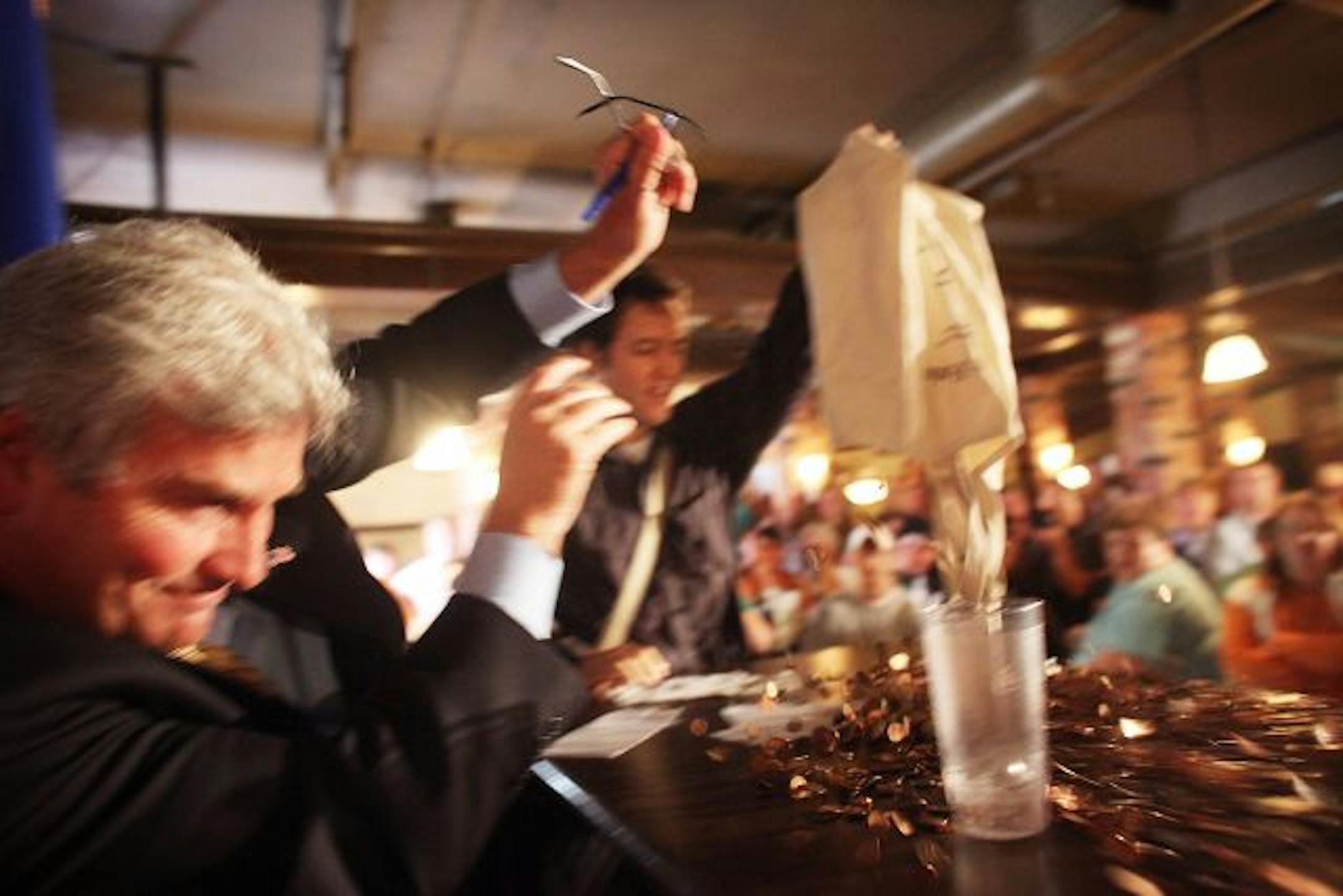
"It's a good, creative way to hold people accountable," said activist Nick Espinosa, who dumped a load of pennies in front of gubernatorial candidate Tom Emmer last summer and disrupted a 2009 Tea Party rally in St. Paul when he somehow managed to get on a speakers' list. "I think people are bombarded by political messages in the media and can get sick of it, but if it's humorous, or you can put a new spin on it, they'll pay attention."
The subversive approach has become so popular that the Yes Men, anti-corporate jokers who have made two critically acclaimed movies, recently opened the Yes Lab, which trains others in the art of dirty work. In October, they advised the Rainforest Action Network on a fake campaign designed to humiliate Chevron.
"These methods have been around for a long time, but they're increasing," said Yes Men co-founder Mike Bonanno. "With mainstream media being de-funded, there is less real reporting out there and more people are resorting to these kind of tactics to get the word out on stuff that should be obvious."
Pranksters say it's surprisingly easy to trick their victims. Espinosa said he was on a Tea Party mailing list for years and when organizers called for speakers, he merely signed up, saying he wanted to rail against immigrants. What he didn't tell them was that the speech would be targeting European immigrants, concluding with the chant: "Columbus, go home!"
Self-defense tactics


