
Polish immigrant wins his family's return to U.S.

Polish immigrant wins his family's return to U.S., ending years of distress.

The New York Times
August 8, 2011 at 1:22AM
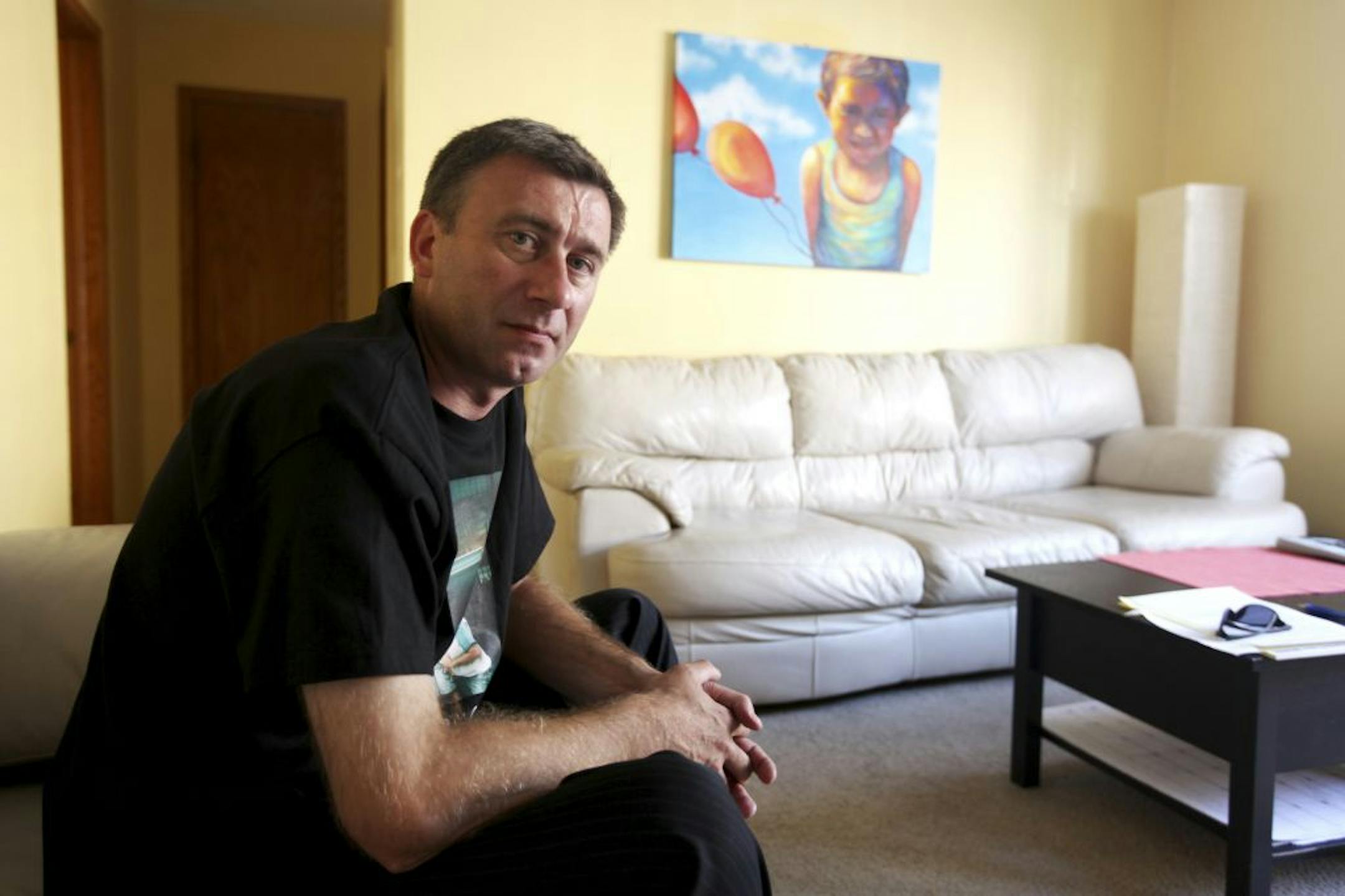
Tony Wasilewski with a portrait of his son, Brian, near Chicago. He sold the family home to help pay his wife and son's expenses in Poland.
Tony Wasilewski with a portrait of his son, Brian, near Chicago. He sold the family home to help pay his wife and son’s expenses in Poland. (New York Times/The Minnesota Star Tribune)

A Polish woman will step off an airplane in Chicago on Monday afternoon with a legal visa in her hand, coming back to live in the United States four years after her deportation sundered her family, in a rare case of the return of an immigrant who was expelled.

Janina Wasilewski, was deported in 2007 after living for 18 years in the Chicago suburbs. Several applications she had filed to become a legal resident became hopelessly tangled in the immigration courts and were finally denied. She left behind her husband, Tony, also a Polish immigrant, but with his agreement she took their son, Brian, a U.S. citizen, who was 6.

The Wasilewski family became one of the nation's most visible examples of the effect of deportation, just as the pace of removals has accelerated under the Obama administration, to nearly 800,000 over the last two years. Images of the scene when Wasilewski left from O'Hare International Airport in June 2007 were circulated widely, with her husband gripping her and their son and weeping as he begged them not to cry.

"I can come back again to my sweet home in Chicago," Wasilewski said last week from Nowe Miasto Lubawskie, a town in north-central Poland where she has lived with Brian in a small apartment for the last four years.

Her homecoming will culminate years of legal wrangling in which Wasilewski, now 45, lost every battle but the last. Her case has cast light on some of the immigration system's cul de sacs and severe penalties that lawyers say have stopped hundreds of thousands of immigrants who lack legal status -- otherwise law-abiding parents or spouses of U.S. citizens -- from finding a way to get right with the law.

Under a 1996 statute, Wasilewski had been forbidden, after her deportation, from re-entering the United States for at least 10 years. The immigration authorities finally reversed course in July, granting a waiver that allowed her to return with a legal permanent resident's green card.

Wasilewski had the help of a tenacious lawyer, Royal Berg, and several lawmakers, especially Rep. Luis Gutierrez, D-Ill. Documentary filmmaker Ruth Leitman made a film about it. Immigrant advocate groups in Illinois kept the case in the public eye.

There has been a shift in Washington, with President Obama saying he wants to avoid separating immigrant families and focus on deporting foreigners who have been convicted of crimes.
'I choose America'

But it was Tony Wasilewski, with his unyielding determination to provide his wife and child with a life in the United States, who ultimately won her return. In 2007, even after the country had expelled his wife, in one of the bleakest periods of his solitary wait, he decided to naturalize and become a U.S. citizen.

"It was very hard to choose between my family and the United States," Tony Wasilewski said by phone from his home in Schiller Park, Ill. After traveling back to Poland to visit his wife and son, he said, "I choose America."

He said he also wanted to erase the stain of deportation on his family. "I did it for three reasons for my wife," he said, using a grand phrase that has been his mantra: "Honor, dignity and justice."

Tony and Janina Wasilewski came here separately from Poland in 1989, both entering legally. Tony Wasilewski eventually obtained a green card and then his citizenship. Janina Wasilewski took a different course, applying for political asylum based on her anti-Communist activism in her home country.

She and Tony Wasilewski fell in love in Chicago, marrying in 1993 and starting a small house-cleaning business. In 1995, after years of delays during which Communist rule ended in Poland, an immigration judge denied her asylum petition. Janina Wasilewski said her lawyer did not make it clear that she had to leave the United States and could not try another avenue to gain residence.

So in 1998, when she applied for a green card under a different law, the immigration authorities responded by initiating her deportation.

Once Berg took the case, he did not give up, appealing all the way to the U.S. Supreme Court and trying to bring Janina Wasilewski back. He had to persuade the authorities to grant her a waiver by showing that her deportation had caused extreme hardship to a close relative who was a U.S. citizen.

The Wasilewskis' son, Brian, was born in Illinois in 2001, an American by birthright. But under the 1996 law, the damage to an American child from a deportation -- in this case Brian's separation from his father -- is not recognized as hardship.

Janina Wasilewski's waiver requests were turned down twice. But the harrowing decline that Tony Wasilewski experienced after his wife and son left finally convinced immigration officials that the hardship standard had been met.

He had an ulcer, a heart attack and bouts of depression. He started smoking and drinking heavily. To raise cash to support his wife and son in Poland, where Janina Wasilewski was never able to find a job, he gave up the family's home, selling it at a loss.

His anguish -- including thoughts of suicide -- is recorded in "Tony and Janina's American Wedding," the documentary that Leitman released in 2010.

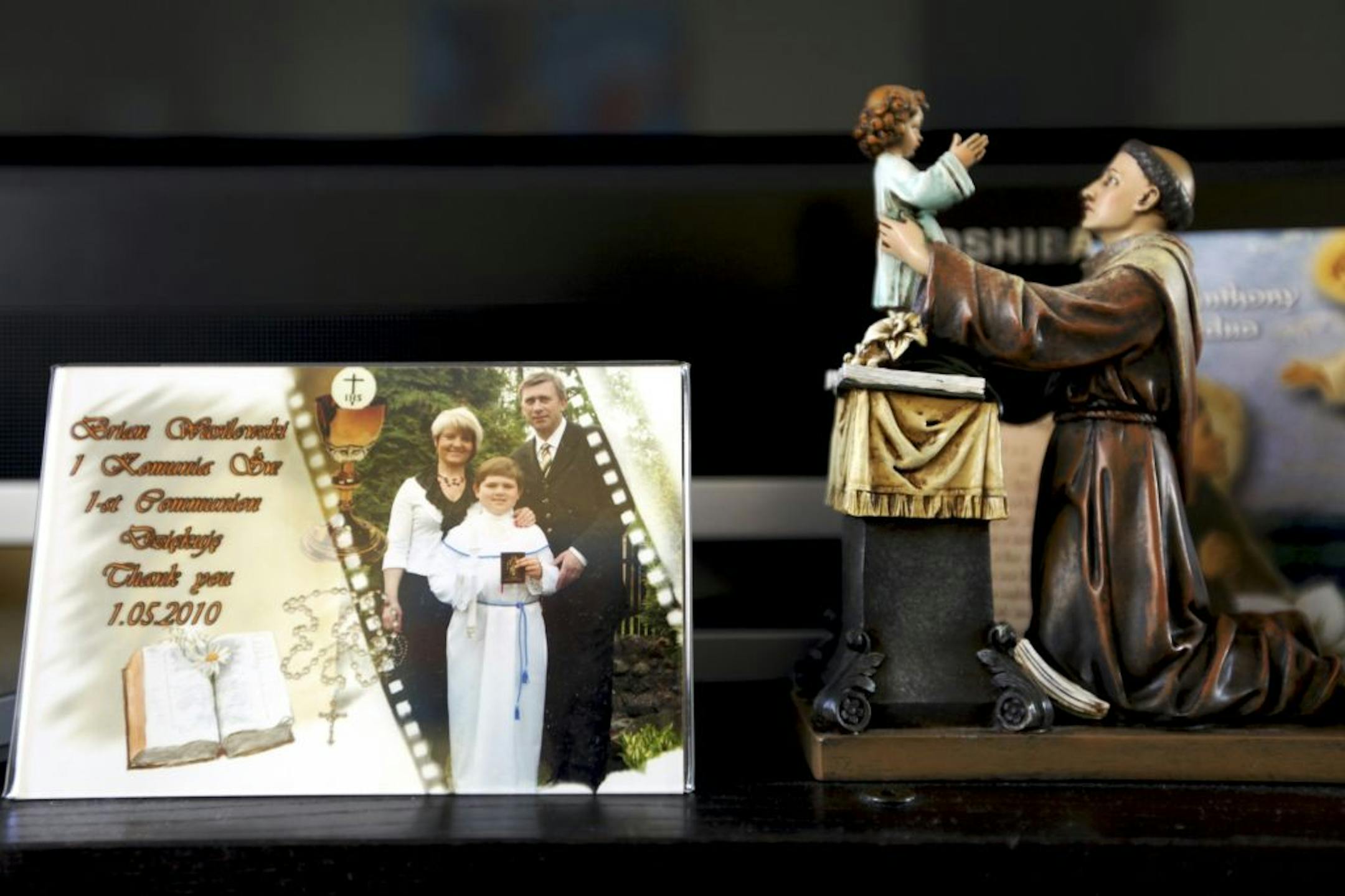
A photo of Tony and Janina Wasilewski with their son, Brian, at his confirmation in Poland last year.
A photo of Tony and Janina Wasilewski with their son, Brian, at his confirmation in Poland last year. (New York Times/The Minnesota Star Tribune)
about the writer

about the writer

JULIA PRESTON