

WASHINGTON - Here's a simple rule for any government agency that monitors or polices Americans: If you get to watch us, we get to watch you.
It's a basic lesson of history and human nature: People are much more likely to behave badly when nobody's watching. That's why police patrol neighborhoods. It's the rationale for New York City's "stop, question, and frisk" policy. It's also what led to the National Security Agency's current surveillance programs. The Sept. 11 plotters used communications channels we weren't monitoring adequately. Now the NSA is watching those channels.
NSA analysts and New York City cops are nothing like the thugs and terrorists they police. But they're still people. They behave better when they're monitored. And because they work for the government, with all its power, their misbehavior can become dangerous. The watchers must be watched.
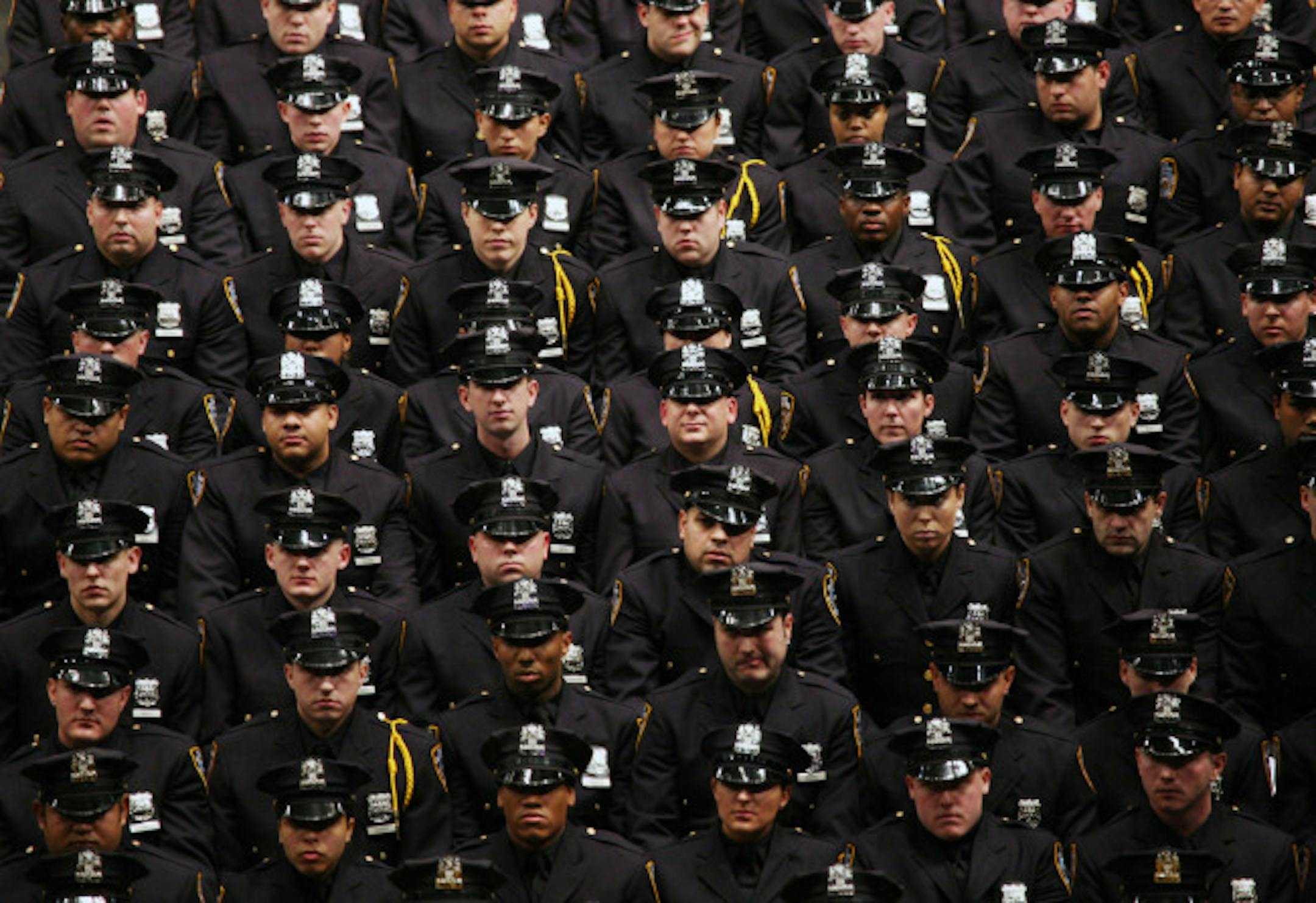
The debates that have erupted in recent days - first over a federal court ruling that struck down parts of the stop-and-frisk policy, then over the Washington Post's revelation of legal infractions by the NSA - are complex. There's a good case to be made for allowing police to stop, question and frisk people based on a lower standard of suspicion than is needed for an arrest. There's also a good case to be made for applying looser rules to the NSA's collection of communications records than to its searches of those records. But one principle should be easy to accept: Both the NSA and the NYPD should be closely scrutinized by independent overseers who can make them suffer for exceeding their authority.
That's what federal Judge Shira Scheindlin prescribed a week ago, when she found the NYPD's stop-and-frisk methods unconstitutional. "The City's highest officials have turned a blind eye to the evidence that officers are conducting stops in a racially discriminatory manner," the judge concluded. To rein in this practice, she ordered "a trial program requiring the use of body-worn cameras in one precinct per borough, a community-based joint remedial process to be conducted by a court-appointed facilitator, and the appointment of an independent monitor to ensure that the NYPD's conduct of stops and frisks is carried out in accordance with the Constitution."
Mayor Michael Bloomberg and Police Commissioner Ray Kelly protested the oversight. "We have to give the members of our Police Department the tools they need to do their jobs without being micro-managed and second-guessed every day by a judge or a monitor," said Bloomberg, borrowing the arguments of Dick Cheney. Putting tiny cameras on officers, as thousands of other police departments have done, "would be a nightmare," Bloomberg asserted, since critics would just claim that the officers "deliberately chose an angle" or failed to capture the whole scene. On Sunday, Kelly went on three national talk shows to bash the judge's decision. "The body camera issue opens up certainly more questions than answers," he told Bob Schieffer. "When do you have the cameras on? When do you turn them off? Do you have it on during a domestic dispute? Do you have it on when somebody comes to give you confidential information?"
The NSA, like the NYPD, claims to be thoroughly supervised. An NSA spokeswoman says the agency reports all its mistakes "internally and to federal overseers." But documents published by the Post show that the agency filters what it reports. The chief judge of the Foreign Intelligence Surveillance Court, when asked by the Post why the NSA used a new data collection method "for many months" before the FISC ruled it unconstitutional, explained that the court "is forced to rely upon the accuracy of the information that is provided" by the NSA. Dianne Feinstein, the Democratic chairwoman of the Senate Intelligence Committee, admits that the committee gets "some" information about compliance issues from the court and the NSA itself but "should do more to independently verify that NSA's operations are appropriate, and its reports of compliance incidents are accurate."
The public gets even less disclosure. More than two months ago, the Associated Press filed a Freedom of Information Act request to see the NSA's vaunted "minimization procedures" for protecting Americans from inadvertent surveillance. The AP is still waiting for the documents. A few days ago, in a conference call with reporters, the NSA's compliance director admitted the agency had experienced "a couple" of willful legal violations in the past decade but gave no details and declined to specify the number. Then, on Sunday, we saw this exchange between Rep. Peter King, R-N.Y., and Fox News anchor John Roberts:


