2:21
2:21Minneapolis police say their officers seized heroin at a rate of nearly once a day last year, echoing a nationwide boom in the narcotic's popularity as Mexican cartels flood cities with the drug.
A highly profitable drug for dealers, it was connected to 392 police calls last year, according to city statistics. That's down slightly from 425 in 2012, but much higher than the 100 to 200 calls a year that the police saw for most of the past decade.
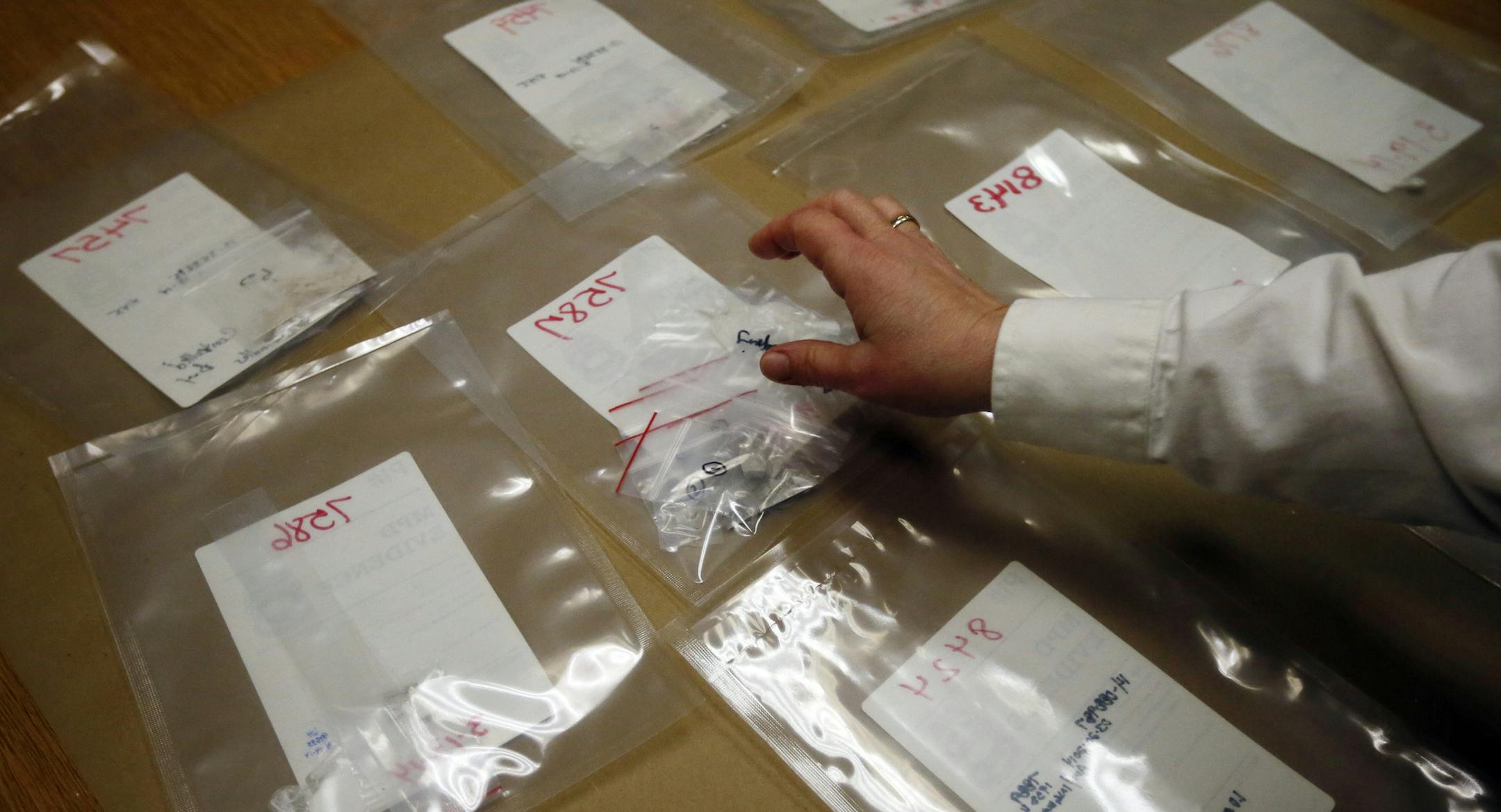
"I started to notice that I was ordering more heroin kits probably about a year and a half ago," said Kerstin Hammarberg, the supervisor of the department's property and evidence unit. When officers seize heroin off the street, it's packaged and sent to her unit. "I've been here for 14 years, and heroin wasn't that popular when I first started. In the last year and half, it's skyrocketed."
Cities across the country have reported a sharp increase in heroin overdoses, heroin seized off the street, medical room visits and treatment center admissions for the drug's addicts. Overdose deaths from heroin and other opiates have risen sharply, too, with 69 people killed in Hennepin County in the first six months of 2013; 84 died in 2012.
For the Police Department, the surge in heroin cases has required a rethinking of how the narcotics unit investigates drug dealing, police Sgt. Brian Anderson said.
"There's usually one main source, but then there's all these runners that they employ to deliver heroin," said Anderson. "To actually get to the source, it's a lot of work."
Anderson said the heroin trade has been much more sophisticated than those dealing other drugs. With most of the heroin coming from Mexican cartels, the operation runs like a business, with distribution points and other systems designed to thwart law enforcement.
Buyers typically use cellphones to connect with the dealers, making it harder to spot buys; many of the dealers, meanwhile, know one another, making it more difficult to infiltrate their network.