Brehm: The Minnesota Twins broke their deal with taxpayers and fans

In return for public funds for the construction of Target Field, we were promised a more competitive team and higher player payrolls. That never panned out.

Columnist Icon
The Minnesota Star Tribune
August 5, 2025 at 8:30PM
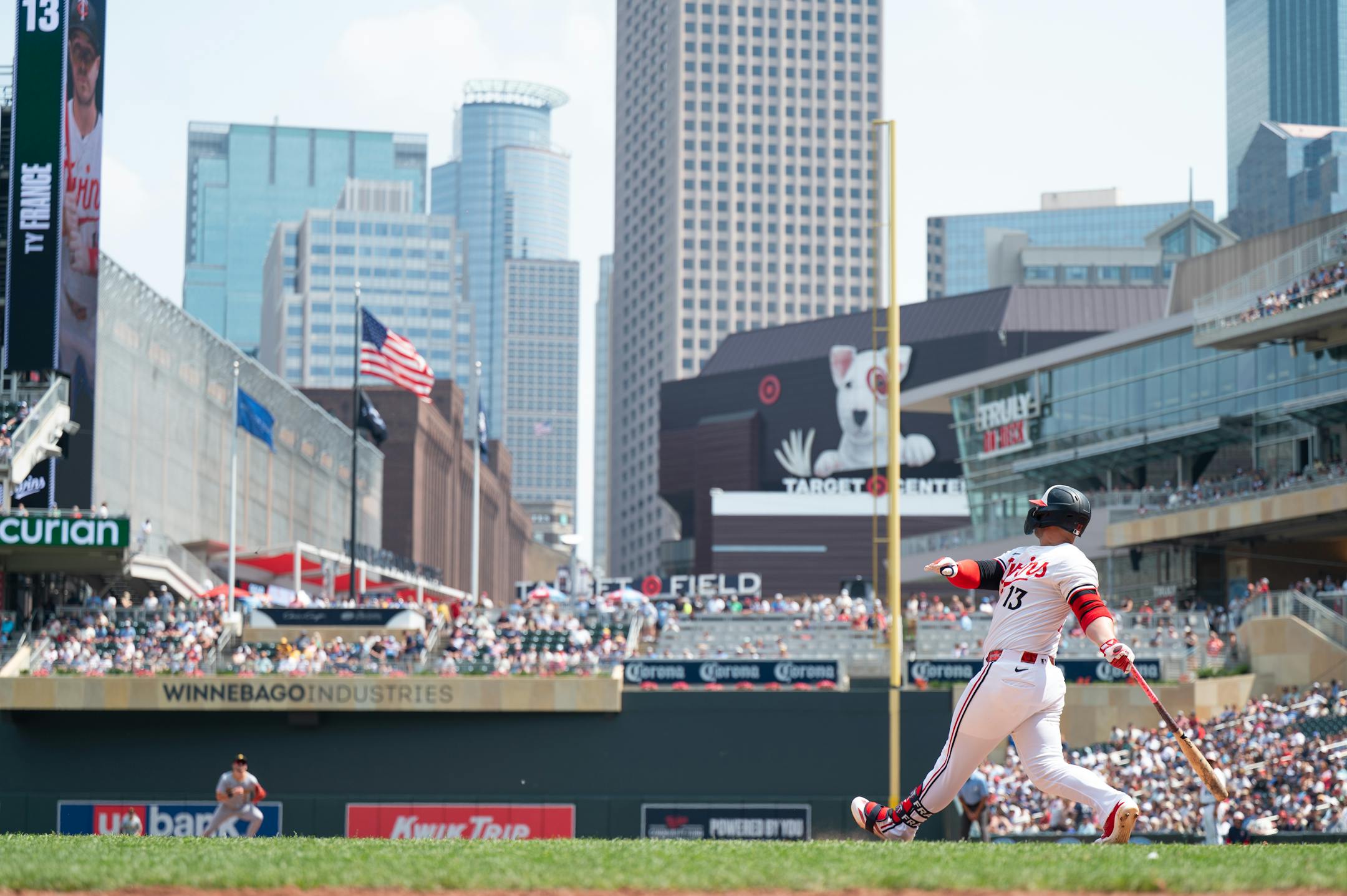
Twins first basemen Ty France makes a hit during the bottom of the 4th inning against the Pittsburgh Pirates at Target Field in July 2025 in Minneapolis.
Twins first basemen Ty France makes a hit during the bottom of the fourth inning against the Pittsburgh Pirates at Target Field in July 2025 in Minneapolis. (Arwen Clemans/The Minnesota Star Tribune)

Opinion editor’s note: Strib Voices publishes a mix of material from 11 contributing columnists, along with other commentary online and in print each day. To contribute, click here.

•••

In the early 2000s, Minnesotans were engaged in a heated debate as to whether it made sense for taxpayers here to contribute to the construction of a new Twins stadium. With the depressing Metrodome reaching the end of its useful life and the team threatening to leave, keeping the Twins here and competitive meant the building of a new Major League Baseball park. The question was: Who pays for it? Only the Pohlads, who owned the team? Or would the public chip in, too?

Many argued that a private enterprise such as the Twins should build their own ballpark. A new stadium would mean better revenues and an increase in the team’s value and should prove to be a profitable capital investment for the organization on its own. Why should taxpayers chip in?

But at the time, the hard truth was cities all over the country were willing to pony up public funds to build pro sports arenas, and saying no to the Twins meant they would leave Minnesota.

In this very opinion section in January 2006, a young Republican and lifelong Twins fan advocated confidently that taxpayer subsidies should in fact be part of the Twins stadium solution.

“The Twins simply cannot remain competitive playing in [the Metrodome],” the author wrote. “Public funds are in short supply these days and it’s critical they be used wisely. A new Twins stadium, however, is a public investment worth making.”

The author of that piece was me. And boy, was I wrong.

As part of the public-private financing partnership Hennepin County and the Twins created to build Target Field (taxpayers fielded $350 million of the bill, the Twins only $195 million), the ballclub’s ownership promised Minnesota a competitive major league franchise, achieved through higher player payrolls that could be afforded from the stronger revenues the new stadium would generate. But that deal was never kept.

Since Target Field opened its doors in 2010, the Twins’ payroll has for the most part remained below the second quartile of MLB teams. And that squad has only won a single playoff series in their decade-and-a-half run at the house Minnesota taxpayers built and has never been close to a World Series berth.

Actually, that’s not quite right. In 2023, the Twins had a roster close to world-champion caliber. But in a substantial slap in the face to fans and season-ticket holders, ownership slashed payroll by $30 million the next year. They decimated it again last week in a historical fire sale that rendered worthless season tickets many of us hopeful fans paid full price for and still hold. None of this is a strategy to make the Twins more competitive anytime soon; it was all about benefiting the owners’ bottom line. The team is unwatchable now and likely will be for years.

Can it be tough being a modest-market MLB franchise like Minnesota? Sure. But look at Baltimore, which is a much smaller region than the Twin Cities. The Orioles have fielded a payroll higher than the Twins in more than half of the past 37 seasons (three of which exceeded the highest payroll in Twins history).

Listen, I am a capitalist through and through. And I have no issue with business owners making tough decisions to benefit their profitability. The free market demands that, and in the end we all advance from the most efficient deployment of capital possible. But when you ask taxpayers to subsidize your business, as the Pohlads did, then other considerations come into play. Keeping your word to field a competitive team to those public investors should have been one of them.

Minnesotans should consider lessons learned here and no longer be willing to subsidize professional sports teams owned by billionaires and staffed by multimillionaires. Period. I have no doubt the American free market can provide more than adequate resources for pro clubs to profit and players and owners to get rich. I have no problem with that — so long as tax dollars remain out of the equation.

Moreover, the return on investment for public-paid pro-sports arenas is not all that it’s cracked up to be. A recent review — “The Impact of Professional Sports Franchise on Local Economies: A Comprehensive Survey” — took a deep dive into the last half century of pro-sports stadium construction in the U.S. and Canada, during which time around $33 billion in public funds were used to support them. The writers discovered that the economic benefits promised by team owners — revitalization, wage and employment growth and improved municipal tax revenues — often do not come to bear. The advantages from these projects are usually only enjoyed by the single neighborhood the new arena sits in and the small subset of businesses and residents located there.

Of course, even in insanely high-tax Minnesota, public dollars are not unlimited. When we spend money on stadiums, we forfeit expenditures on other things, such as parks, public transportation and refunds back to taxpayers. That’s a mix-up in public policy priorities.

My family has had season tickets with the Twins for close to 30 years — through glorious seasons and miserable ones alike. But that streak will end next year, as I imagine it will for many other exhausted and brokenhearted fans. Loyalty is a two-way street, and if to the Twins’ front office the budget is paramount to that, my budget won’t include the team.

Taxpayers too should remember the lessons learned here and get out of the business once and for all of subsidizing pro sports teams that just don’t need it. If the Twins can charge 12 bucks for the Diet Coke I bought the last time I was at Target Field, they shouldn’t need any help from the government.

Andy Brehm is a contributing columnist for the Minnesota Star Tribune. He’s a corporate lawyer and previously served as U.S. Sen. Norm Coleman’s press secretary.

about the writer

about the writer

Andy Brehm

Contributing Columnist

Andy Brehm is a contributing columnist for the Minnesota Star Tribune. He’s a corporate lawyer and previously served as U.S. Sen. Norm Coleman’s press secretary.

See Moreicon

More from Contributing Columnists

See More
card image
Jeff Wheeler/The Minnesota Star Tribune

The loss of more than a billion dollars that’s occurred on the governor’s watch makes him unfit for further service to the state.

card image