(The New York Times/The Minnesota Star Tribune)
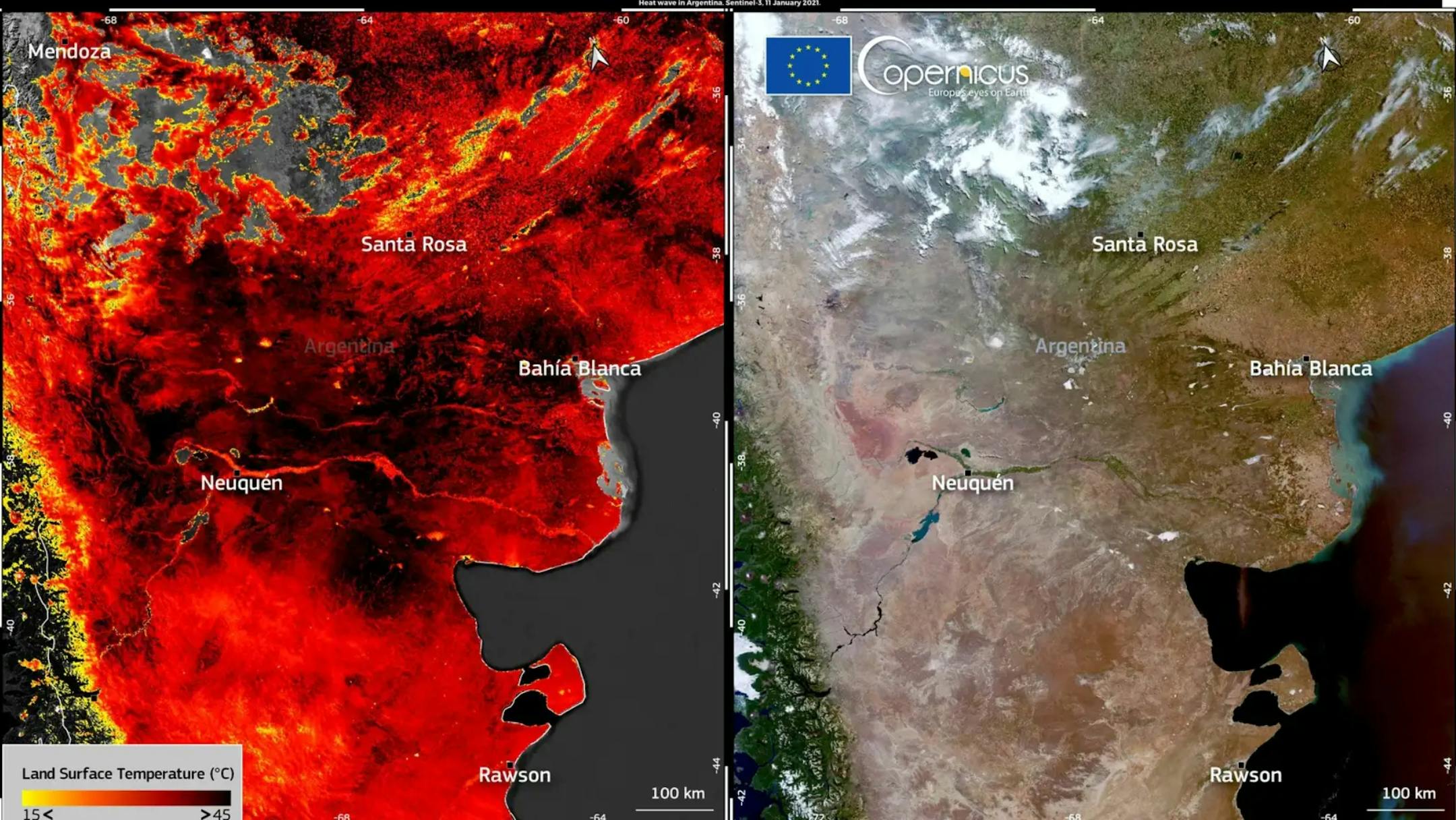
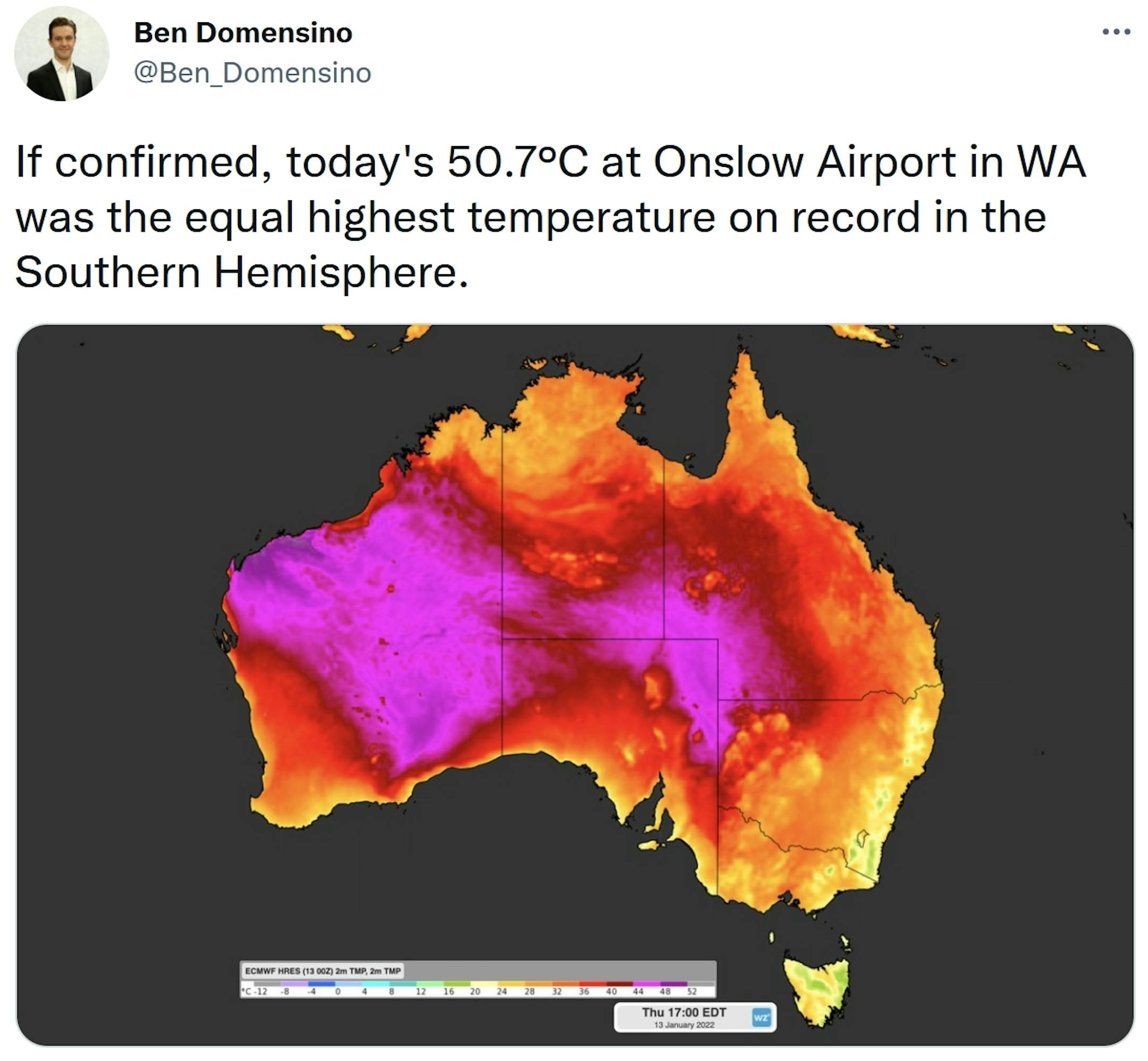
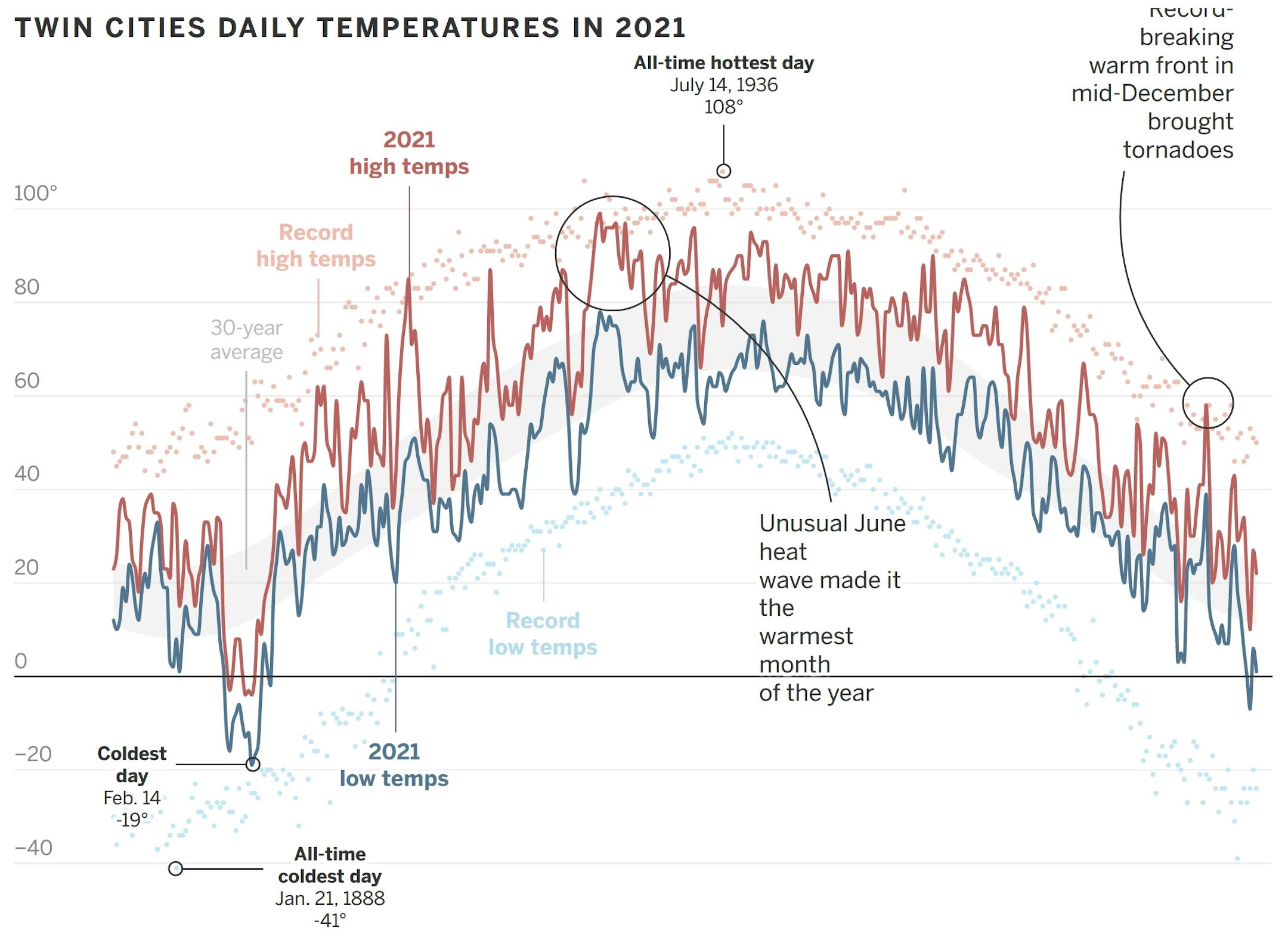
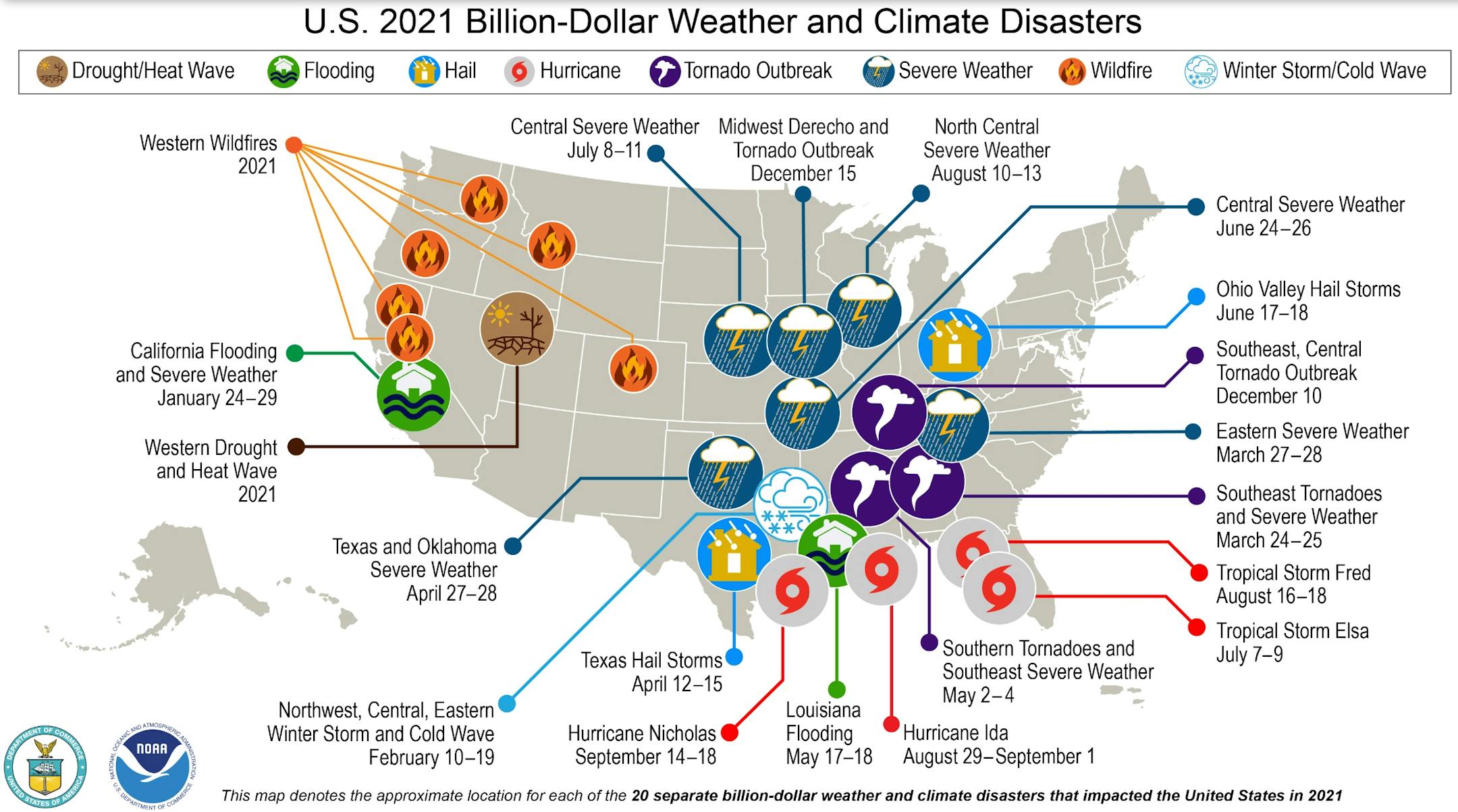
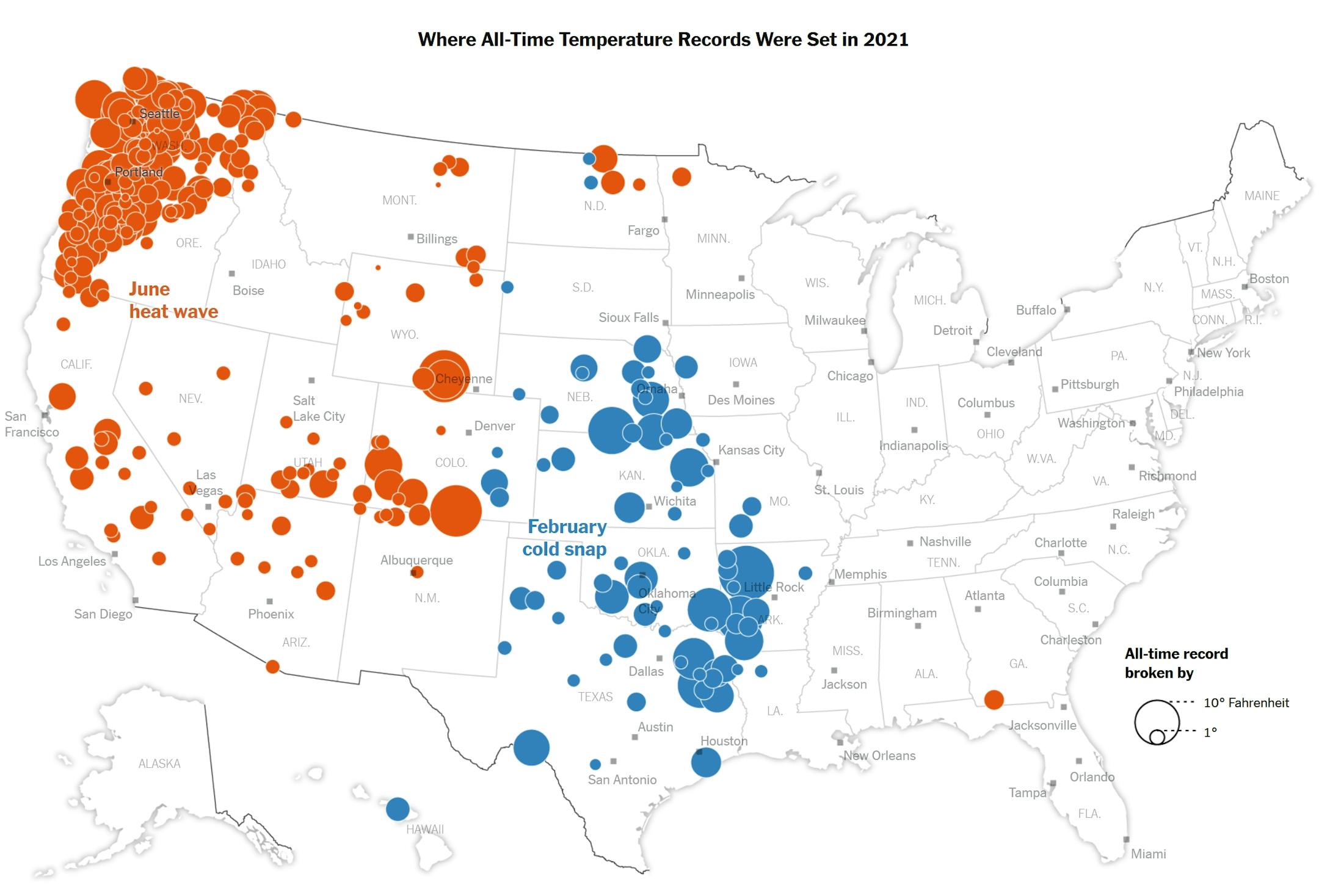
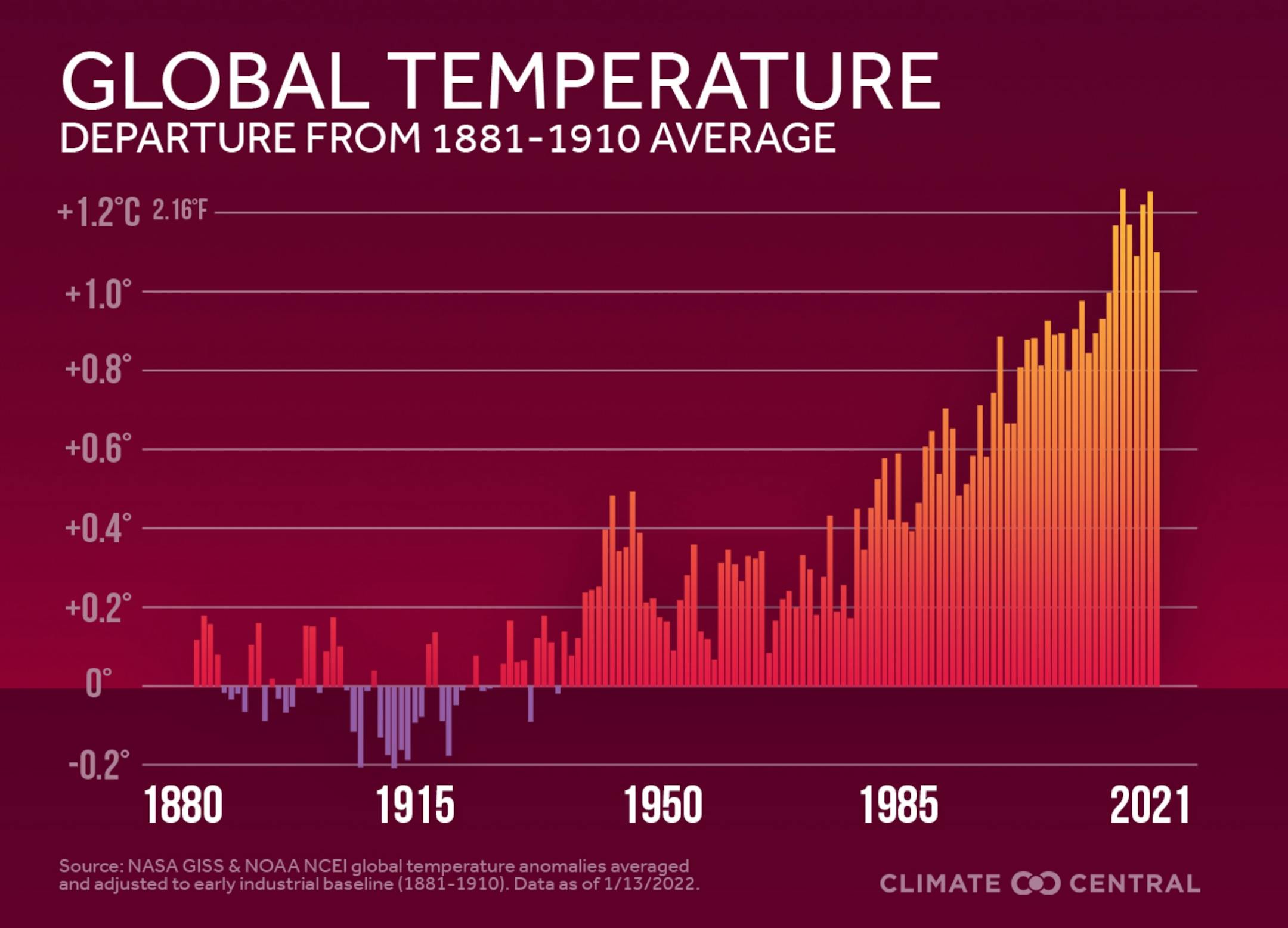
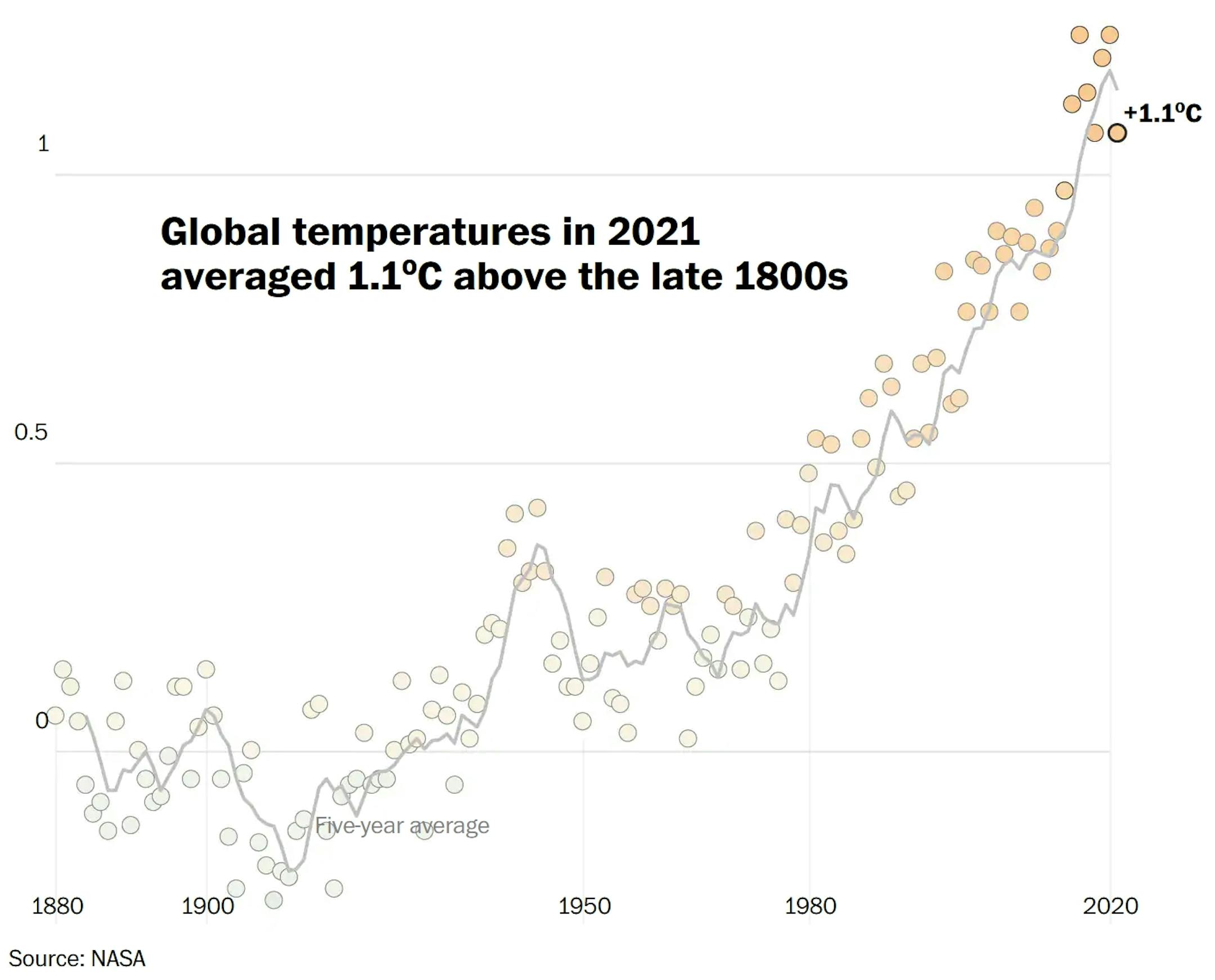
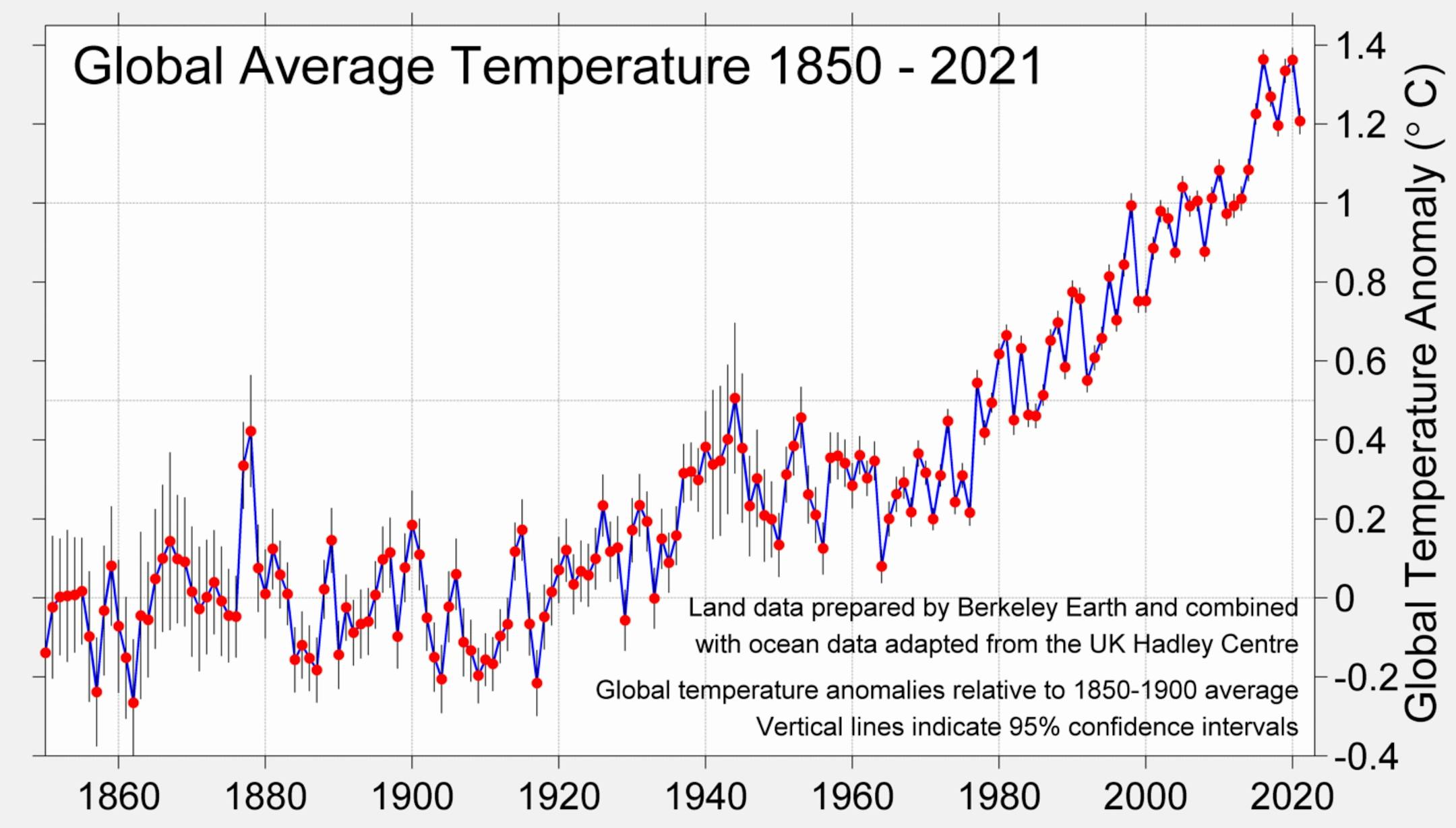
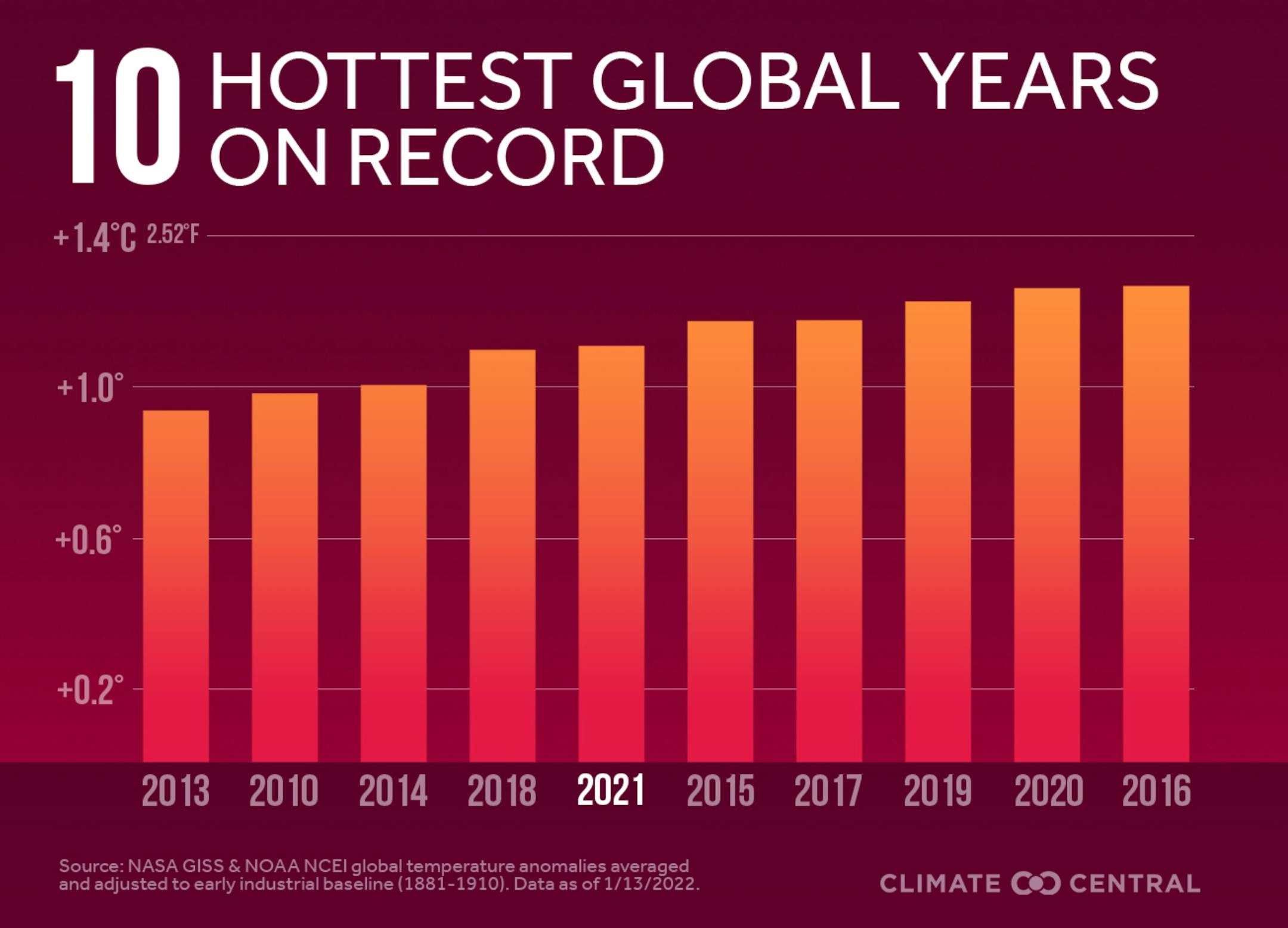
A Vivid View of Extreme Weather: Temperature Records in the U.S. in 2021. The New York Times (paywall) has details: "Temperatures in the United States last year set more all-time heat and cold records than any other year since 1994, according to a New York Times analysis of Global Historical Climatology Network data. Heat waves made up most of these records. All-time heat records were set last year at 8.3 percent of all weather stations across the nation, more than in any year since at least 1948, when weather observations were first digitally recorded by the U.S. government. The world has been warming by almost two-tenths of a degree per decade. Extreme-temperature events can often demonstrate the most visible effects of climate change. "We do not live in a stable climate now," said Robert Rohde, the lead scientist at Berkeley Earth, an independent organization focused on environmental data science. "We will expect to see more extremes and more all-time records being set..."
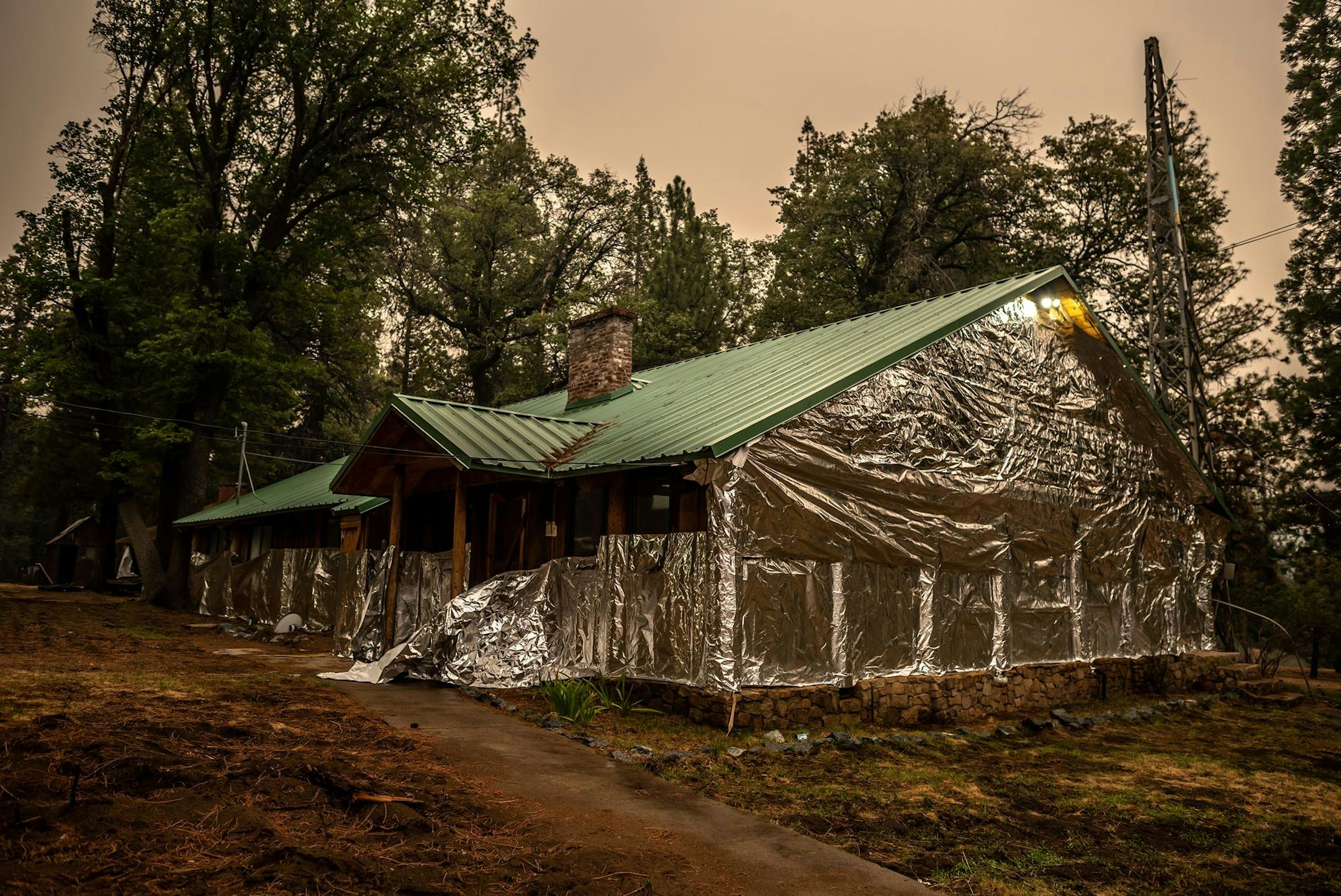
A U.S. Forest Service building in Johnsondale was wrapped in an aluminized material to protect it from the heat and embers of the nearby Windy fire on Sept. 19, 2021. (ProPublica/The Minnesota Star Tribune)
California's Forever Fire. ProPublica takes a look at the nearly perpetual wildfires impacting the state; here's an excerpt: "...The dominant story in California these days is that the orange, dystopian smoke-filled sky that blanketed the state on Sept. 9, 2020, was proof that our beloved was corrupted and had been for some time. We were in the midst of the worst wildfire season in the state's history, and the evident wrongness traumatized us and shook us awake. Living in California now meant accepting that fire was no longer an episodic hazard, like earthquakes. Wildfire was a constant, with us everywhere, every day, all year long, like tinnitus or regret. The dry spring was bad; the dry summer, worse; the dry fall, unbearable. Even a wet winter (if we caught a break from the drought) offered little reprieve. All thoughts, all phenomena, existed relative to fire. Where we are now — January, the fresh and less fire-alarming time of year — should be the moment for us to relax and reassess what we're doing in California and how to live here well. Yet the rains turn the burn scars into mudslides and allow the next season's flora, what the foresters call fuel, to grow..."
(The Minnesota Star Tribune)
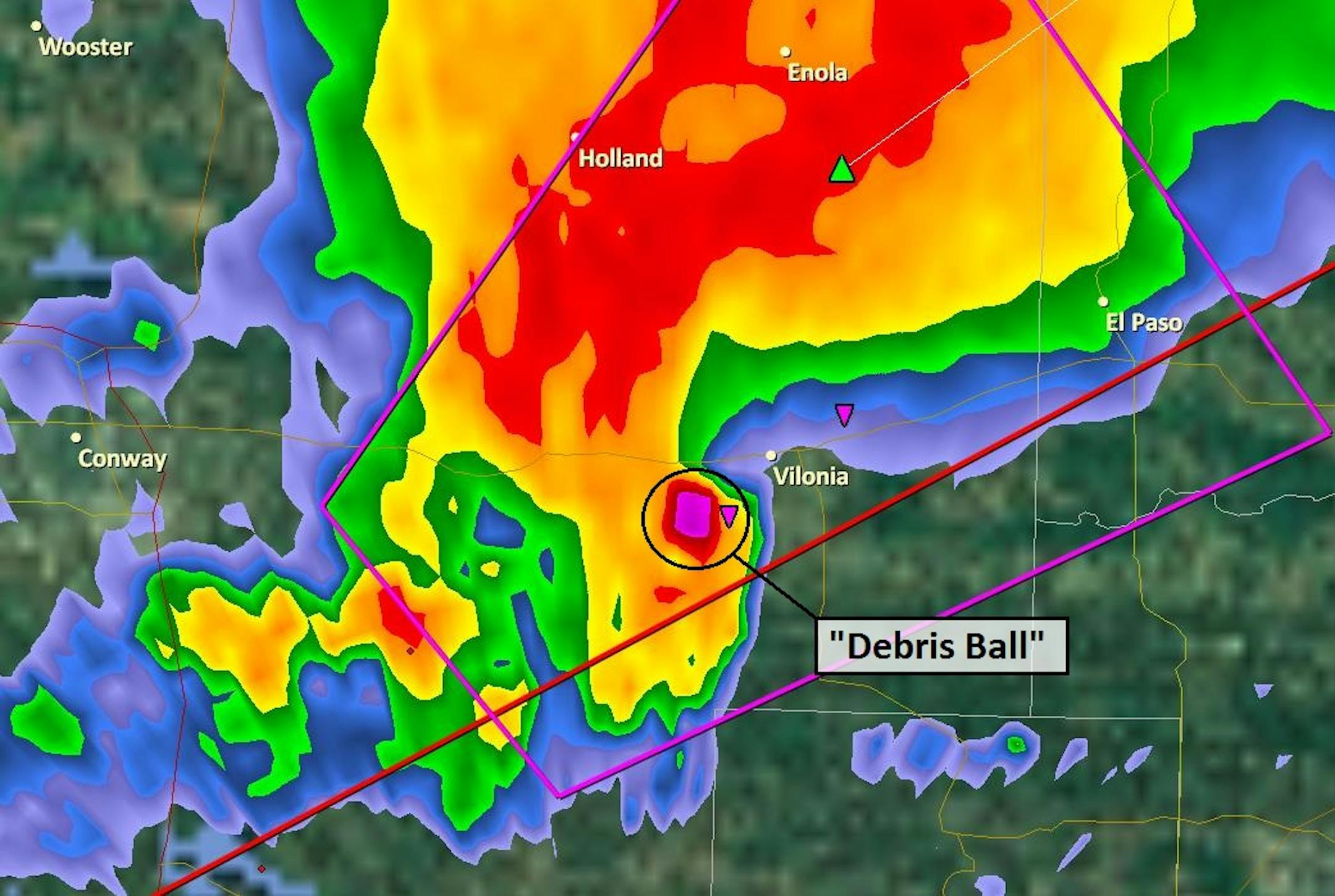
How Radar Works: The Technology Made Famous by War. Live Science has an interesting look at how technology designed for war has been applied to tracking tornadoes; here's an excerpt: "Radar was among the most important technical breakthroughs of the Second World War. The technology helped Britain and its allies emerge victorious during the Battle of Britain, the air war fought over UK skies in 1940, according to Imperial War Museums (IWM). Radar – which stands for Radio Detection and Ranging – is a detection system that uses radio waves to locate objects. It is still widely used today, but as technology has advanced they now often harness microwaves, according to the Earth Observing Laboratory. These are at the higher frequency end of the radio spectrum and provide more accurate readings..."
(The Minnesota Star Tribune)
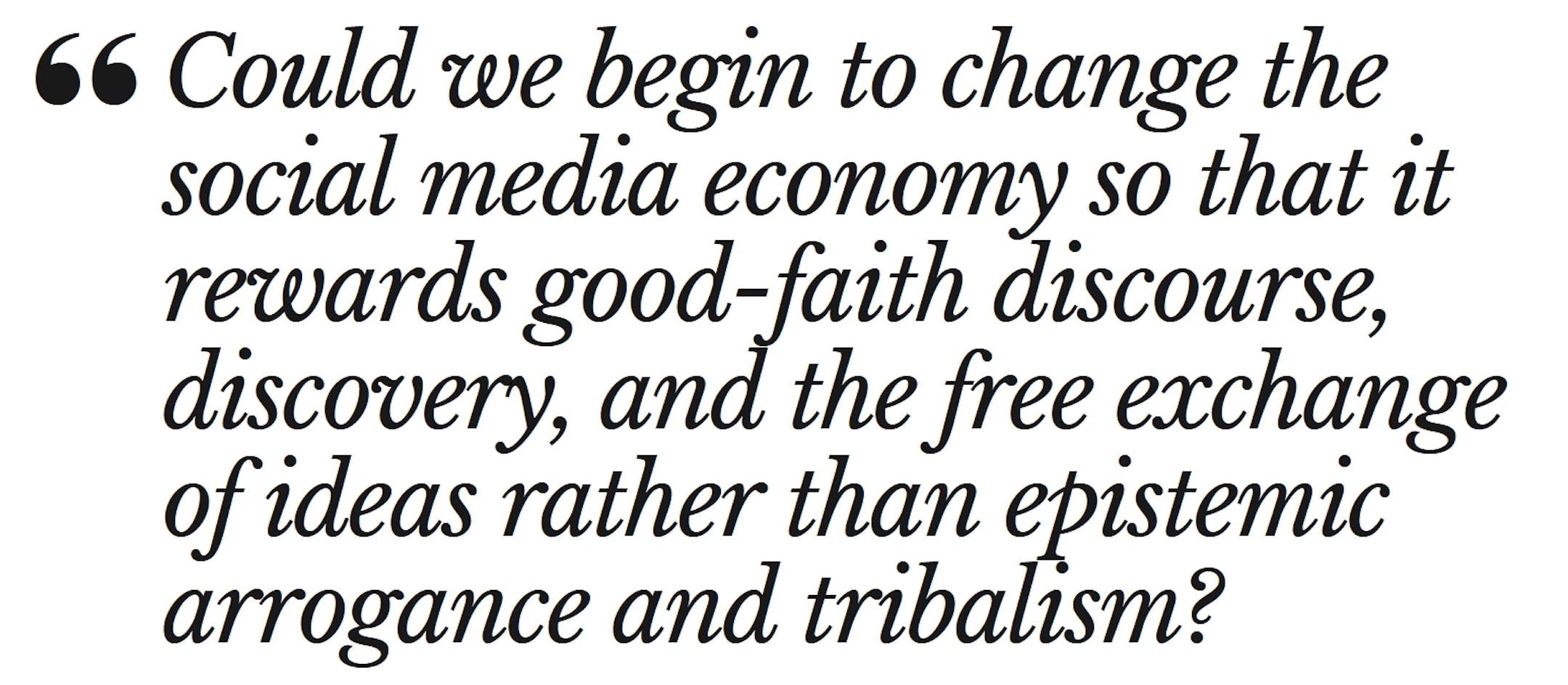
Is Social Media Killing Intellectual Humility? Food for thought from Big Think; here's a clip from a thoughtful post: "...In other words, the internet encourages epistemic arrogance—the belief that one knows much more than one does. The internet's tailored social media feeds and algorithms have herded us into echo chambers where our own views are cheered and opposing views are mocked. Sheltered from serious challenge, celebrated by our chosen mob, we gradually lose the capacity for accurate self-assessment and begin to believe ourselves vastly more knowledgeable than we actually are. But it's not just the social reinforcement mechanism of like-minded crowds that is killing intellectual humility. It's also our own digital trails—the permanent records of our previous opinions..."
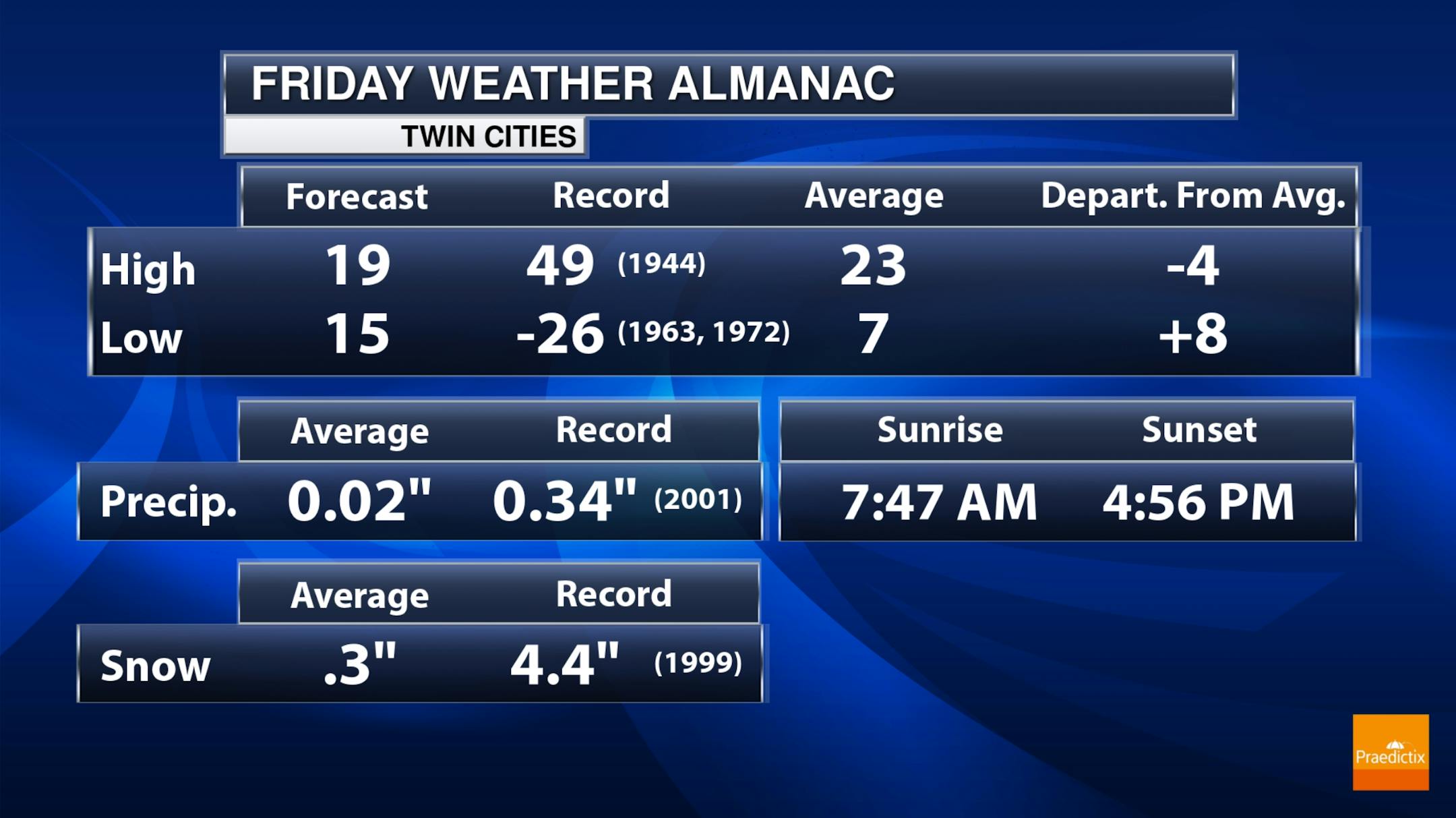
3" snow on the ground on Thursday at MSP International Airport.
34 F. Twin Cities high temperature yesterday.