

Opinion editor's note: Star Tribune Opinion publishes a mix of national and local commentaries online and in print each day. To contribute, click here.
•••
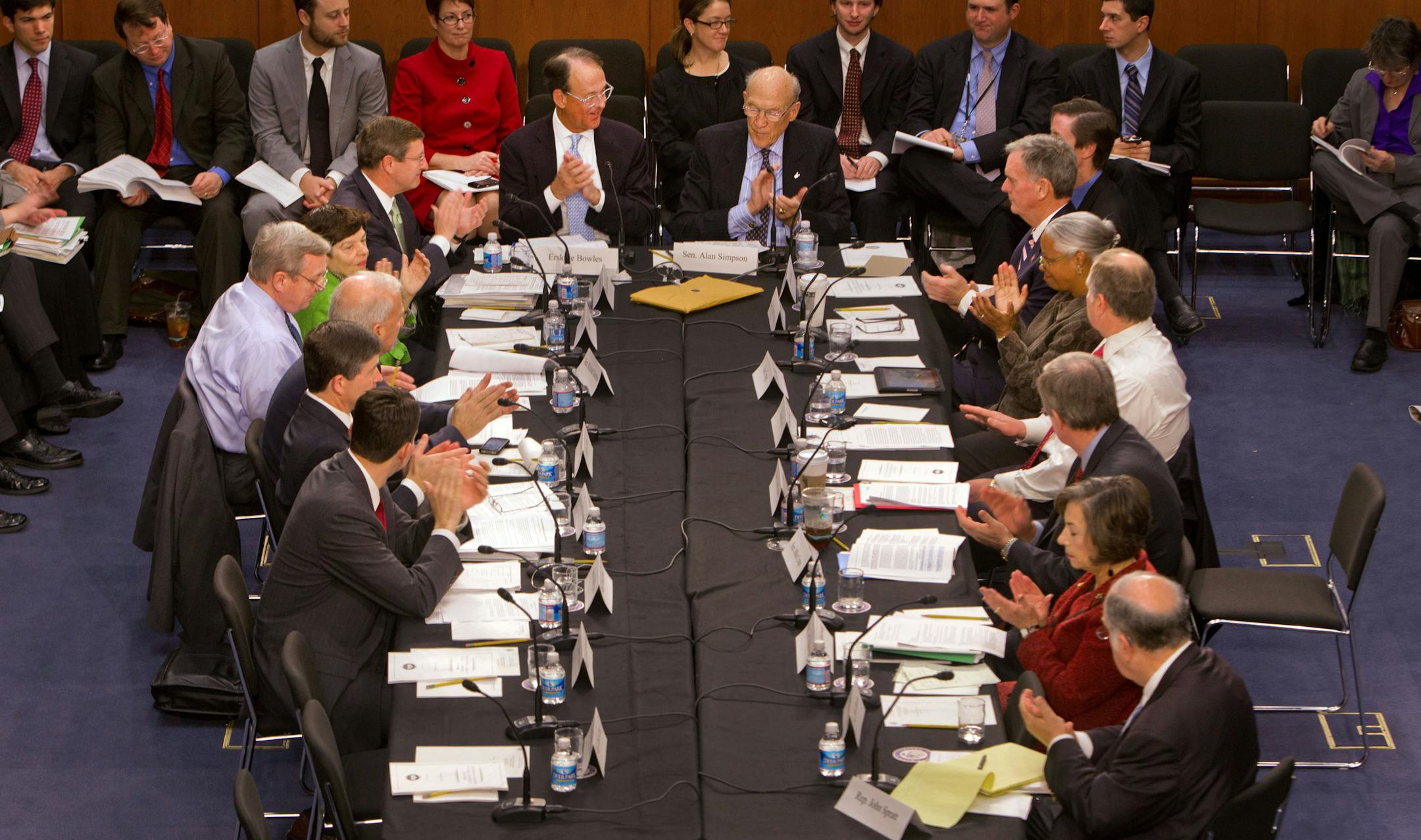
In March 2011, Erskine Bowles and Alan Simpson, chairs of a White House deficit-reduction commission, issued a frightening warning about U.S. government debt. Unless America took major steps to rein in future deficits, they warned, a fiscal crisis could be expected within about two years.
Bowles described what he thought would happen: Foreigners would stop buying our debt. And then, he asked, "What happens to interest rates? What happens to the U.S. economy? The markets will absolutely devastate us."
That was 12 years ago. At the time Bowles issued his warning, the interest rate on 10-year U.S. bonds was about 3.5%. Not much was done to reduce deficits, aside from a squeeze on discretionary federal spending that probably delayed economic recovery. But at the end of last week, the 10-year rate, which has gone up substantially over the past year as the Fed raises rates to fight inflation, was … about 3.5%.
The point is that in the early 2010s, the last time we faced a potential crisis over the debt ceiling, there was an elite consensus that budget deficits were a severe, even existential threat. This consensus was, in retrospect, completely wrong. Yet, it almost completely dominated the political conversation, to such an extent that, as Ezra Klein pointed out, the media abandoned the normal rules of reportorial neutrality and openly cheered proposals to cut Social Security and Medicare.
And those of us who challenged the elite consensus, mocking the peddlers of debt panic as Very Serious People (because ranting about the evils of debt sounds serious and responsible, even when the math doesn't support the rhetoric), were treated as odd and out of touch.
Now, the Very Serious People are trying to make a comeback, in effect lending cover to Republican efforts to hold America hostage by refusing to raise the debt ceiling. So, it's important to realize that the case for debt panic is, if anything, even weaker than it was in 2011.


