
Playwrights, with help from Jeffrey Hatcher, take aim at critics in Guthrie double bill

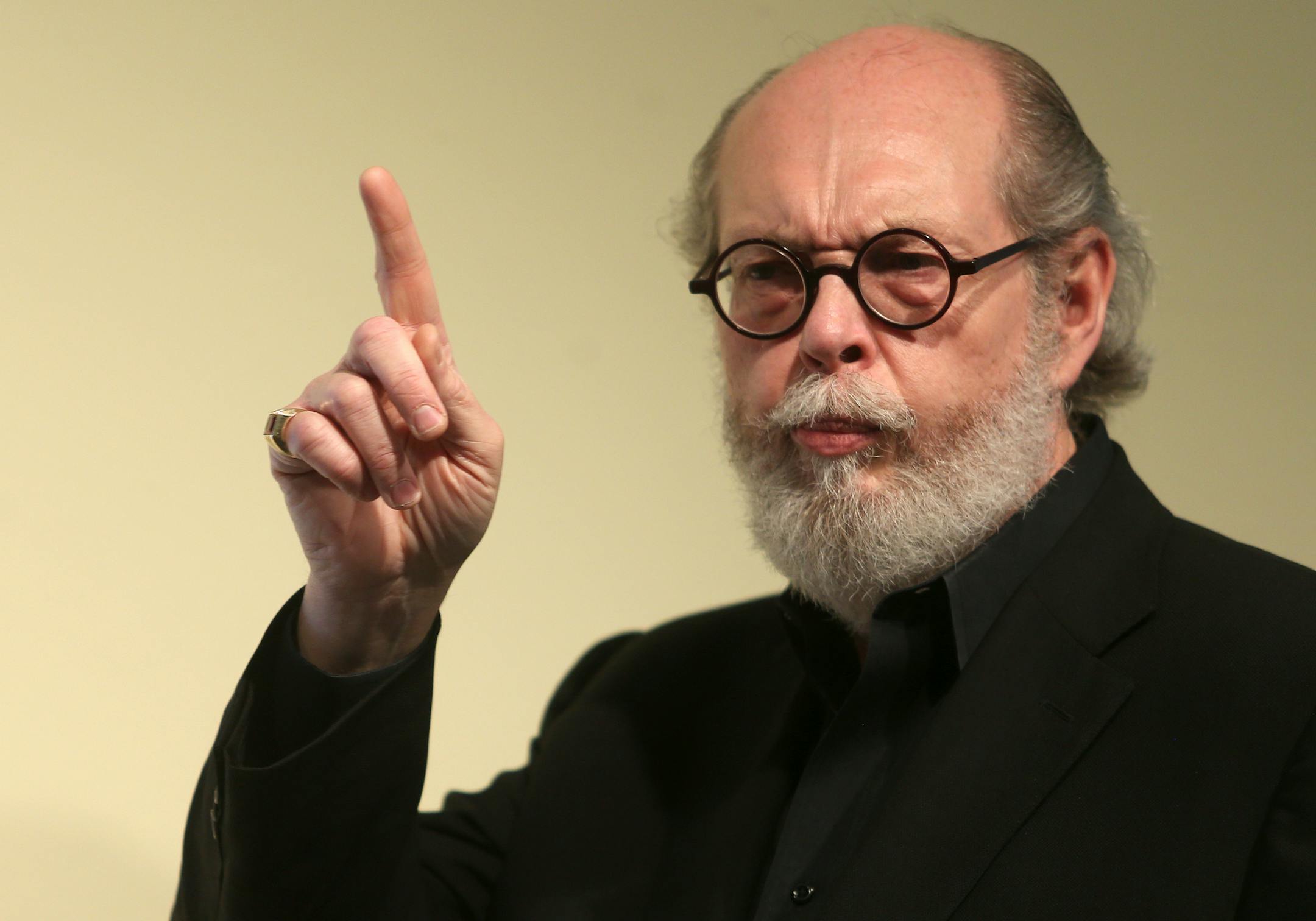
Playwright Jeffrey Hatcher offers up a critique of his relationship with critics.

February 19, 2016 at 8:52PM
Playwright Jeffrey Hatcher turned the 18th-century play “The Critic” into a one-act that will run at the Guthrie with 1968’s “The Real Inspector Hound.”
Playwright Jeffrey Hatcher turned the 18th-century play “The Critic” into a one-act that will run at the Guthrie with 1968’s “The Real Inspector Hound.” (Star Tribune/The Minnesota Star Tribune)

Critics take the brunt of the lampoon in two shows opening Friday on the Guthrie's proscenium stage.

Playwright Jeffrey Hatcher adapted Richard Brinsley Sheridan's 18th-century play "The Critic," turning it into a taut one-act. Then after intermission, "The Real Inspector Hound" takes the stage. Tom Stoppard's 1968 one-act depends largely on the repartee of two critics watching a whodunit.

The Guthrie produced the show in collaboration with Shakespeare Theatre Company from Washington, D.C., where it played last month.

Hatcher took time to bat a few tongue-in-cheek e-mails back and forth about critics and playwrights and Sheridan's play.

Q: You must learn a great deal from the insights of critics, yes?

A: Very much so, although what I learn is hard to apply to a show that's already opened or, in some cases, has to close early due to a bad review.

Q: So then we are certain to see a better play next time out?

A: The next one is always better than the current one. If I didn't believe that, I'd have to start lying to myself.

Q: Are you a writer who has been wounded by the critic's razor-sharp observations of your work?

A: The razor-sharp ones heal nicely and leave barely a scar. It's the blunt instruments that do the interior damage.

Q: Are you suggesting the critic's pen is not always as sharp as we might imagine?

A: As Waldo Lydecker says in "Laura," "I don't use a pen. I write with a goose quill dipped in venom."

Q: Yes, that reminds me of a line in your adaptation, wherein Mr. Puff declares that anyone with pen and ink and a well of resentment could be a critic. You know we use computers now.

A: That line gets a nice laugh. Even from civilians. It tells you something.

Q: You seem to suggest that the great theatergoing public might share the idea that critics offer nothing but resentment.

A: Heaven forfend. Rather, that the great, good, welcoming and wise theatergoing public is sensitive to the fact that the relationship between playwright and critic is fraught.

Q: Yes. Say, that Richard Brinsley Sheridan is sure a witty writer, isn't he?

A: Sheridan was very witty. Better: He was funny. Sometimes "witty" just sits there, waiting for you to notice how pointed, how perfect. In the original, [the critic] Sneer says, "I am quite of your opinion, Mrs. Dangle; the theater in proper hands might certainly be made the school of morality, but now I am sorry to say it, people seem to go there principally for entertainment!" That's a witty line. It tells a truth, but there's ambiguity at work because we're never quite sure which side Sneer is taking.

Q: Who is your favorite character in "The Critic"?

A: Puff. Sneer runs a close second because he gets to say all the really nasty things. But Puff is such a wonderful, buoyant, oblivious blancmange. He's a rare bird: an innocent with an eye to the main chance. An amateur, an entrepreneurial tyro in a world of wised-up professionals. He may occasionally say something that wounds, but it's never intentional.

A lot of what he says are like Gielgudies: the unintentionally scathing and funny comments John Gielgud would make to other actors. Gielgud was rehearsing a Peter Brook-directed "Oedipus" involving theater games and psychodrama. When Brook told the cast to each come downstage and say something terrifying, Gielgud announced primly: "We open in 10 days."

Q: Has writing this adaptation given you a new appreciation for the critic or more appreciation for the chance to lampoon the critic?

A: I know I'm supposed to say something cuttingly witty or self-serving and servile, but it's fascinating to realize that criticism as we know it has evolved from a place much more like the Wild West. The 18th century was a world of unsigned reviews and anonymous hatchet jobs, closer to social media today. The objective critic is a fairly recent construct. As recently as the 1920s, the chief drama critic for the New York Times was George S. Kaufman — this while he was a practicing and successful Broadway playwright. Ethical? Not very. But I bet he got a kick out of it.

Graydon Royce • 612-673-7299

about the writer

about the writer

Graydon Royce, Star Tribune

More from No Section

See More
FILE -- A rent deposit slot at an apartment complex in Tucker, Ga., on July 21, 2020. As an eviction crisis has seemed increasingly likely this summer, everyone in the housing market has made the same plea to Washington: Send money — lots of it — that would keep renters in their homes and landlords afloat. (Melissa Golden/The New York Times) ORG XMIT: XNYT58
Melissa Golden/The New York Times

It’s too soon to tell how much the immigration crackdown is to blame.