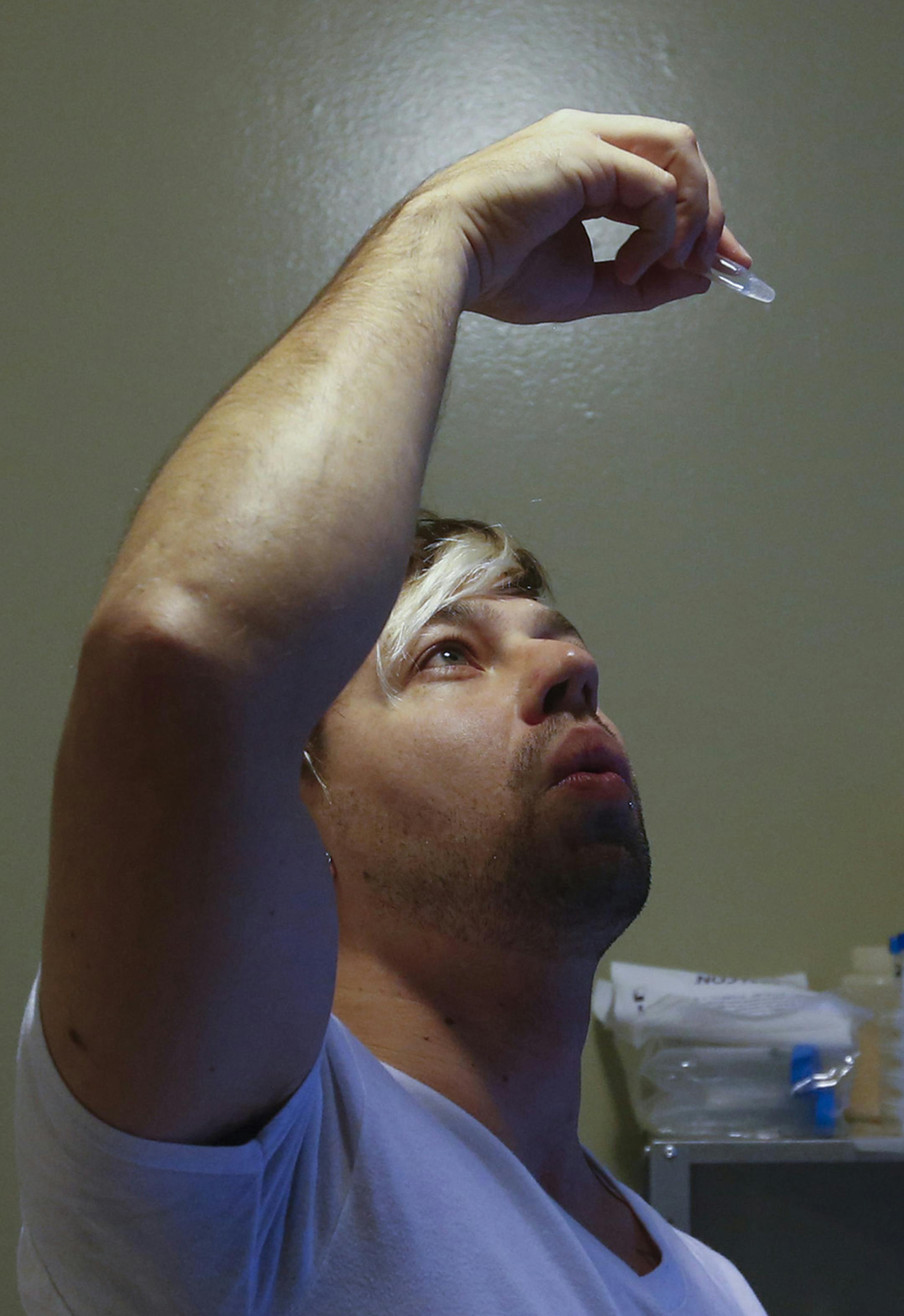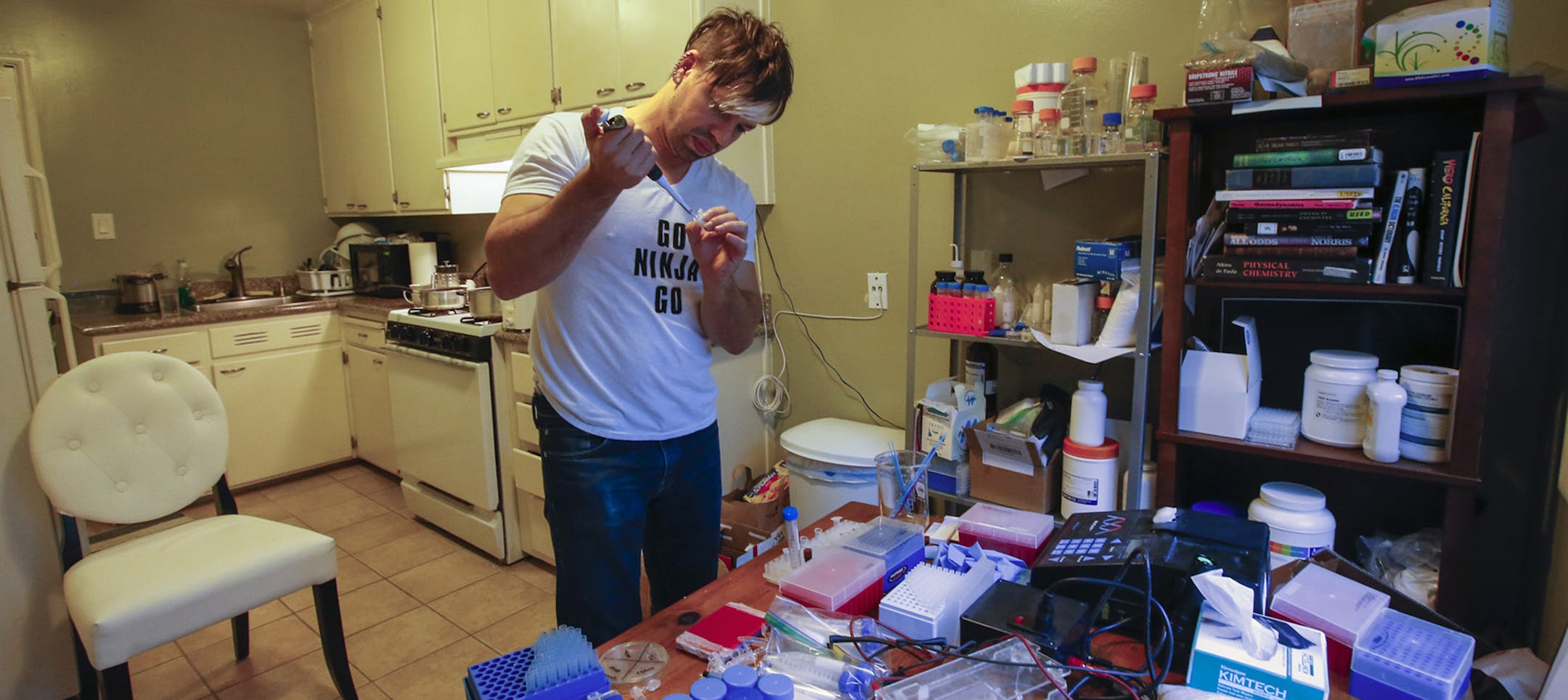
BURLINGAME, Calif. – On the kitchen table of his cramped apartment, Josiah Zayner is performing the feat that is transforming biology.
In tiny vials, he's cutting, pasting and stirring genes, as simply as mixing a vodka tonic. Next, he slides his new hybrid creations, living in petri dishes, onto a refrigerator shelf next to the vegetables.
And he's packaging and selling his DIY gene-editing technique for $120 so that everyone else can do it, too.
"I want to democratize science," said Zayner, whose left arm is etched with the tattoo "Build Something Beautiful."
It's a prospect that worries those who fear unregulated amateur biologists could unleash new pathogens but delights others who imagine the day when anyone could redesign the living world to create cheap drugs or clean fuels.
This was once a Godlike power: moving genes from one living creature to another. Then it became the realm of big-budget labs. Three years ago, the University of California, Berkeley, invented the so-called CRISPR gene-editing tool — on which Zayner models his kits — offering a cheap, fast, precise and powerful way to edit genetic sequences. But its use remained confined to academic and commercial settings.
Zayner is the first to market a simplified version of the tool to the masses — a project that, for now, is more provocative than perilous. The kit has limited applications. His altered bacteria and yeast, quite harmless, lead brief and fairly dull lives. They can't do much except change color, fragrance or live in inhospitable places. Then they die.
But it raises the specter — deeply troubling to some experts — of a day when dangerous gene editing is conducted far from the eyes of government regulators, posing risk to the environment or human health.