

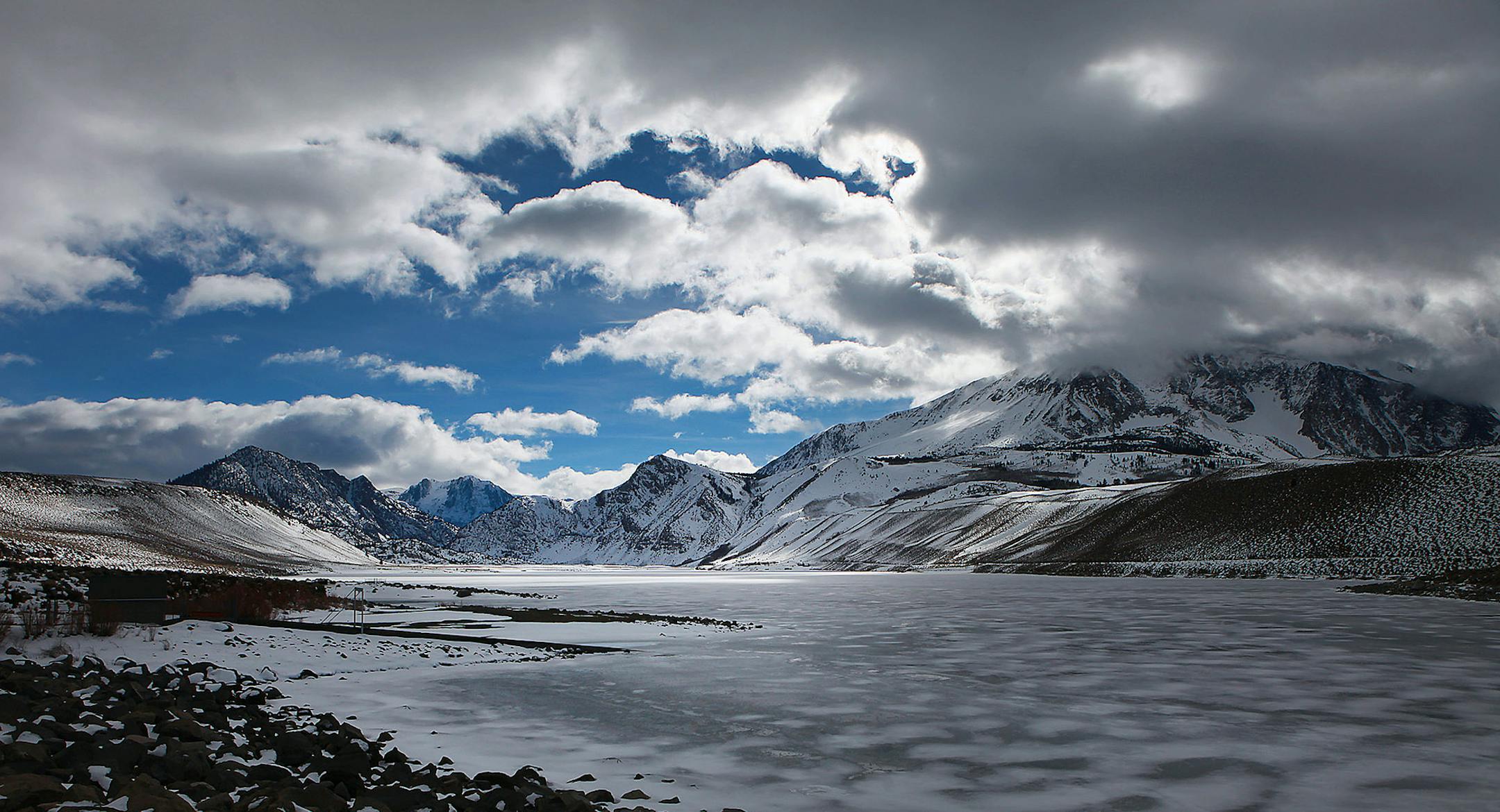
SAN FRANCISCO – New data on how the mountain chain that runs from Alaska to Mexico was formed are causing geologists to rethink how the American West was made.
Hundreds of millions of years ago, the area was under an ocean. Scientists had thought one large underwater plate shifted against another, and that the action swept material together as if it was on a conveyor belt to create the ranges, including the Rocky Mountains. Instead, new data suggest several plates may have piled up like a multicar accident on a freeway.
The report, published in the journal Nature, says the collisions likely took place between 200 million years ago, a period known as the Jurassic, and 50 million years ago, in the Eocene era. While some scientists had theorized this previously, the report by Karin Sigloch, a seismologist at Munich University in Germany, adds supporting evidence that the western mountain ranges assembled as massive slabs collided with North America.
Western North America "consists of scores of continental jigsaw pieces of different origins, sizes and ages," Saskia Goes, an earth scientist at the Imperial College London, said in a related editorial. She described the process as "a slow dance of tectonic plates over the past 350 million years."
To gain the data, Sigloch's team used a scanning technology that creates 3-D images by measuring the energy waves produced by earthquakes. In this case, the target of the scans was the earth's mantle, the layer between the crust and the core where the plates float. The plates pressed down are of a different material than the mantle, and waves travel through the plates more quickly, allowing geologists to estimate their position.
"The importance of this paper is that it provides independent verification of this model," said Robert Hildebrand, a geologist at the University of California Davis, in a telephone interview. He wasn't involved in the study, but had proposed similar models separately.
The chain of peaks that came into being includes ranges such as the Cascade Mountains, the Sierra Nevada, the Sierra Madre and the Rocky Mountains.


