

WASHINGTON – When Edith Windsor and her girlfriend got engaged in 1967, she was too nervous about how to answer the inevitable "Who is he?" queries to wear an engagement ring. So they compromised on a ring-shaped diamond brooch instead.
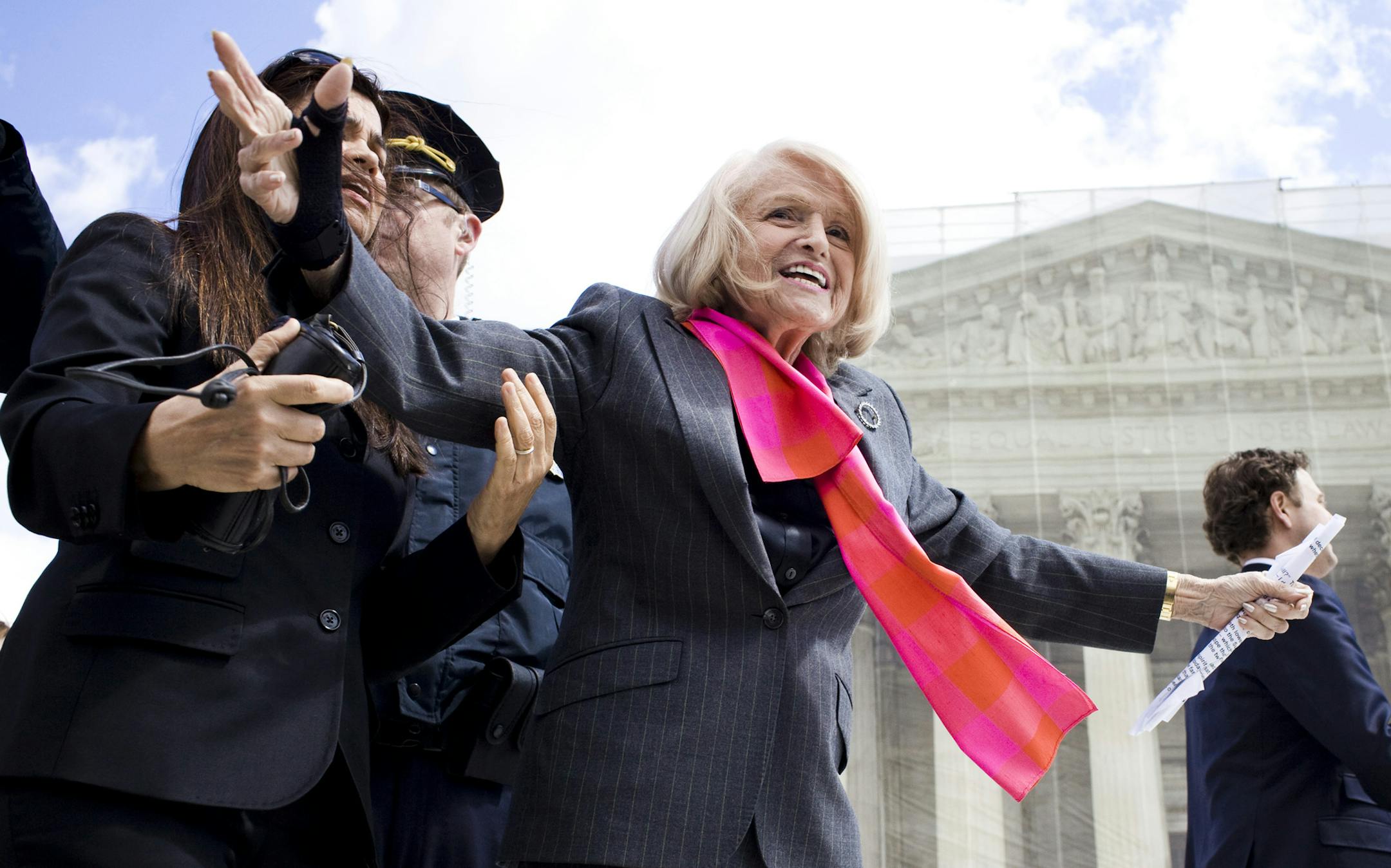
As Windsor stood on the steps of the Supreme Court on Wednesday, wearing that same brooch on her lapel, she marveled how much had changed. Someone who was once so afraid of saying that she was a lesbian had become the central figure in the case that could strike down the law forbidding federal recognition of marriages like the one she and her partner, who is now deceased, entered into in 2007.
Now 83, she has difficulty walking and hearing. But age has not dulled her wit, nor muted her appreciation of the moment she found herself.
"Hi. I'm Edie Windsor, and somebody wrote me a large speech which I'm not going to make," she said, clutching a white sheaf of paper. "I am today an out lesbian, OK, who just sued the United States of America, which is kind of overwhelming for me."
She went on to explain her case, and how when her wife, Thea Spyer, died four years ago it not only left her hospitalized with what she diagnosed as a broken heart but with a sizable estate tax bill that she would not have paid if Thea were, in her words, Theo.
Even though they were married for only the final two years of their 40-year relationship, she said something intangible but unmistakable changed after they were married. "For anybody who doesn't understand why we want it and why we need it," she said, "it is magic."
There were points during the news conference when she strained to hear the questions. Her lawyers often had to repeat them two or three times before she could answer. But there was one question that she heard immediately. Why are more people beginning to accept gay marriage?
"As we increasingly came out, people saw that we didn't have horns. People learned that, OK, we were their kids and their cousins" and their friends, she said. "It just grew to where we were human beings like everybody else."


