

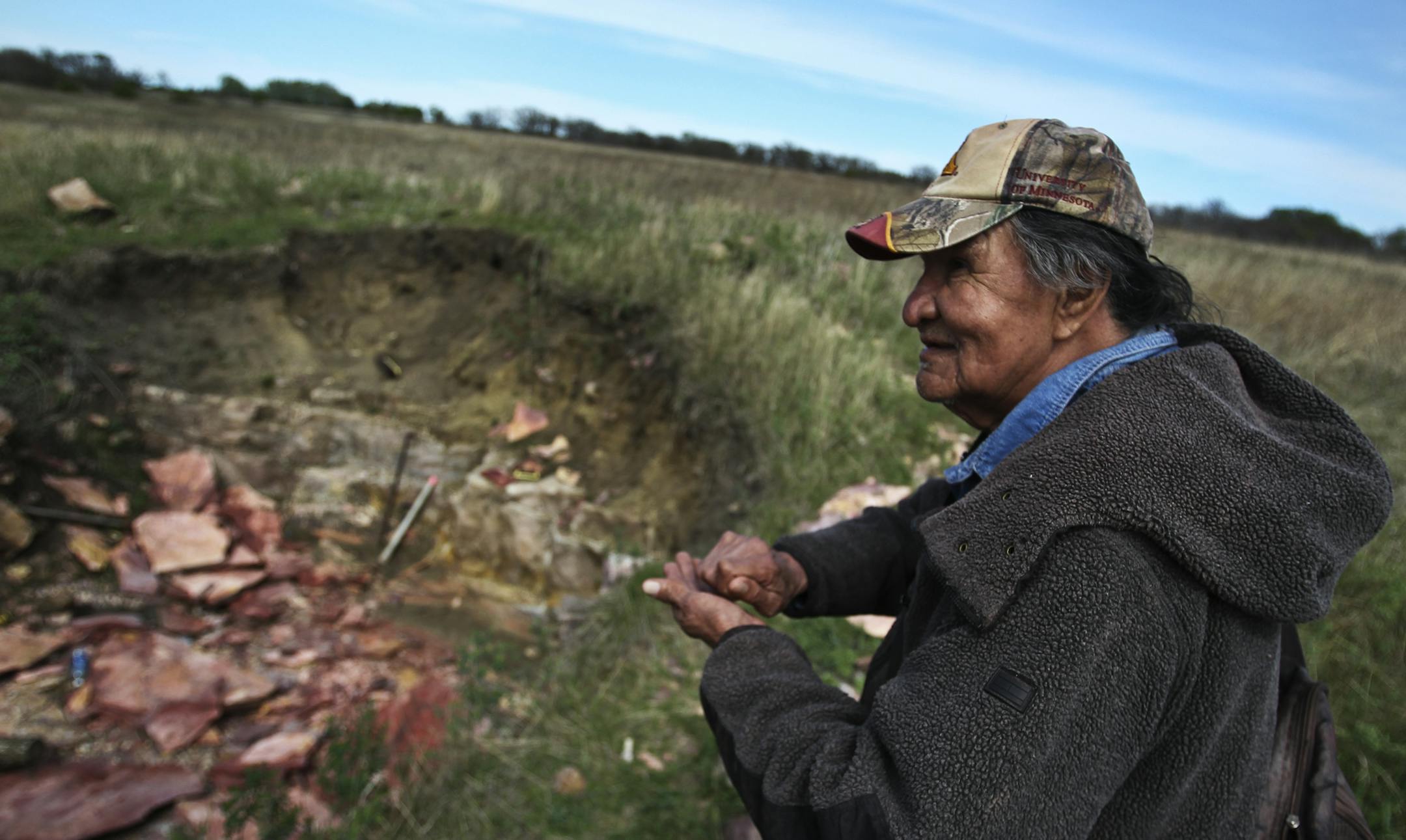
If there were no wind, the prairie would be silent. But there is always wind, and so a walk through Pipestone National Monument has a low, humming soundtrack of the breeze threading the sumac in the swales of this sacred place.
For 2,000 years, Indians have heard the wind as they methodically, laboriously descend through dense roots of bluestem grass and unforgiving layers of hardest quartzite, seeking a seam of reddish stone.
This is pipestone, or stone from which ceremonial pipes are carved.
Legend says the stone's color comes from the blood of ancestors drowned in a cataclysmic flood.
Geology says its rusty shade comes from traces of iron-bearing hematite deposited by Ice Age glaciers.
Whatever you believe, know that you're visiting the only place of its kind on Earth.
There are a few other sources of similarly reddish rock in the world, but only the rock in this small pocket of rural Minnesota — Pipestone County, no less — is free of the mineral quartz, making it particularly carveable.
Tribes journeyed hundreds of miles to quarry enough pipestone to bring home for their ceremonies. Even today, quarrying permits are issued only to Indians enrolled in tribes recognized by the U.S. government. Currently, there's a 10-year waiting list.


