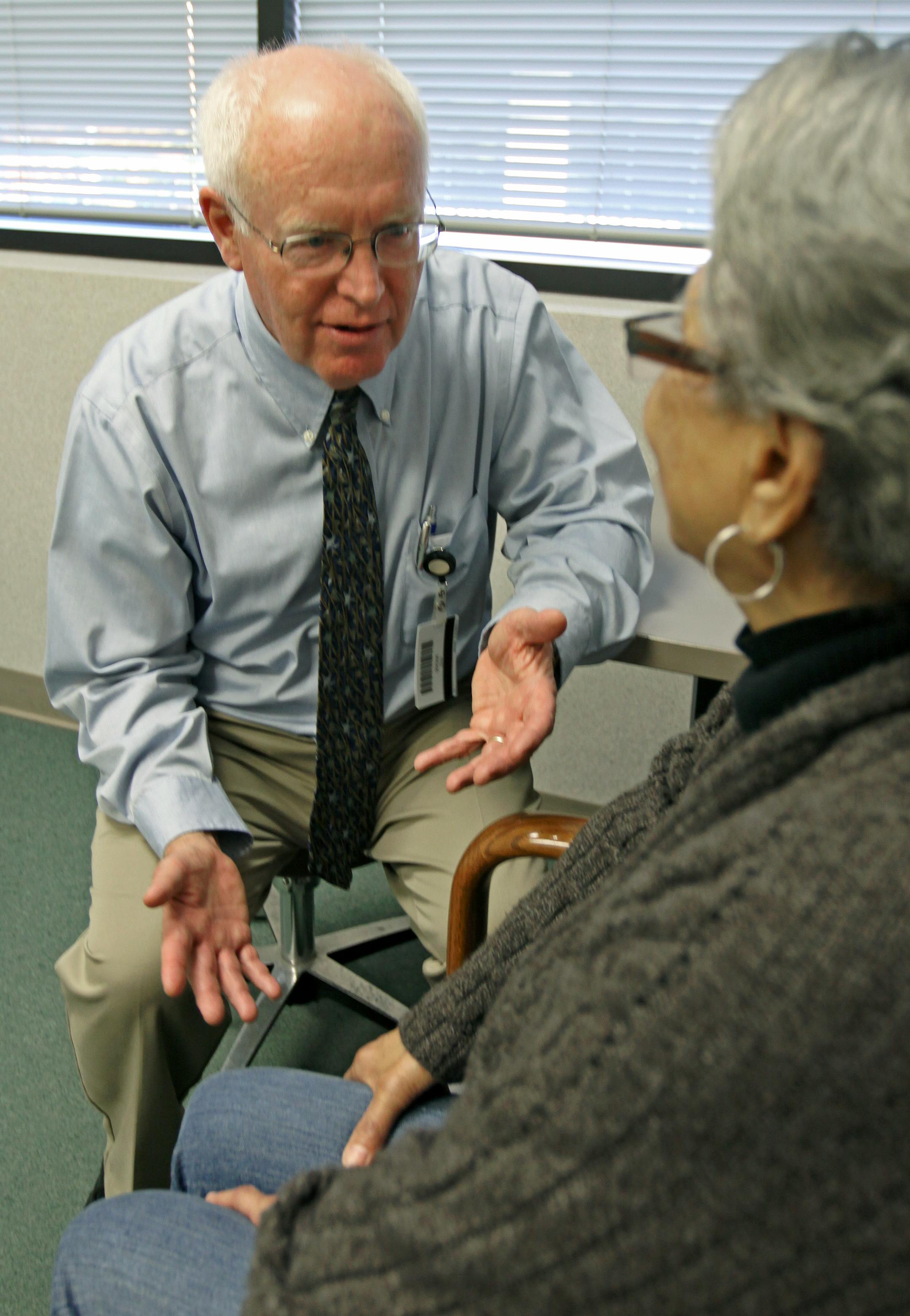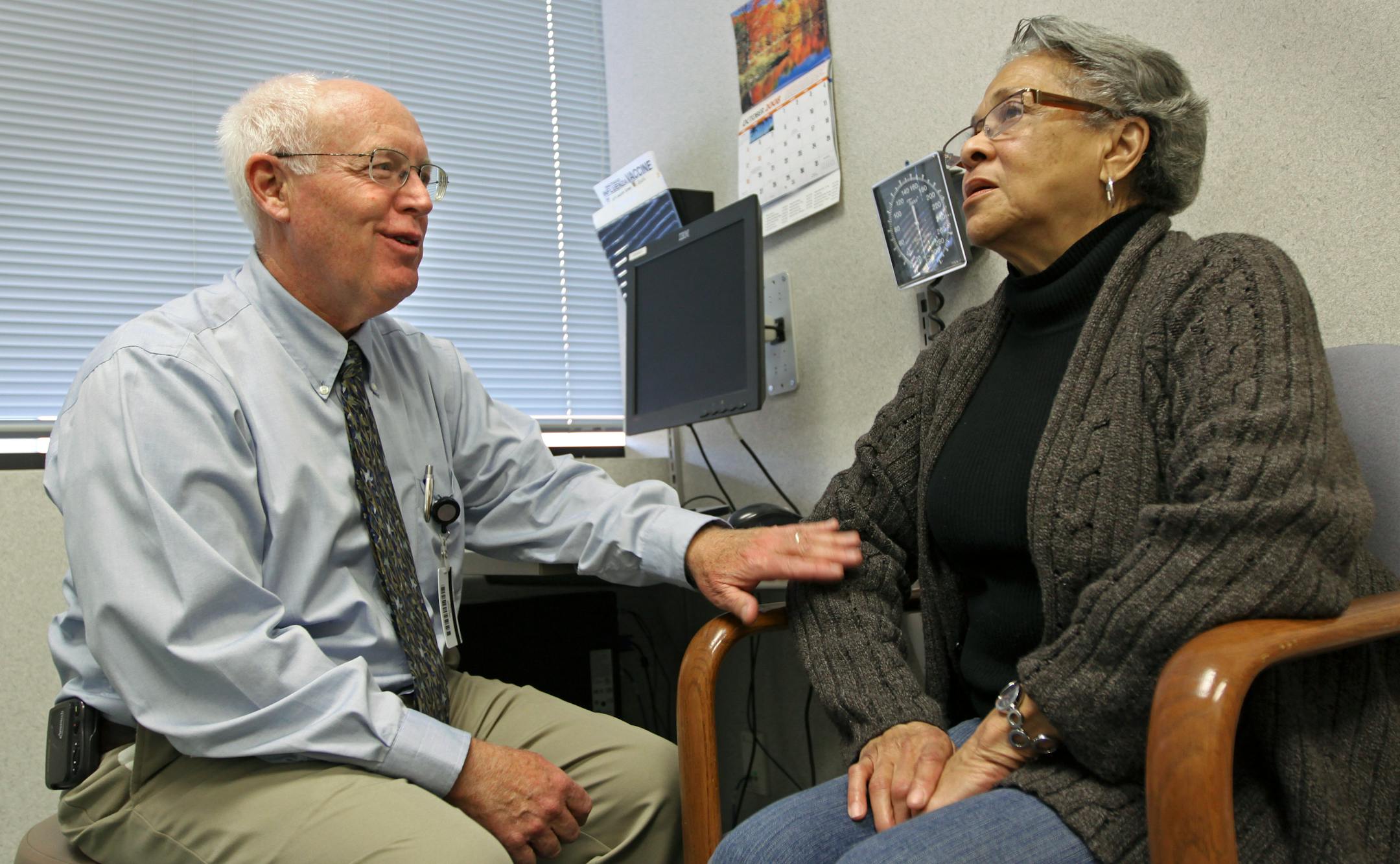
Are you young, idealistic, energetic, computer savvy and looking for a job with benefits? Then Dr. Dick Adair at the ANGMA Medical clinic in Minneapolis might have the just the job for you -- care guide.
Never heard of it? That's because it's a new kind of job altogether, part of an experiment in creating a different way of caring for patients with complex, chronic diseases.
Adair, an internist at Abbott Northwestern Hospital is using a $6 million grant to find out whether a strategy that combines electronic medical records, contracts between patients and doctors, and the skills of care guides can improve health and reduce costs for the hundreds of poor, chronically ill patients who walk through his doors every month.
It's a new wrinkle in the movement to provide "medical homes" for patients. This one aims to prove that coordinating care and solving problems before they occur will save money -- enough to convince health insurers that it's worth the cost.
Adair hopes that care guides can make the whole experiment hang together. They won't need to have medical know-how. He's looking for people with good communication and research skills who can develop relationships with patients, their families and their doctors. "There is so much untapped idealism in the world," he said.
To understand Adair's challenge, consider David, a 67-year-old patient on Medicare with chronic heart disease.
One of his many doctors started him on an expensive heart drug because he got free samples provided by the drug's manufacturer. When those ran out David quickly burned through his Medicare drug benefit. Then he stopped taking the drug, in part because he was too embarrassed to admit he was too poor to pay for it. He ended up in the hospital with a serious condition.
What he didn't know is that there is a generic drug that would have cost him only $4 per month and is just as good, Adair said.