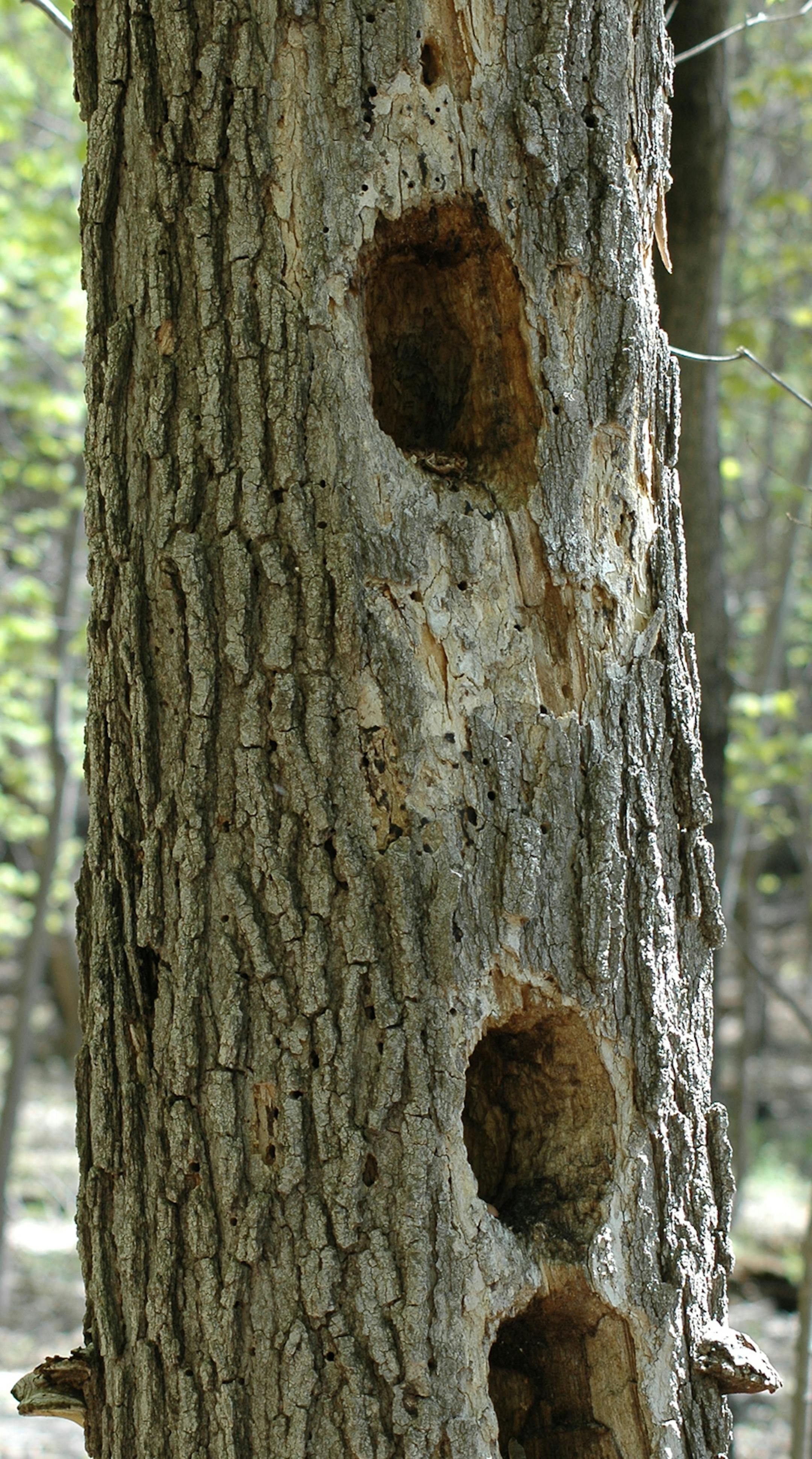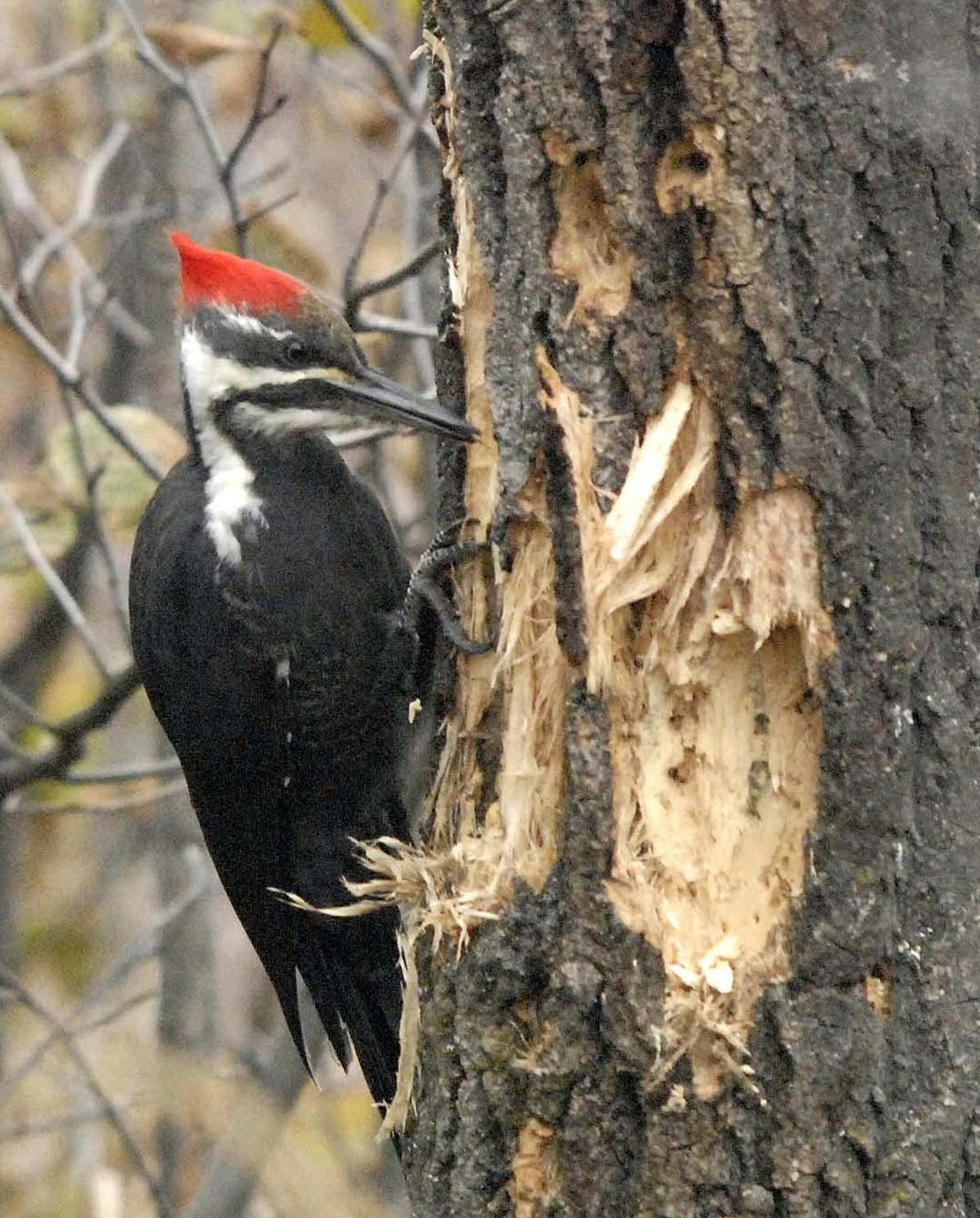
A walk in the forest, even an urban forest, sometimes reveals the strange sight of a tree that looks as if it had been bombed. Long shards of broken bark lie scattered around a trunk marked by large, deep holes.
This is the handiwork of Minnesota's largest woodpecker, the pileated, whose huge chisel beak can dramatically alter a tree. This woodpecker drills into the trunk of a dead or dying tree in search of its favorite meal, a nice, gooey ball of carpenter ants.
They're impressive birds, nearly twice as large as backyard woodpeckers such as red-bellied and hairy woodpeckers. Most of us are familiar with Minnesota's smallest woodpecker, the downy: Stack three downies, one on top of the other, and you'll have a sense for the pileated's size.
"A magnificent bird, nearly the size of a crow and nearly as black, but adorned with a flaming red crest and showing, in flight, great white patches in the wings," aptly wrote Thomas Sadler Roberts, ornithologist and first director of the Bell Museum of Natural History, in a work published in 1934.
A startled response is everyone's inevitable reaction to a first sighting of these big boys of the forest.
They fly through the woods leading with that massive beak and with long wings outstretched, creating the illusion of an even larger bird. Then they fold their wings and gracefully land on a tree trunk, and all but disappear. But wait patiently for a minute and you'll often spy the bird hitching its way upward, tapping and listening for the sounds of insects chewing away under the bark.
A 'bug bird'
Like all woodpeckers, its diet is largely made up of insects, primarily ants and wood-boring beetle larvae, small prey for such a big bird. Finding a tree chamber filled with busy carpenter ants really makes a pileated's day, and it eagerly flicks its long, sticky tongue inside to pull out balls of squirming insects.
"They're so enthusiastic about finding an ant meal that you almost feel like jumping in there to join them," a friend once joked.