

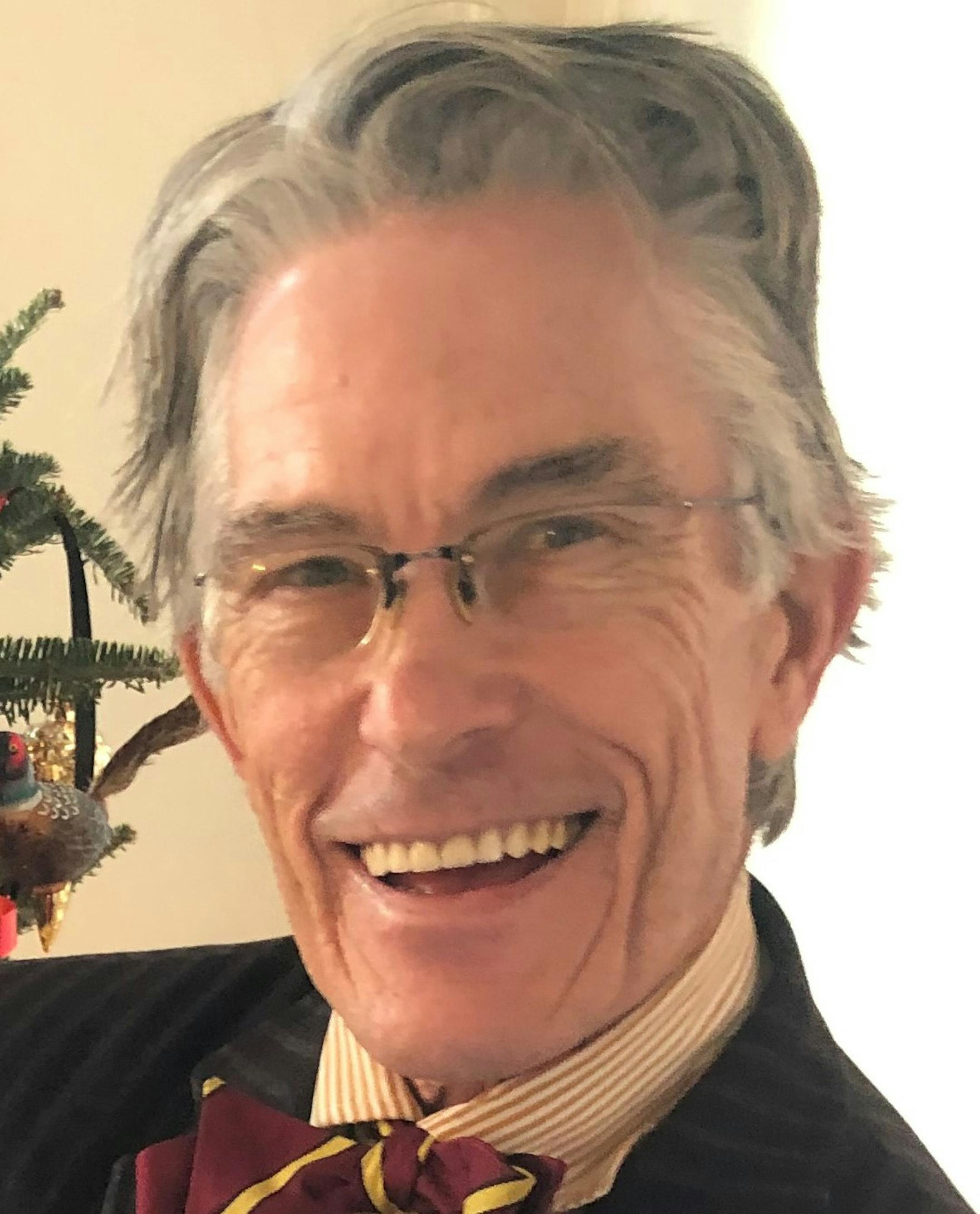
To walk around downtown Minneapolis with lawyer, business owner and humanitarian Pierce McNally was to enter a near-magical realm where city streets felt like they were being transformed into movie sets. Random photographers would sometimes stop him, trying to capture his style and verve. Doormen and security guards would see him coming and call out to him, and he would return their greetings, hailing each by name.
A bon vivant noted for his warmth and style, McNally died Dec. 16 in Wayzata after a yearlong battle with cancer. He was 71.
"Pierce always saw human beings and never looked through them," said Twin Cities attorney Lew Remele, his friend of 40 years. "That's what he gave off, and that's what people felt around him."
Trained as a lawyer, McNally made his name, and left deep impressions, through his passions. He was an adventurer who took family members heli-skiing in the Canadian Rockies. He read voraciously and smoked cigars with equal gusto. When he took up exercise later in life, it was at a similar, all-in posture. He competed in events like the three-mile Head of the Charles Regatta in Cambridge, Mass., rowing with those young enough to be his offspring.
McNally brought a similar zeal to his service on the boards of some of the organizations that make the Twin Cities an artistic, educational and cultural mecca, including the Minnesota Opera, the Minnesota Orchestra and the Minnesota Historical Society.
"He was a really humble guy who would never brag about his background, but he believed deeply in treating everyone with fairness and deep respect," said his daughter Caitlin McNally Hobley, a documentary filmmaker.
That background included being born into an eminent family that included great uncle W.F. Murphy, who owned the Minneapolis Tribune before selling it to the Cowles family. His family also started WCCO. McNally's father, William J. McNally, was a marquee writer for the Tribune who also crafted plays produced on Broadway.
"He had a sense that to whom much is given, much is expected," his daughter said. "He was not judgmental, but he based his interactions with people on character, not on status."


