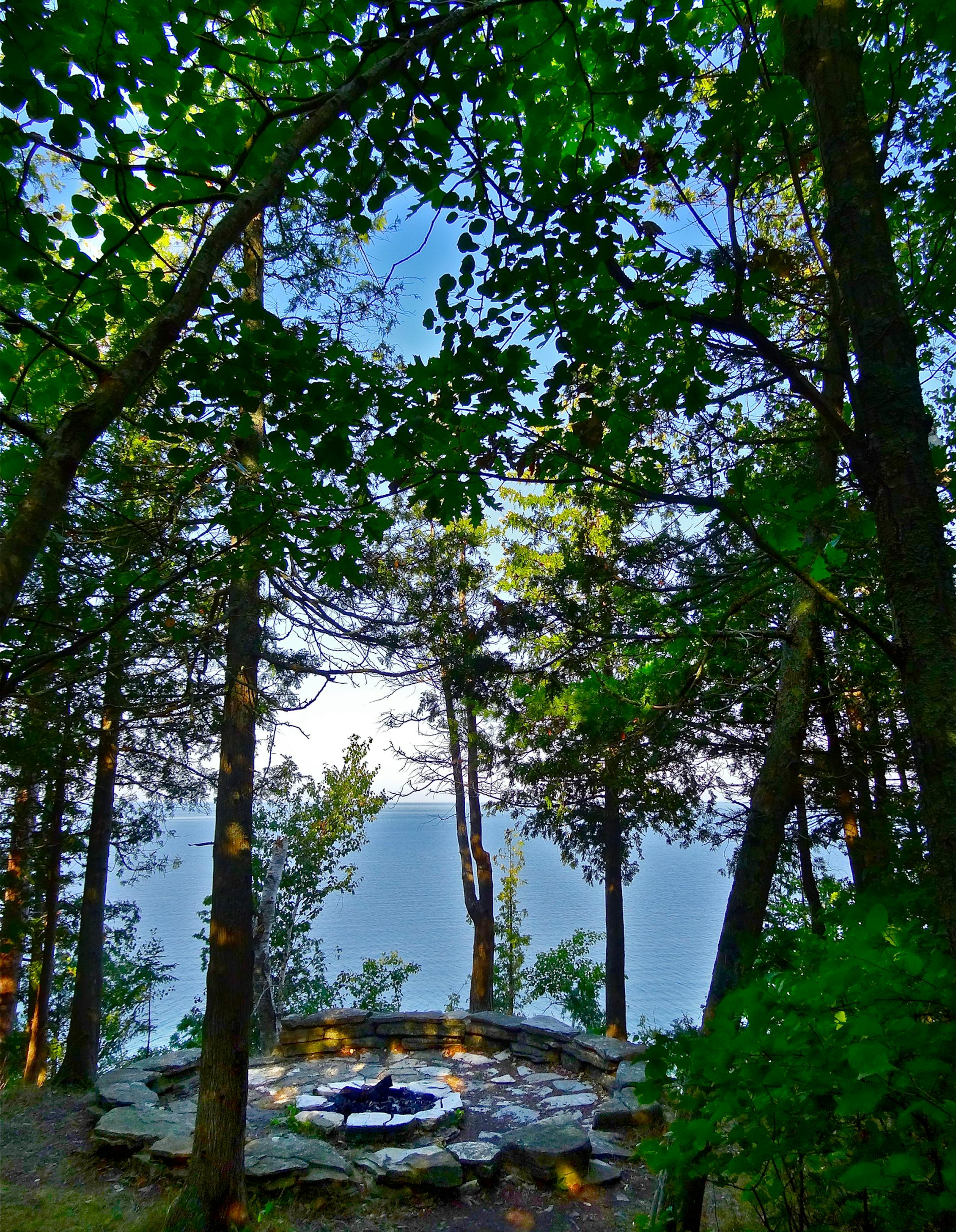
Lake. Woods. Meadow. It seems that city dwellers are always yearning for quiet places that remind them of fundamental truths. I'm no exception. I grew up in Milwaukee, and trips to Door County, known as "the Cape Cod of the Midwest," presented themselves as paradise. My childhood memories of it were preciously few trips with my mother and aunt, and later girlfriends, which often included walks through towns tucked into coves with names like Egg Harbor, Sister Bay and Fish Creek. There was always the shoreline, the fields of wildflowers, lighthouses — and escape and discovery.
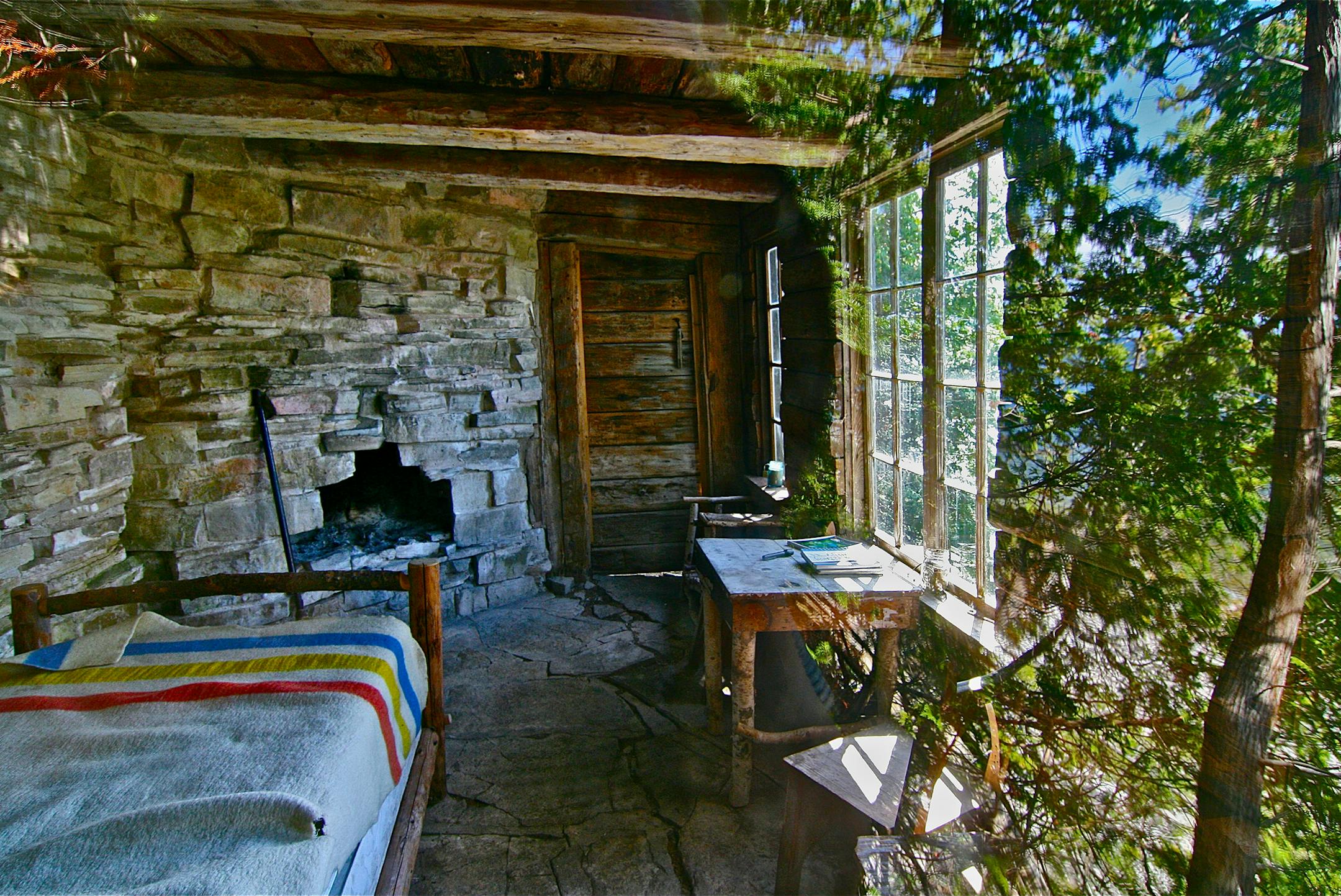
Fast-forward 40 years, and I longed to return. Looking through recommended sites online, I found the Clearing Folk School in Ellison Bay near the tip of Door County, the skinny peninsula that juts out from Wisconsin's eastern coast, deep into the blue waters of Lake Michigan. I glanced at the school's offerings of art classes, primitive and not so primitive art forms like woodcarving or watercolors. A photography class, specializing in architecture, got me excited. I'd been shooting structures since my early days in college with view cameras, medium formats, and single lens reflexes. When I saw the century-old log cabins they offered students as dorms, I knew that attending a folk school was no longer a "someday" activity. I imagined myself traipsing through the barnyards and beaches with my tripod, lens and cameras with the quiet joy of completing something on a longtime wish list.
Our mission with the weeklong photography class was to shoot architecture of the area, from long-established cabins made of timber and log to the more modern getaway of a Danish architect. We traveled from town to town, shooting homesteads, white churches, farms and art galleries. In essence, we took the bones of Door County and put them onto our digital discs. Torn lace curtains, old buggies, metal bells, carved gates and paintbrushes filled our lenses, just as they would a visitor's eyes as they traversed the landscape of this art- and nature-filled peninsula.
Our seven-member class was diverse. Some fixated on the intricacies of their high-powered digital camera software, while others were purists working only with black and white. Our ages spanned generations, along with our lifestyles, corporate to bohemian. Led by Suzanne Rose, a former Chicagoan now living in southern Door County, we shared our latest work in the classroom and began a week of nonstop hunting and gathering — the making of images.
Forays for photography
Situated on 20 acres, Craig Blietz's studio, a high-ceilinged sanctuary near Sister Bay, is home to his large canvases of cows — in repose, on the move, in portraiture. As our class roamed the space, I wandered around tables filled with paints and brushes, past large canvases clustered with cows, an occasional set of drawings. Flooded with light, the cavernous space featured ceiling beams and a whitewashed barn door that hung high beneath the pitched ceiling. The yard, with windmill, ladders, rusty troughs and sections of white picket fences, glistened in the harsh sunlight.
Among the group of churches we visited, one resonated. The Boynton Chapel in Baileys Harbor is a replica of the 12th-century Garmo Slave Chapel in Lillehammer, Norway. It is so small that we took turns going in to capture images. Its spare and simple design pulled us closer to the angels depicted with scripture on the walls. Walls were frescoed with colors and designs more akin to children's fairy tales by their owner, Winifred Boynton. The interior practically glowed from within. I paused on my way out to catch the rounded entry door slightly ajar, wood beams framing the back wall, a single lamp lit, with a tiny window above. Outside, hand-carved dragons and bears protected the property.
A Danish modern retreat designed by architect David Salmela was also on our rounds. The two-story structure was anchored in the woods, filled with multiple windows and birch-wood walls. We tiptoed throughout in our stocking feet. Black leather chairs and paper lampshades accented the rooms. A sleek bench ran across a section of the house. Rolled white towels were stacked in the sauna. Later we assembled at the back deck to shoot exteriors.
Beauty of aging places
One night I photographed the rotting picker shacks, former home to migrant workers who came to harvest cherries decades ago. I went alone. It was the "golden hour," when the sun fades and paints everything with a subtle hue that lasts only briefly. Knee-deep in weeds, I advanced carefully, trying to avoid any snakes, or holes in the ground that I couldn't see. Camera in tow, I advanced to the long rows of former homes, exteriors now bent by the wind, doors and windows missing. A few remnants remained: an old television set, an upside-down bedframe, appliances askew. I stood there in that vast field at a somewhat lonely intersection, wondering about the pickers' lives.