Chicken soup for healing and recovery. Coffee, with its heavenly smell, as a morning ritual. Colorful fruits and vegetables to bring home from a bustling market. Cake to seal a wedding celebration.
Food and how it's used to mark holidays, traditions or seasons help us cross regional and cultural divides. The scents and sights of savory delicacies draw us closer. In the Twin Cities, we glimpse a multitude of worlds, traditions and countries simply by entering a church or restaurant or grocery store along the path. These photos explore how we can all connect by sitting down at another person's table.
Hundreds help Habib Abdi and Nafisa Mohamed celebrate their wedding in Minneapolis. Following tradition, the couple fed each other a piece of wedding cake before heading to the dance floor, where guests danced until 4 a.m. (The Minnesota Star Tribune)
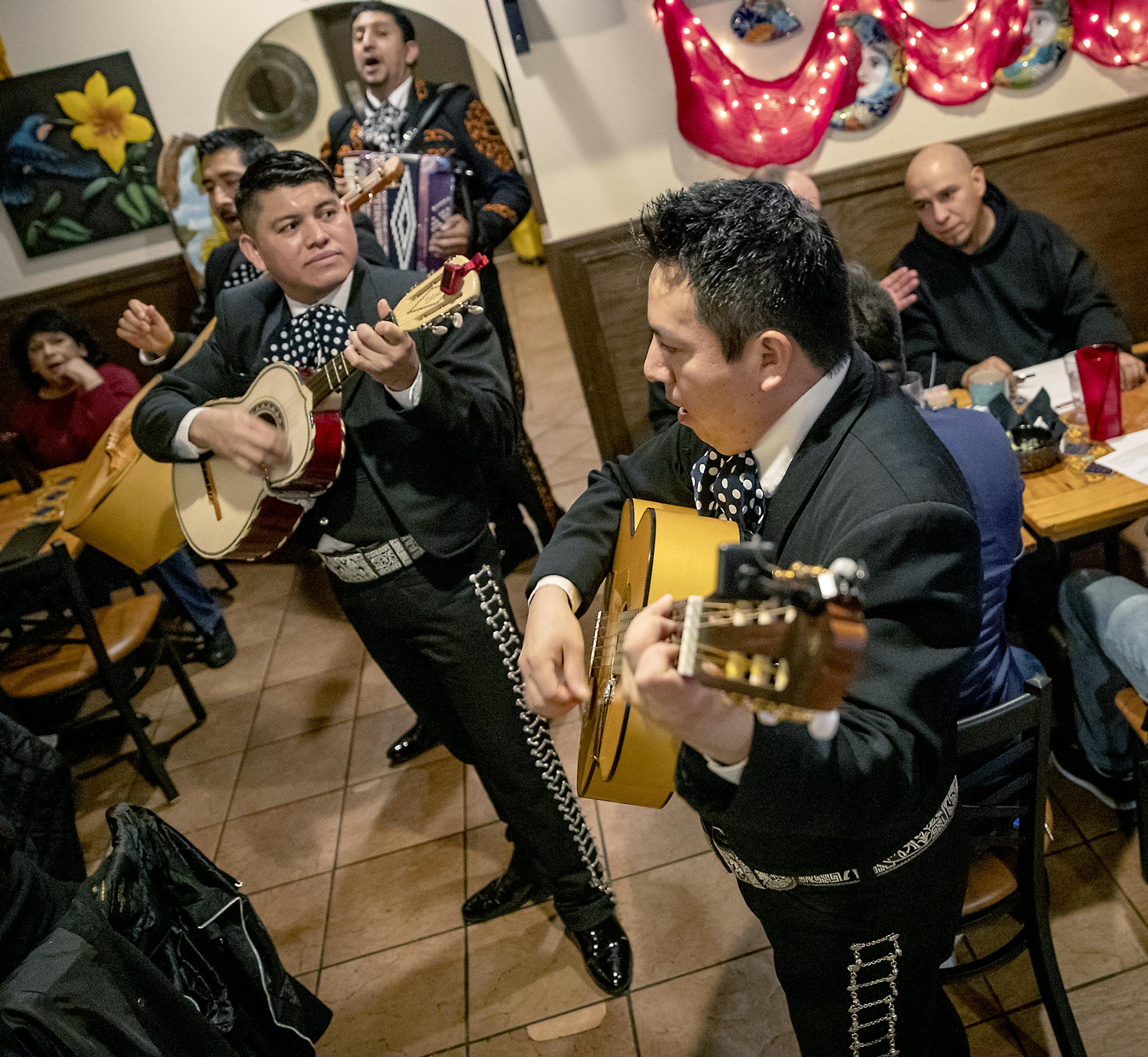
Tomas and Maria Silva have owned El Burrito Mercado in St. Paul since 1979. After outgrowing their tiny market, they opened a sprawling space nearby with a market, grocery store, cafeteria and a bar with weekly mariachi entertainment. ELIZABETH FLORES (The Minnesota Star Tribune)
Coffee plays a pivotal role in the social and cultural lives of Ethiopians. Hanna Teklu, far right, prepares fresh roasted and ground coffee in her home on Ganna, or Ethiopian Christmas, celebrated each year on Jan. 7. RICHARD TSONG-TAATARII (The Minnesota Star Tribune)
Yee Lee, top, brings daughter Joupag Lee some chicken herb soup after the birth of Joupag Lee’s son, Keng Xiong. Yee Lee says the traditional Hmong soup, called Thsuaj rau Qaib, is part of the postpartum diet and is believed to help with recovery and with health issues later in life. ELIZABETH FLORES (The Minnesota Star Tribune)
Although not members of Holy Family Maronite Church, Marilyn Carnes and Karin McComb, above, came for the popular Lebanese-style Lenten fish fry. The church, primarily made up of Lebanese American families, is in Mendota Heights. RENÉE JONES SCHNEIDER (The Minnesota Star Tribune)
Sawanree Ren, far right, brings his youngest son, Jaxson, and nephew Saiyan Ren to eat at Mandarin Kitchen in Bloomington, a favorite place to get dim sum. The family tries to dine together twice a month to remain familiar with Asian culture and food. RICHARD TSONG-TAATARII (The Minnesota Star Tribune)
The venerable Seng Bun Sang blessed the food offerings brought to the monks at Watt Munisotaram in Hampton, Minn., as part of the three-day Cambodian celebration. RENÉE JONES SCHNEIDER (The Minnesota Star Tribune)
Representing the Minnesota Indian Education Association, Miiskogihmiiwan Poupart-Chapman, 18, prepares to serve food to elders at a community feast at the Minneapolis American Indian Center. “Food sovereignty is being able to sustain yourself,” she says. RICHARD TSONG-TAATARII (The Minnesota Star Tribune)


![The handsome couple of Habib Abdi and Nafisa Mohamed fed each other some wedding cake before heading to the dance floor. ] The Somali wedding of between Habib Abdi and Nafisa Mohamed took place at the Safari Center with several hundred people in attendance till 4 in the morning.RICHARD TSONG-TAATARII ¥ richard.tsong-taatarii@startribune.com](https://arc.stimg.co/startribunemedia/OHBABF2B6TERJSG2EE6ZSMMLXM.jpg?&w=1080)
![Hanna Teklu prepares fresh roasted and ground coffee in her home on Ganna. Coffee plays a pivotal role in the Ethiopian home as a formal way of welcoming guests on an important holiday. ] Ganna or Ethiopian Christmas is celebrated on January 7th as described in the Bible .RICHARD TSONG-TAATARII ¥ richard.tsong-taatarii@startribune.com](https://arc.stimg.co/startribunemedia/LQNE7KFQVQZEM3MEBR5OGNF45M.jpg?&w=1080)
![Yee Lee held her grandson Keng Xiong as her daughter, Jouapag Lee, ate the traditional Hmong Chicken Herb Soup (Thsuaj ray Qaib) she made for her, Sunday, March 31, 2019 in Little Canada, MN. The soup is made of holistic herbs including lemongrass and chicken from a local farmer. According to Lee, the soup is a traditional Hmong 30 day postpartum diet. They believe that the soup helps in recovery and improves the production of milk and helps with later-in-life health issues. ] ELIZABETH FLORES &](https://arc.stimg.co/startribunemedia/KCUAAZCH2V2IV4HTTMAN6IVI5I.jpg?&w=1080)
![Marilyn Carnes and Karin McComb enjoyed a meal at the Friday Fish Fry at Holy Family Maronite Catholic Church in Mendota Heights, Minn., on Friday, March 22, 2019. They do not go to this church but they came for the famous Lebanese style fish fry. McComb is holding traditional Lebanese flatbread. The entire church was packed with people eating and doing lines. The church is a Lebanese Catholic Church. Most of the families are second or third generation Lebanese Americans. ] RENEE JONES SCHNEIDER](https://arc.stimg.co/startribunemedia/RFN36LD73JLJCAMDJ5JFUBBWT4.jpg?&w=1080)
![With his nephew Saiyan Ren part of the dining experience, far left, Sawanree Ren enjoys bringing his youngest son Jaxson,5, to eat dim sum . The family tries to dine out together twice a month so that they can remain familiar with Asian culture and food. ] Mandarin Kitchen is one of the favored dim sum spot in the Twin Cities where families come find their favorite dumplings. .RICHARD TSONG-TAATARII ¥ richard.tsong-taatarii@startribune.com](https://arc.stimg.co/startribunemedia/OLSF25S4TS4I4GU6UYFUDMDJGE.jpg?&w=1080)
![Venerable Seng Bun Sang put his hands on a case of beverages to bless them for the later meal as many visitors brought food offerings to the monks during the Cambodian New Year celebration at Watt Munisotaram Temple in Hampton, Minn., on Sunday, April 14, 2019. At his left is Venerable Moeng Sang. ] RENEE JONES SCHNEIDER ¥ renee.jones@startribune.com](https://arc.stimg.co/startribunemedia/5E2IID4JFTMGTKPXKC4RN4Y2AA.jpg?&w=1080)
![Miiskogihmiiwan Poupart-Chapman, Ms. M.I.E.A.( Minnesota Indian Education Association) for 2018-19 got in line to get food to serve elders. The community feast was prepared by Brian Yazzie, a Native American chef who incorporated wild rice from White Earth, and organic ingredients in the feast of turkey and salad. "Food sovereignty is being able to sustain yourself," said the 18-year old from Lac Du Flambeau, Wisconsin who has volunteered with Dream of Wild Health.] Community feast at Minneapoli](https://arc.stimg.co/startribunemedia/JU32QH2CIGDRFGF4AYB4S2H2Y4.jpg?&w=1080)


