

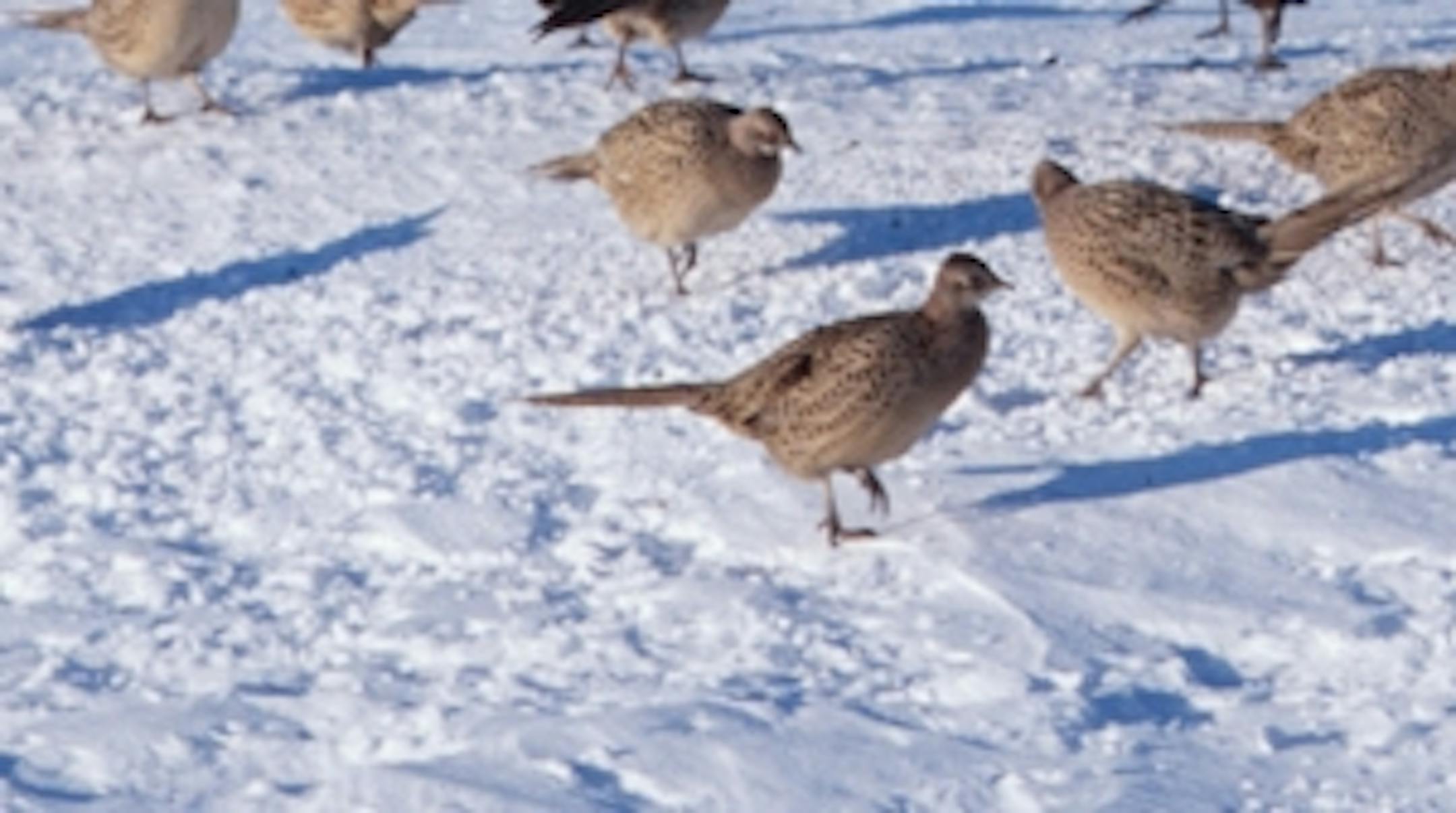
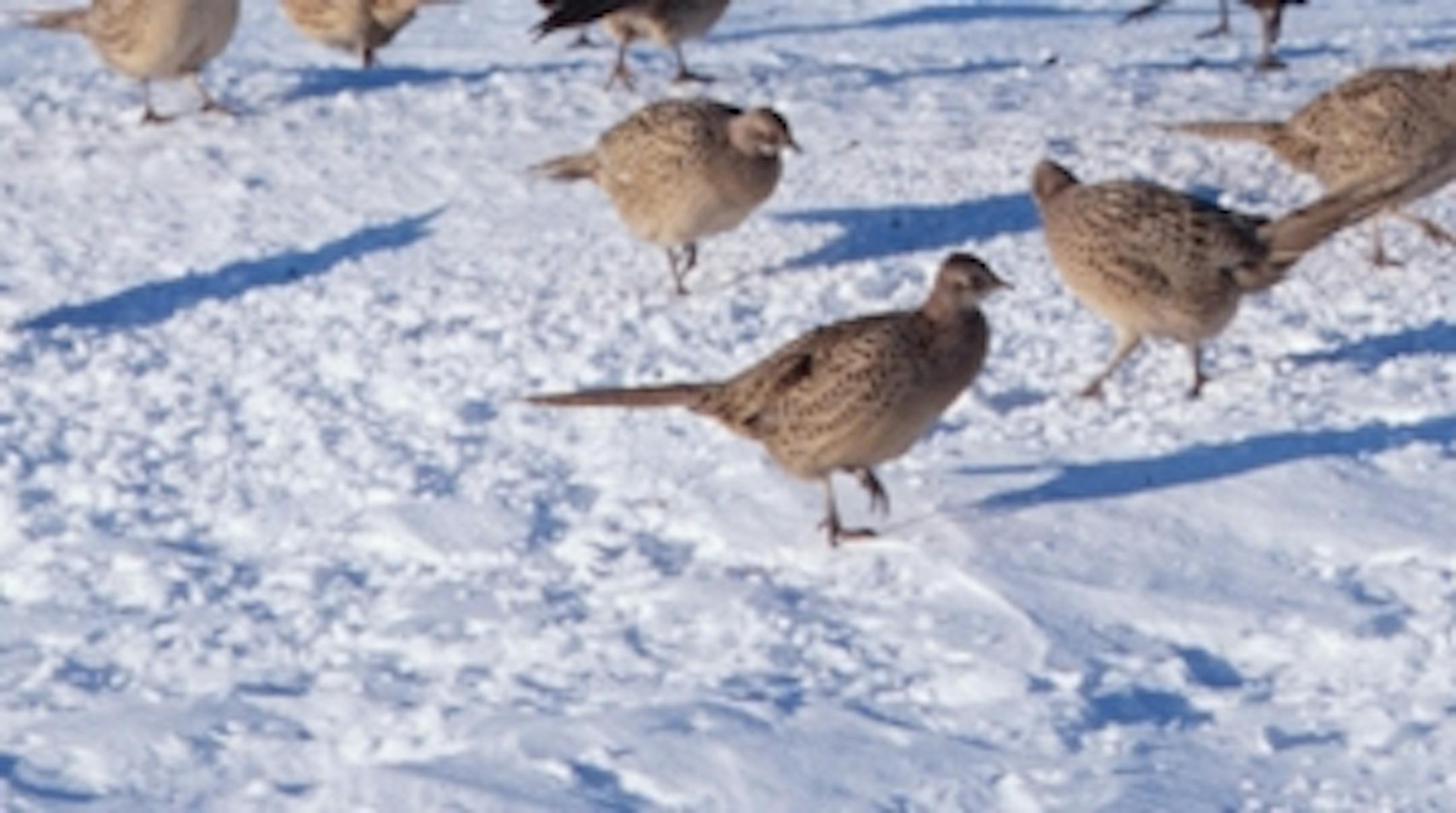
Inevitably, there will come a time – whether it's on an elevator, at work or in chatting with the cutie at the bar – when the conversation will turn to pheasants, winter and why roosters and hens group up separately in the winter. When that moment strikes, be prepared. According to reputable Pheasants Forever wildlife biologists, the short answers are: •Roosters are larger than hens and more capable of aggressively defending a limited food supply. •Rooster plumage is more striking than that of hens, and hens can more easily blend into the surrounding - hence the appearance that hens and roosters are segregated. •Roosters like to go where they won't get shot. If they haven't been disturbed in some time there will be larger concentrations. But if that cutie is really into you and has nothing but time, it's time to go with the full-assault answer. "The full answer is different for the two distinct seasons - breeding season and every other time," says Ron Leathers, Pheasants Forever's Director of Public Finance, a wildlife biologist by trade. Ron's full answer to me also included the words polygynous, dimorphism and precocial, but unless the bar maiden is taking wildlife biology at South Dakota State, let's not go down that road. Here's the rest of Ron's breakdown: During Breeding Season - Pheasants have adapted such that hens and roosters rarely interact during the breeding season except to breed. Once a hen is bred, she goes off to lay eggs and care for chicks who are hatched "ready to go" and don't require participation from 2 parents to thrive (chicks catch and eat their first meal within 2 days of hatching). Roosters are too interested in the next un-bred hen to spend any time hanging around a hen that he just fertilized or his offspring. During the Rest of the Year – Food is typically the limiting resource during the non-breeding season. Where sufficient food sources exist you will see hens and roosters feeding together, that is, assuming you see the hens. Where food is scarce, roosters will defend food sources and drive away the smaller birds - the hens - to maximize their own fitness for the next breeding season. Ultimately, we need adequate nesting cover to allow roosters to claim territories and hens to find quality nesting site for the breeding season, and we need to provide thermal habitat that includes well-placed winter food sources which will allow hens to enter the following breeding season in better condition - improving her chances of success. As for your chance of success with said guy/gal at the bar, you may want to seriously consider your options before you go down this conversation road.

