Pheasants: Through the years

October 7, 2015 at 12:42AM
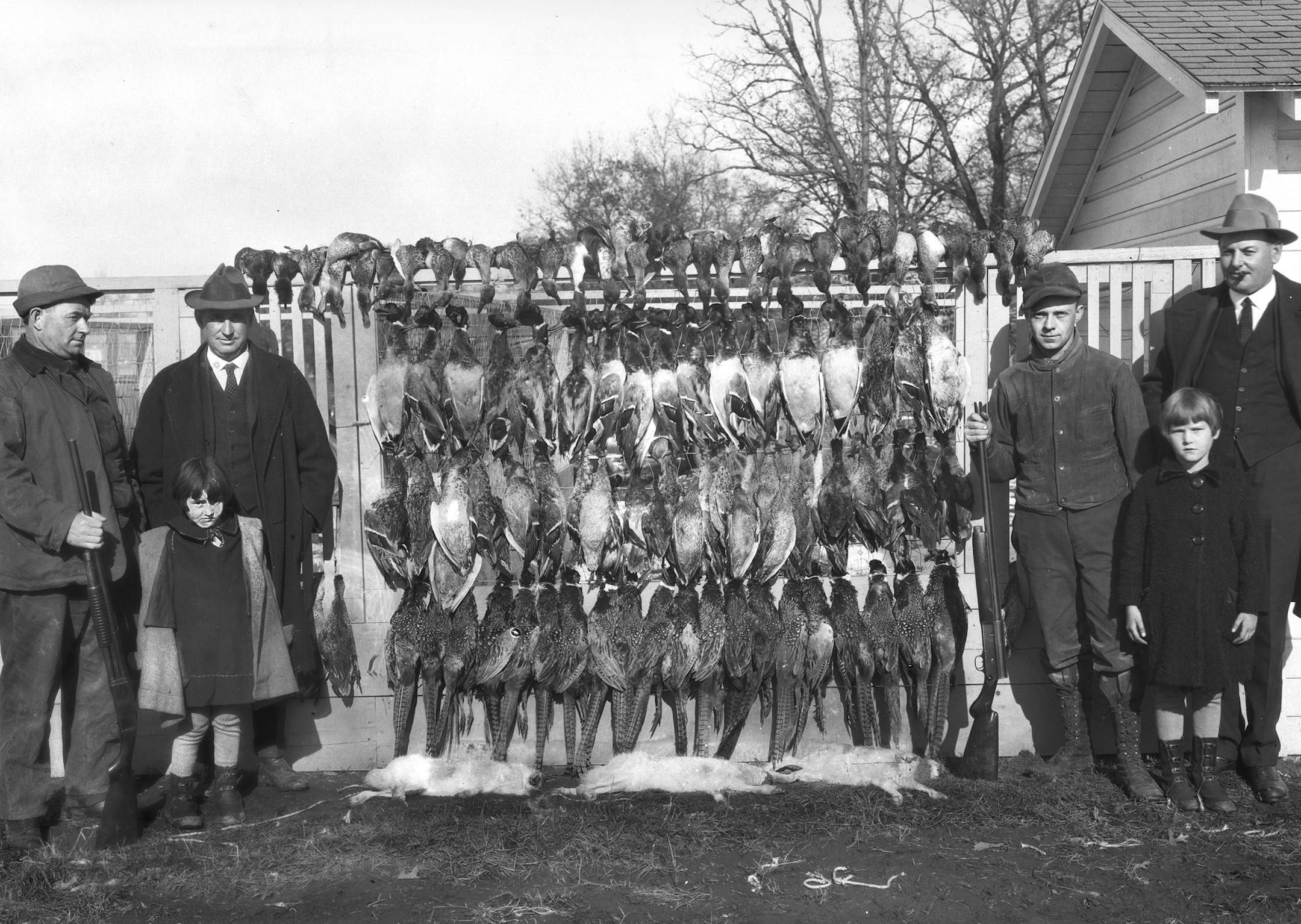
These unidentified hunters posed with ducks, pheasants and rabbits they bagged in 1924. The Minnesota pheasant season that year was just four days, and the daily bag was three birds, so these fellows might have had some help shooting all of those ringnecks. Photo courtesy Minnesota Historical Society. ORG XMIT: Documentation
Four unidentified hunters posed with ducks, pheasants and rabbits they bagged in 1924. The Minnesota pheasant season that year was just four days, and the daily bag limit was three birds. (The Minnesota Star Tribune)

When tens of thousands of Minnesota hunters go afield Saturday for the pheasant season opener, they will continue a tradition that started modestly 91 years ago.

Imported from China, pheasants were first brought to Minnesota in 1905, when the predecessor to the Department of Natural Resources released 140 birds.

It's been a roller-coaster ride for pheasants and pheasant hunters ever since. The ringneck population has flourished or fallen with the addition or subtraction of habitat. And weather here, too, has been a factor in their fluctuations.

None of those initial birds survived.

But wildlife officials were persistent. By 1922, ringnecks had been released in 78 of the state's 87 counties, and some finally took hold. Minnesota held its first pheasant hunting season — just four days long — in 1924. Three hundred birds were shot.

But less than a decade later, in 1931, hunters bagged more than 1 million birds, and the hunting landscape began to change. Hunters started descending into small towns across the southern half of the state every fall. Friendships and traditions were formed.

Most years, there were birds aplenty. From the 1930s until the early 1960s, hunters often shot 1 million pheasants. Of course, many more Minnesotans called themselves pheasant hunters then. The DNR estimates some 270,000 hunters went afield in 1961, or more than quadruple the number who hunted last fall.

Declining habitat has reduced the pheasant population in recent years, though it rebounded a bit this year, yielding hope to ringneck hunters. They've come to cherish the bird — and their time afield.
Come Saturday, dogs — and spirits — will be unleashed, and hunters will push through chest-high prairie grass in search of a bird that, though it's not native, has been accepted as one of our own.


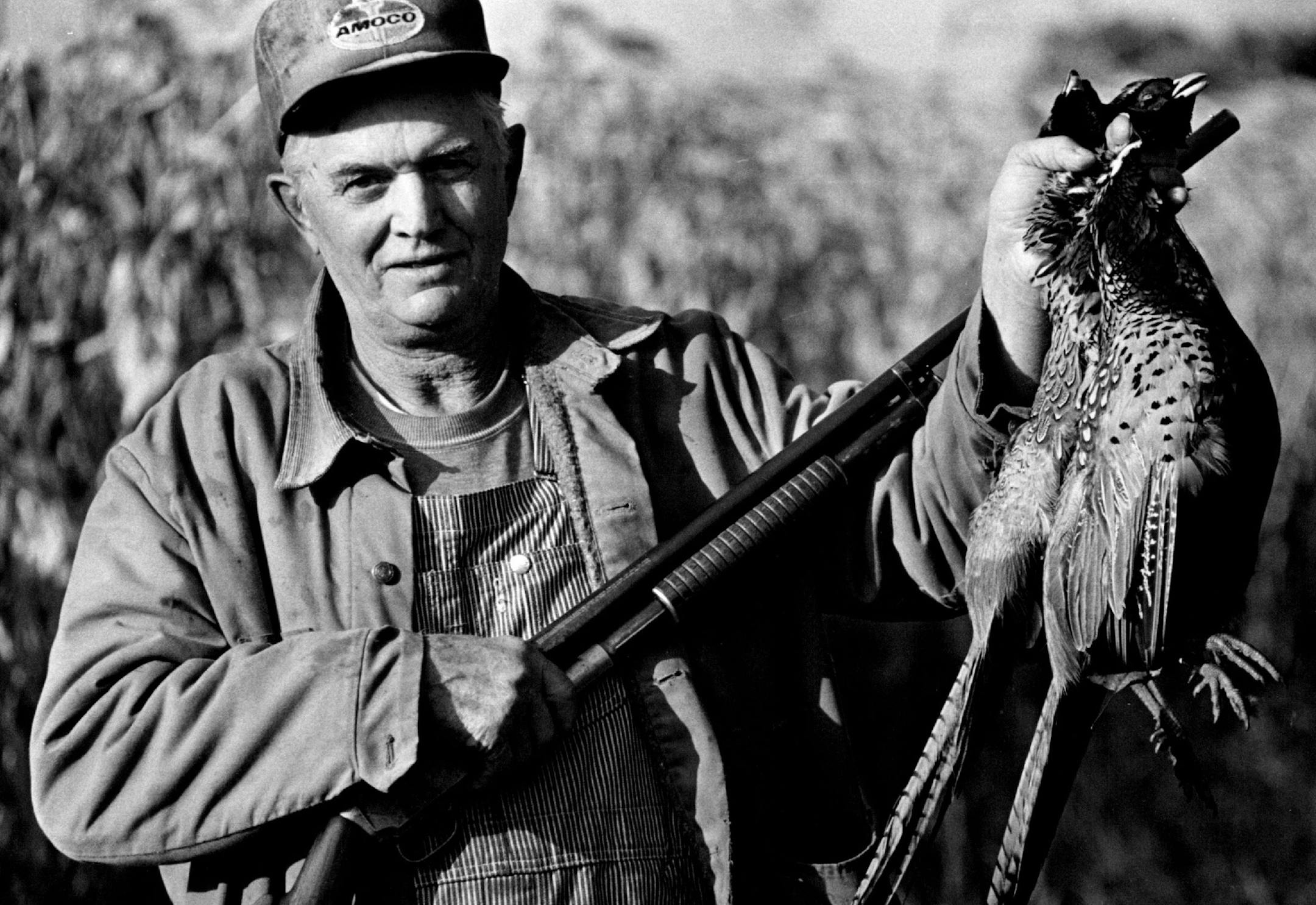
In 1982, hunters didn't have to wear blaze orange, an hunting attire was a bit more relaxed than now, as is evident in this photo. Here, Ed Larson of Wyoming, Minn., wears an Amoco hat and dungarees while bagging two roosters at Carlos Avery wildlife area near Forest Lake. October 22, 1982 Mitch Kezar, Minneapolis Star Tribune ORG XMIT: MIN2015100609553120
In 1982, hunters didn’t have to wear blaze orange. Ed Larson of Wyoming, Minn., wore dungarees while bagging two roosters near Forest Lake. (The Minnesota Star Tribune)
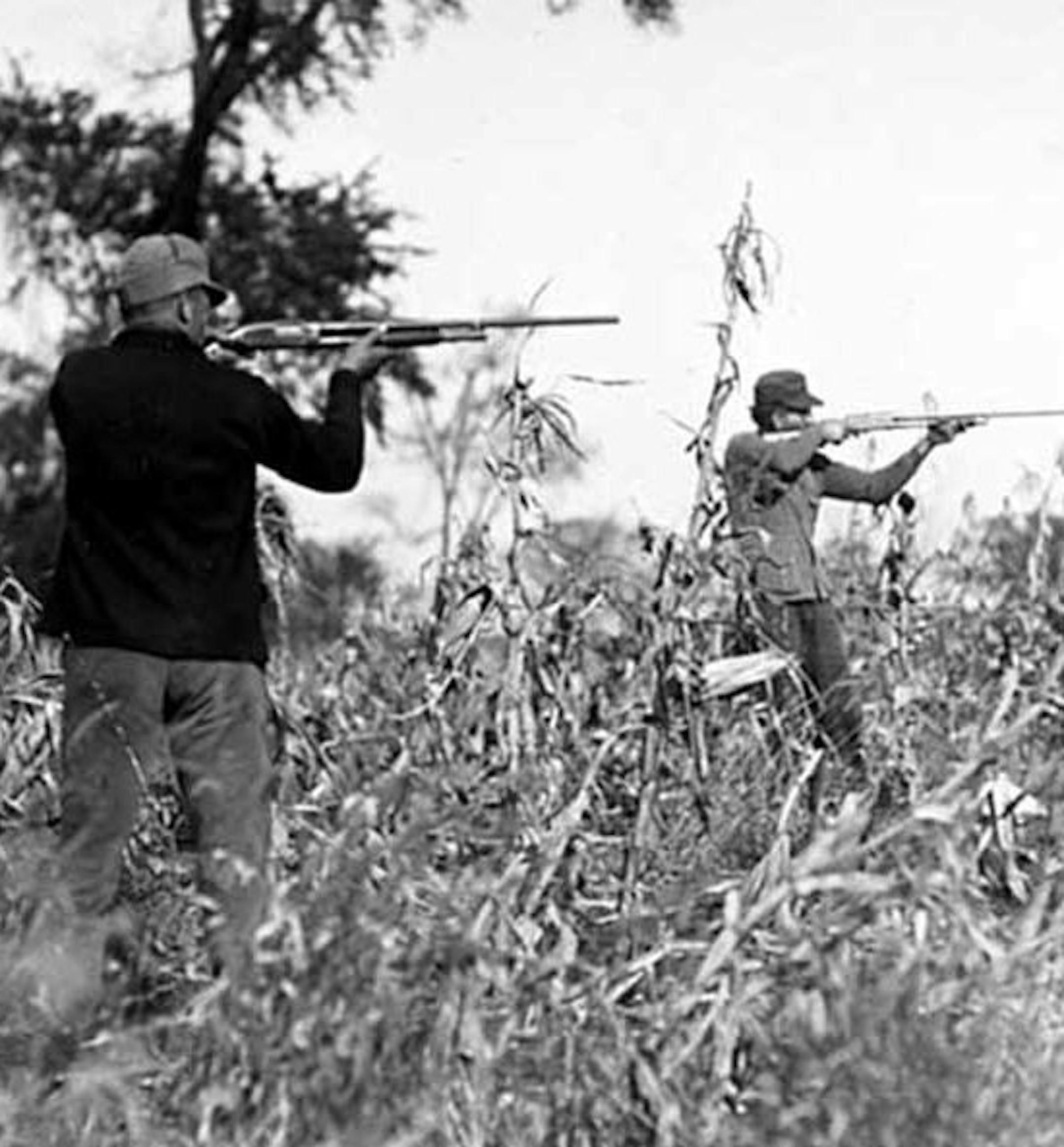
Pheasant hunters in a cornfield circa 1924. Photo courtesy Minnesota Historical Society.
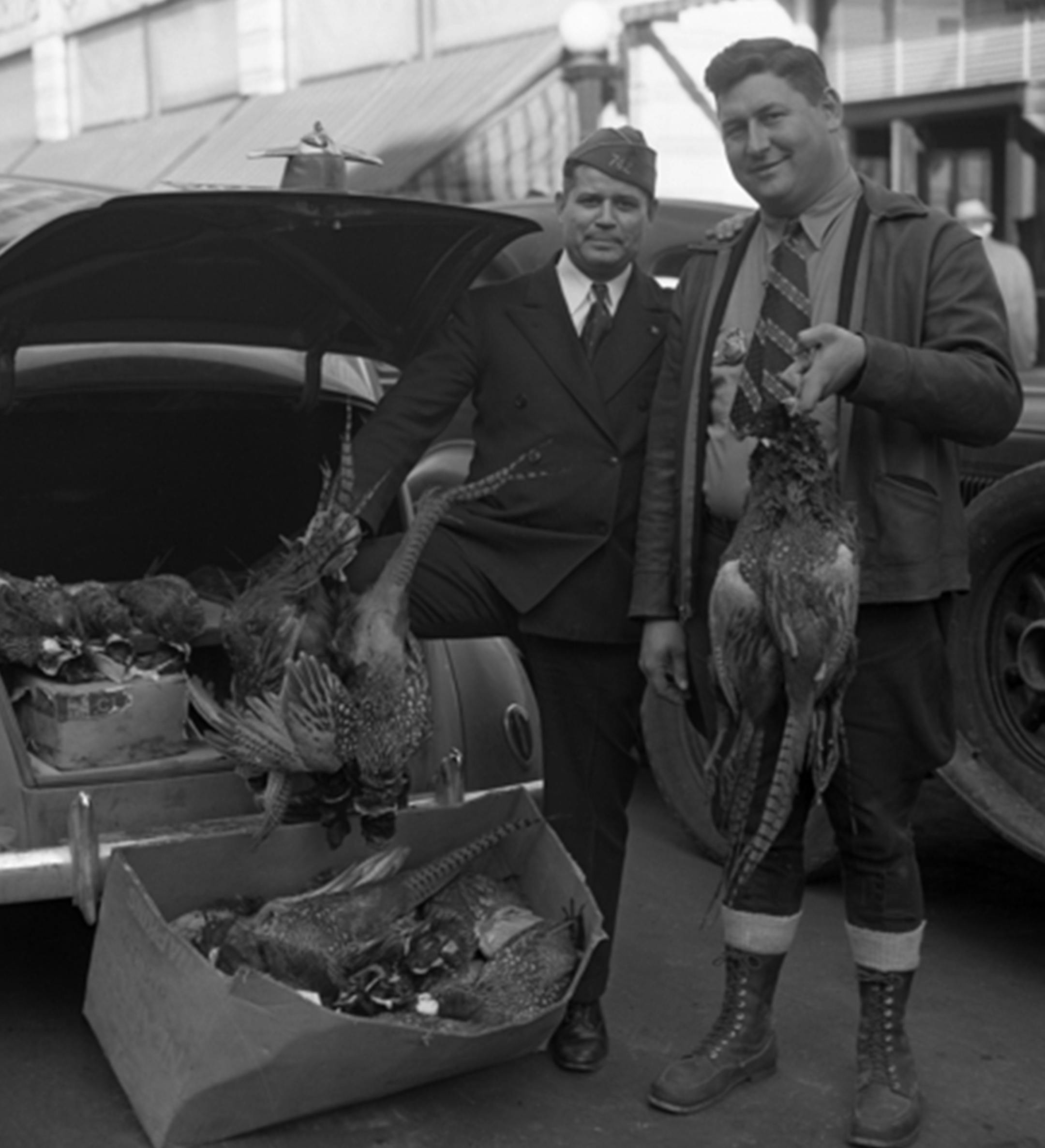
Two hunters arrived home with a trunkful of pheasants in 1938. (The Minnesota Star Tribune)
Two hunters arrive home with trunkful of pheasants in 1938. Photo courtsey Minnesota Historical Society
Two hunters arrived home with a trunkful of pheasants in 1938. (The Minnesota Star Tribune)
about the writer

about the writer

DOUG SMITH, Star Tribune