

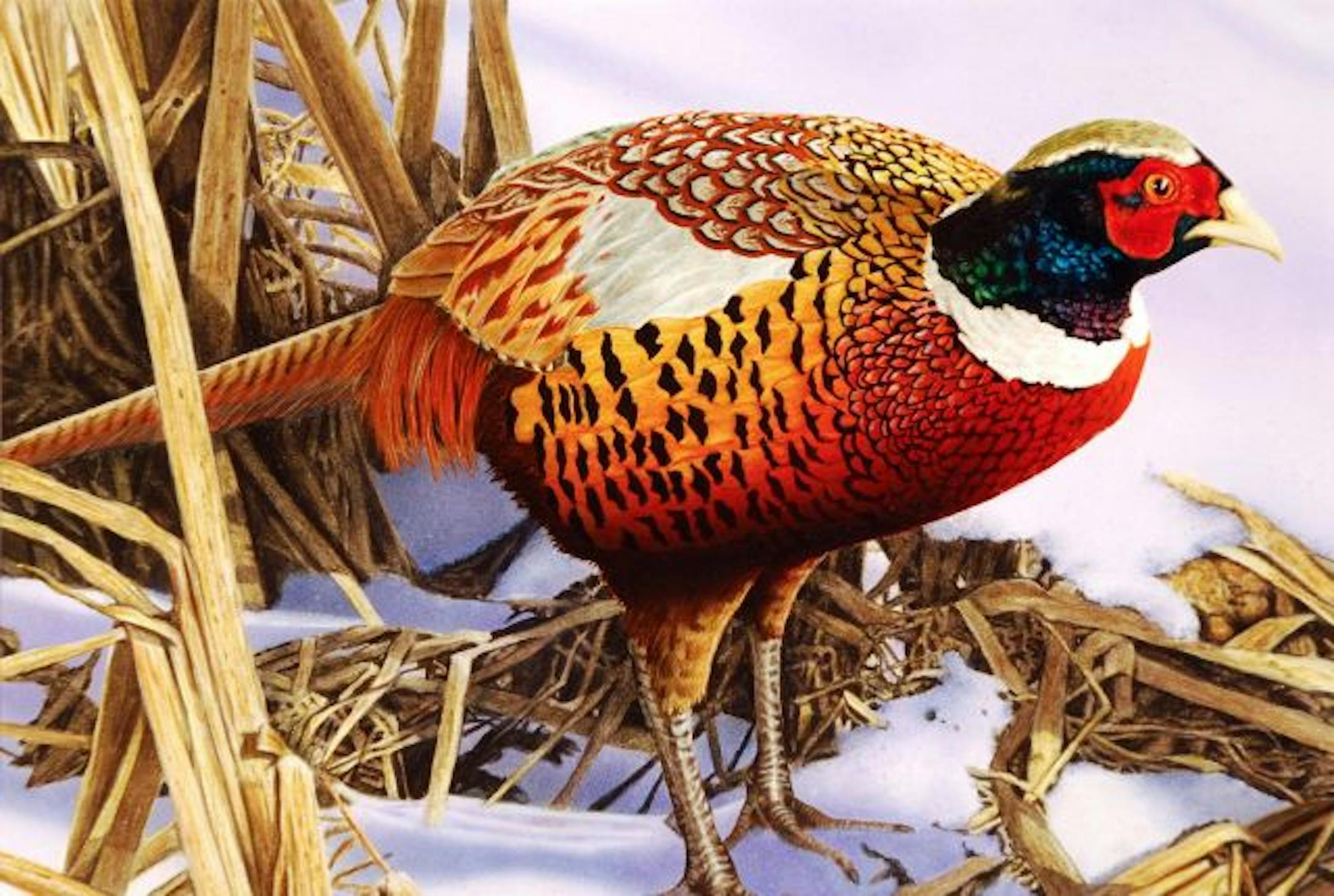
Fifteen fun facts from pheasant land that might boost a hunter's fortunes afield Saturday when Minnesota's 2010 ringneck season opens amid predictions of a 400,000-bird harvest similar to last year's.
1 The first state to offer a pheasant season was ... South Dakota? Wrong. It was Oregon, in 1892, following the shipment 11 years earlier of 30 ringnecks from China by Judge Owen Nickerson Denny, then the U.S. consul to China. Twenty-six birds survived the journey and were released near Denny's home in Oregon's Wilmette Valley.
2 Minnesota's first season was four days long, in 1923, with a harvest of 300 birds. The next year the season was closed. But the birds multiplied quickly in the lightly (compared to today) farmed landscape of southern and western Minnesota. By 1928, the season was extended to 18 days and a harvest of 168,000 birds was recorded.
3 The state's harvest this year is expected to be about 400,000 birds, unchanged from 2009. A pleasant surprise, this, considering how severe much of the winter was across southern and, especially, southwest Minnesota. But recall that spring came early, and March was uncommonly warm. That and the apparent over-winter survival of reasonably good numbers of hens kept disaster at bay, and even allowed for slight population increases in parts of the pheasant range.
4 How devastating can bad winters be to pheasants? Consider that in 1963, 1,040,000 birds were killed by hunters in Minnesota. But a mere six years later the season was closed statewide for lack of birds -- a management decision that was controversial at the time and likely didn't repair the state's ringneck numbers.
5 In some states where pheasants are hunted, pointing breeds of sporting dogs outnumber Labradors, which is the most popular hunting dog in Minnesota. At least two reasons explain this. One is that states like Kansas have far less water and waterfowl hunting than Minnesota does, so multispecies hunting dogs such as Labs often play second fiddle to upland specialists such as setters and pointers. Another is that Labs often prevail in heavy cover such as cattail sloughs, which are plentiful in Minnesota, while setters and pointers shine in bigger, more open country.
6 Pheasants Forever (PF) was founded in St. Paul in 1982, and Minnesota still has more members -- 23,919 -- than any other state. Counterintuitively perhaps, given the severity of the recession, PF's 2010 Minnesota membership is up from 22,579 a year ago. Nationally, the group's membership grew from 117,976 in 2009 to 125,085 this year.
7 If Minnesota is No. 1 in PF members, who's in second place -- and third, fourth and fifth? Here's the order: Minnesota, Iowa, Nebraska, Illinois and Michigan.


