1:36
1:36About 30,000 Minnesota immigrants will be eligible for work permits and temporary stays on deportation under President Obama's new executive order.
That's according to an estimate from the nonpartisan Pew Research Center released Friday, the day Obama signed an order expected to allow more than 5 million immigrants without legal status to stay in the country. The Minnesota number represents almost a third of the 95,000 people Pew estimates live in the state illegally.
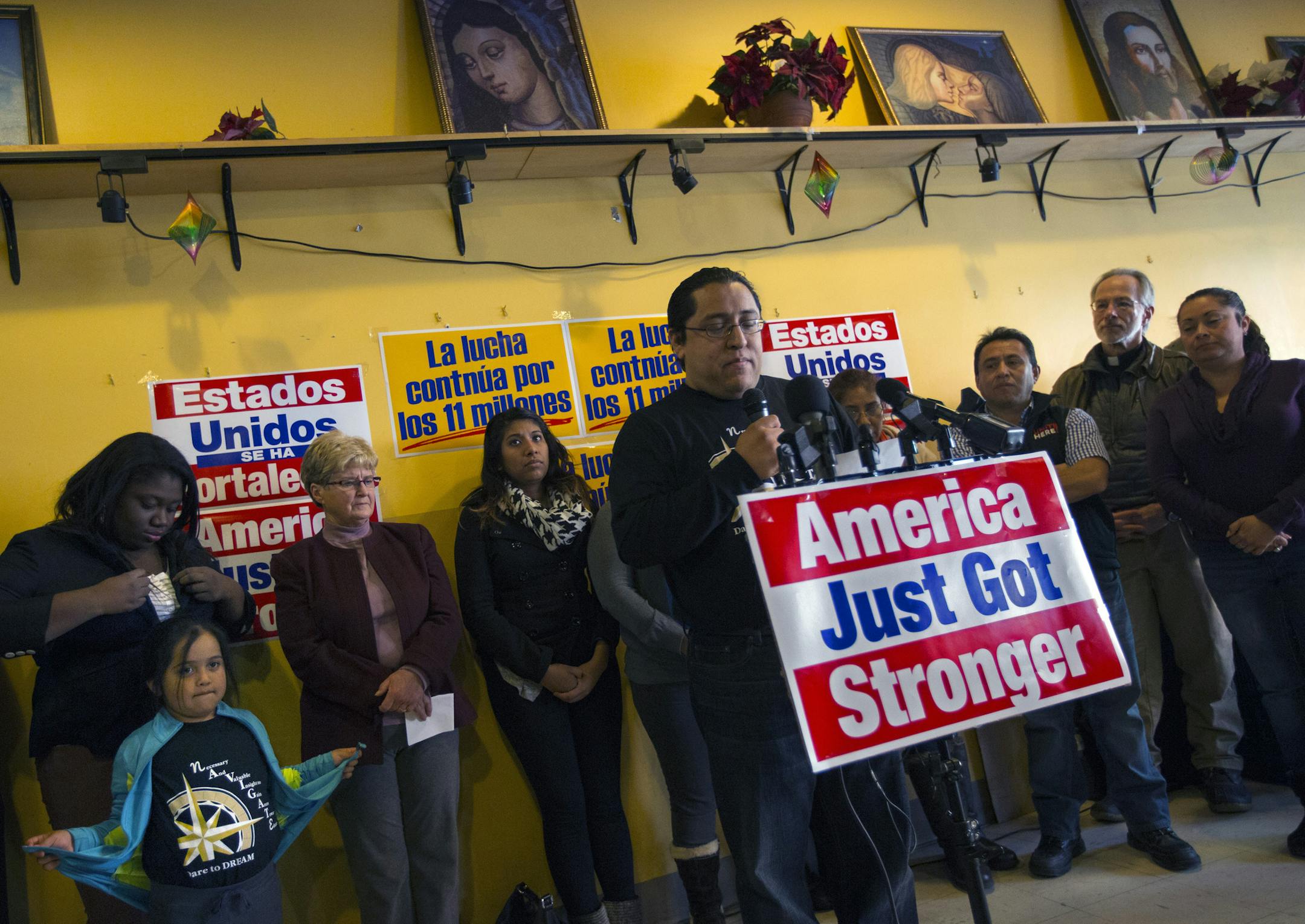
Immigrant advocates said Friday they will work to make sure that people who are eligible take advantage of the order. Minneapolis officials said the city is mounting an effort to provide information and free legal advice to residents who qualify: those who have U.S. citizen or permanent resident children and have lived in the country more than five years, as well as immigrants brought to the United States as children.
"We have so many people who will be able to participate in our community more fully," said Barb Johnson, the Minneapolis City Council president. "The city will work to make this transition as easy as possible."
Those who qualify under an expansion of Obama's 2012 Deferred Action for Childhood Arrivals order, or DACA, will be able to start applying in three months. Parents of U.S. citizen children will begin applying in six months. They will have to pass a background check and start paying taxes to qualify.
Republicans have vowed to do everything in their power to fight the order. They denounce it as presidential overreach that gives a free pass to those who broke the nation's immigration laws in defiance of Congress.
Minnesota in the middle
Based on the latest Pew study, the percentage of immigrants in the U.S. illegally who are newly eligible for permission to stay and work in the country varies widely among states — from 44 percent in Idaho to 4 percent in Alaska, with an average of 34 percent. That puts Minnesota in the middle of the pack.
When immigrants who were eligible under the earlier version of DACA are factored in, the Minnesota percentage of eligible immigrants rises to 42 percent, or about 40,000 people in total.