3:08
3:08First, the tiger attacked the boy. Then came the lion. They bit him and dragged him, and when it was over, 10-year-old Russell LaLa would be paralyzed for life in Morrison County. Cynthia Gamble's 550-pound pet tiger Tango mauled her to death in her Pine County barnyard. In Mower County, a tiger burst through a gate at an animal park and snatched 7-year-old Emily Hartman in its jaws, inflicting serious injuries.
"You can believe they're just like a big teddy bear, but they're not. There's no margin for error with a predator that big," said Morrison County Sheriff Michel Wetzel, who remembers the horror that night when Russell was attacked at an auto business south of Little Falls in 2005. "From a safety perspective, those cats and any large predator is a time bomb. If you mishandle [one] or are negligent, it's only a matter of time until somebody gets hurt or killed."
It's been eight years since a state wildcat law was enacted to stop the mounting threat to public safety in Minnesota. No violent attacks have occurred since Gamble's death in 2006. Far fewer cases of private ownership are being reported to authorities. And at Minnesota's only accredited wildcat sanctuary, calls for help from owners, law officers and veterinarians have plummeted.
The law stopped short of an outright ban, but it did prohibit Minnesotans from buying big cats after Jan. 1, 2005, and existing owners from breeding their cats. Those existing owners had to abide by new regulations that range from meeting minimal U.S. Department of Agriculture requirements to fortifying fencing, displaying warning signs and registering their animals.
Nobody's prepared to say that Minnesota's dark days of big cat attacks have ended, because anyone ignoring the law might be harboring lions, tigers, panthers, mountain lions, lynx and other "exotic" wildcats at farms and private residences.
Nevertheless, it appears that the trend in Minnesota has reversed, said Tammy Thies, who runs the Wildcat Sanctuary in Pine County not far from where Gamble was killed.
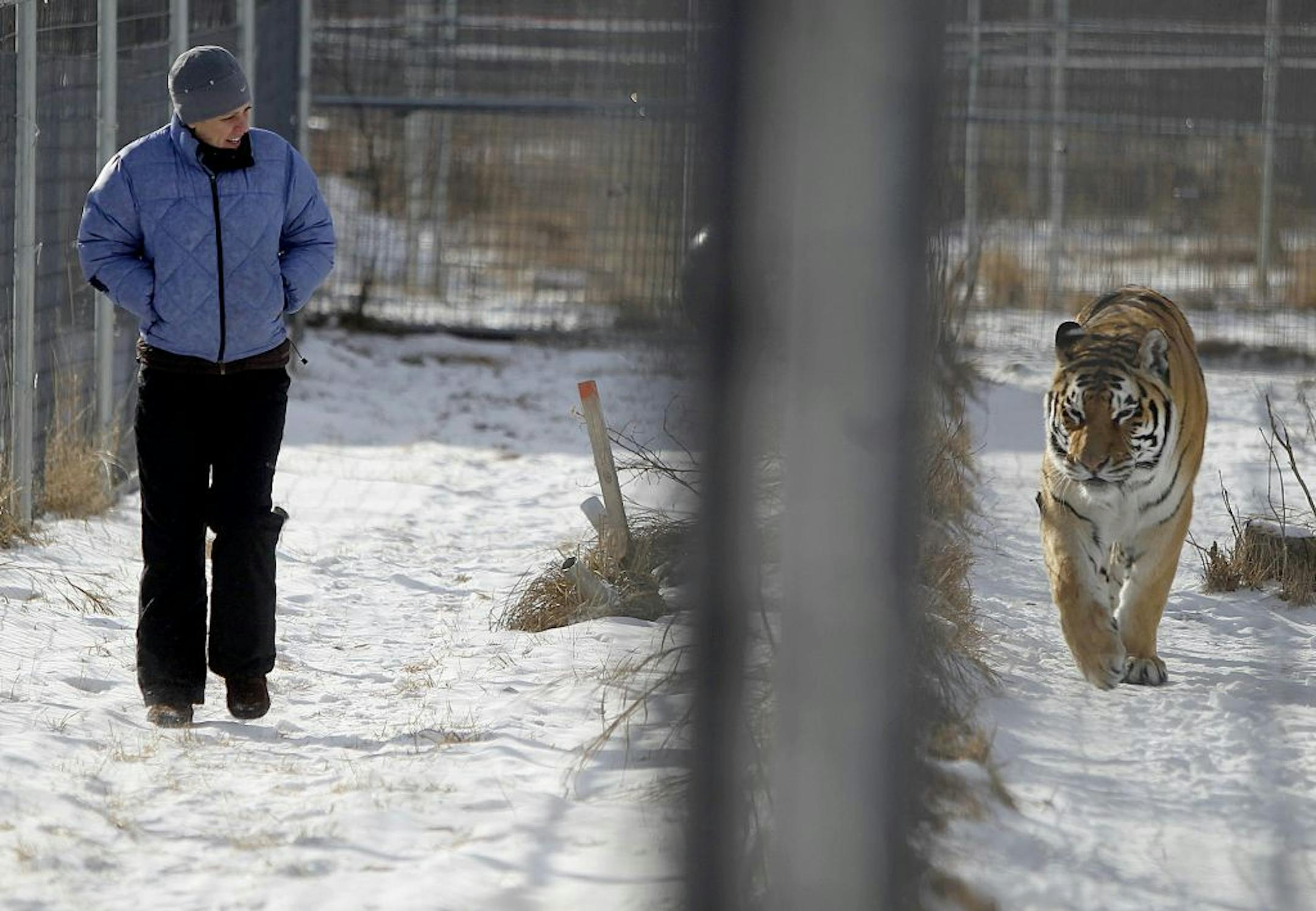
"Where there is awareness of the law, it's really decreased private ownership. I don't know how many animals we would have if we didn't have a law in place," Thies said on a frigid morning when a male lion barked a warning at visitors and two massive tigers that belonged to Gamble playfully stalked each other behind tall electric fences.
The sanctuary, down a dirt road in the woods, isn't a zoo but more of a retirement home for wildcats that have become public threats or suffered abuse.