

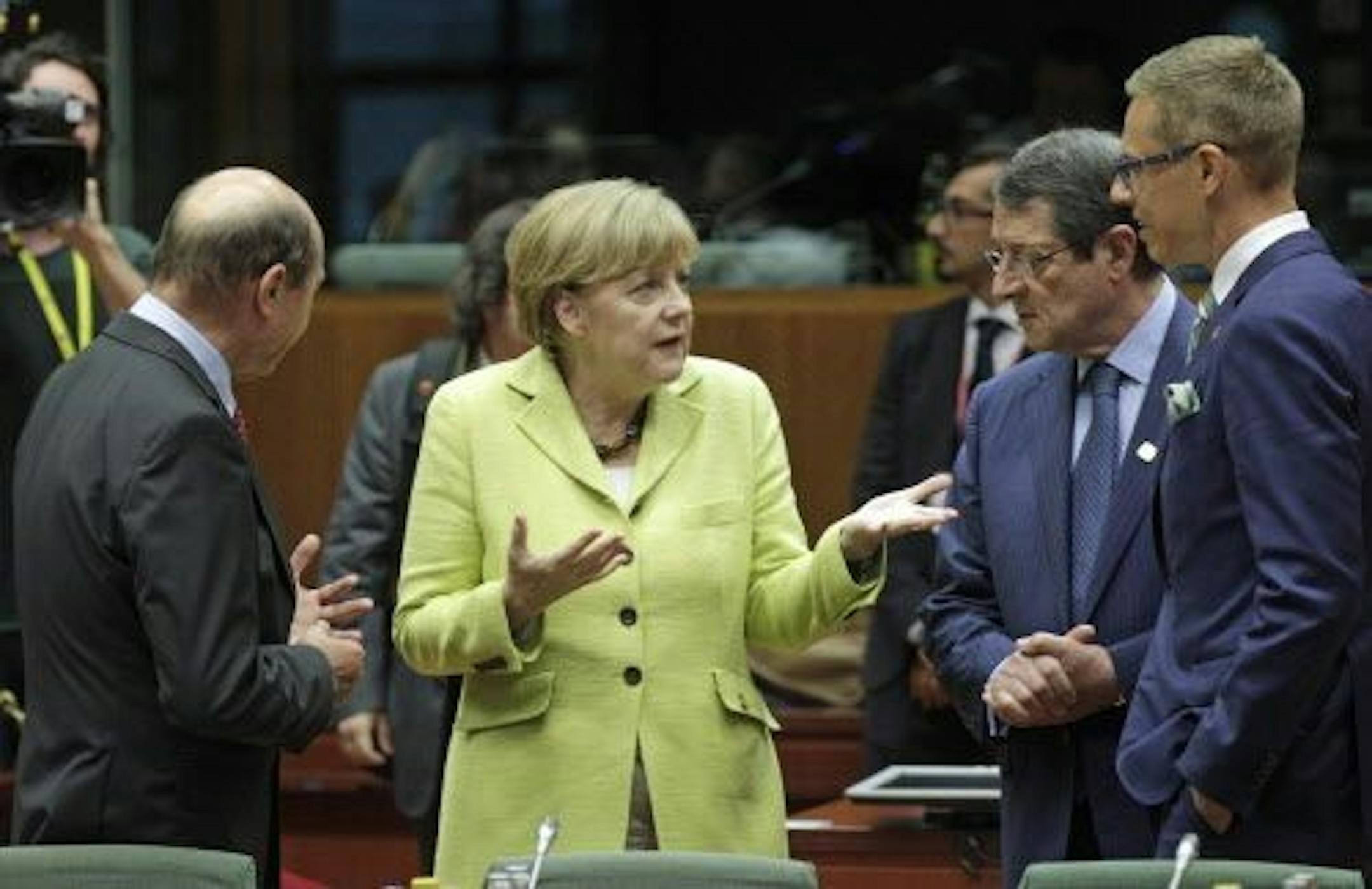
BERLIN — Chancellor Angela Merkel's emergence as a leader in efforts to resolve Ukraine's crisis — showcased by a visit to Kiev this weekend — underlines Germany's increasing ambition to transform itself from economic power to diplomatic heavyweight.
Merkel and her foreign minister, Frank-Walter Steinmeier, have put Berlin at the forefront of so-far frustrating diplomatic efforts, as many European nations focus on domestic troubles and the U.S. is engaged in crises elsewhere.
Nearly nine years in power and an unchallenged leader at home, Merkel has thrown Germany's weight behind European economic sanctions against Russia, while also keeping up months of frequent telephone diplomacy with President Vladimir Putin.
Merkel "is aware that no other institution can take on this mediation role," said Olaf Boehnke, who heads the Berlin office of the European Council on Foreign Relations, a multinational think-tank. "The Americans don't fit as mediators and ... no one else in the EU has this authority that Merkel enjoys."
Merkel's visit to Kiev on Saturday, her first since the Ukraine crisis erupted late last year, reflects Berlin's desire to show support for President Petro Poroshenko's government in the face of what the West says is Russian efforts to foment rebellion in eastern Ukraine.
It follows a trip Monday to Latvia, a former Soviet republic that like many new eastern NATO and European Union members increasingly worries about the perceived threat from Russia.
There, Merkel stressed that NATO's collective defense clause "must be brought to life" if the situation requires, but also made clear that there will be "no permanent stationing of combat troops" on the alliance's eastern edge — something that would infuriate Moscow.
That reflects Germany's balancing act of seeking to preserve Western unity while also keeping open lines of communication with Moscow, which Berlin stresses must be part of a political solution to the conflict.


