

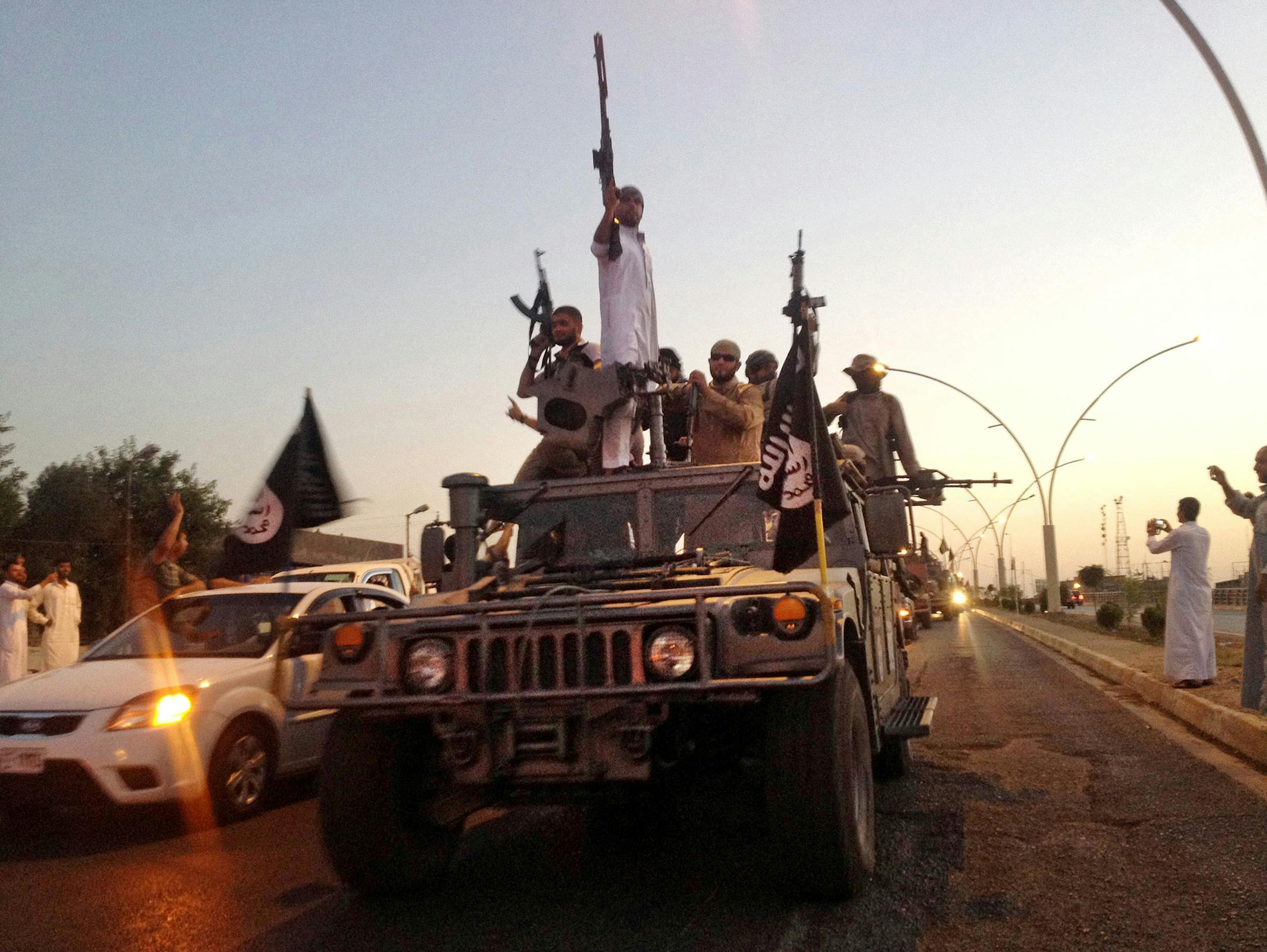
An existential struggle is taking place in the Arab world today. But is it ours or is it theirs? Before we step up military action in Iraq and Syria, that's the question.
What concerns me most about President Obama's decision to re-engage in Iraq is that it feels as if it's being done in response to some exaggerated fears — engendered by videos of the beheadings of two U.S. journalists — that the Islamic State is coming to a mall near you. How did we start getting so afraid again so fast? Didn't we build a Department of Homeland Security?
I am not dismissing the Islamic State. Obama is right that the group needs to be degraded and destroyed. But when you act out of fear, you don't think strategically and you glide over essential questions, like why is it that Shiite Iran, which helped trigger this whole Sunni rebellion in Iraq, is scoffing at even coordinating with us, and Turkey and some Arab states are setting limits on their involvement?
When I read that, I think that Nader Mousavizadeh, who co-leads the global consulting firm Macro Advisory Partners, is correct when he says: "When it comes to intervening in the Arab world's existential struggle, we have to stop and ask ourselves why we have such a challenge getting them to help us save them."
So before we get in any deeper, let's ask some radical questions, starting with: What if we did nothing? George Friedman (no relation), the chairman of Stratfor, raised this idea in his recent essay on Stratfor.com, "The Virtue of Subtlety." He notes that the Islamic State uprising was the inevitable Sunni backlash to being brutally stripped of power and resources by the pro-Iranian Shiite governments and militias in Baghdad and Syria. But then he asks:
Is the Islamic State "really a problem for the United States? The American interest is not stability but the existence of a dynamic balance of power in which all players are effectively paralyzed so that no one who would threaten the United States emerges. … But [that] does not mean that balance must be maintained directly. Turkey, Iran and Saudi Arabia have far more at stake in this than the United States. So long as they believe that the United States will attempt to control the situation, it is perfectly rational for them to back off and watch, or act in the margins, or even hinder the Americans … Absent the United States, they have no choice but to involve themselves. They cannot stand by and watch a chaos that could spread to them."
Therefore, he concludes, the best U.S. strategy rests in our "doing as little as possible and forcing regional powers into the fray, then in maintaining the balance of power in this coalition." I am not sure, but it's worth debating.
Another question: What's this war about?


