

There is no in-between with pears. Underripe and the late-fall fruit is hard, astringent and tasteless; overripe and it's gritty and bland. At peak, a good pear is one of the finest fruits, perfumed, melting and luscious.
All pears are harvested before they've fully ripened to protect their delicate nature. It's in the kitchen where they'll progress — if we're patient.
The best way to ripen pears is to set them in a paper bag with a banana. The paper allows the pears to breathe, and the banana's natural ethylene gas expedites the ripening.
Pears are capricious. Be vigilant; blink and you may be too late. Because pears ripen from the inside out, you can't judge their readiness by looking at the skin. To test, press with your thumb near the stem end and if it gives slightly, it's most likely ready.
Store ripe pears in plastic bags in the refrigerator crisper. They'll stay fresh for several days.
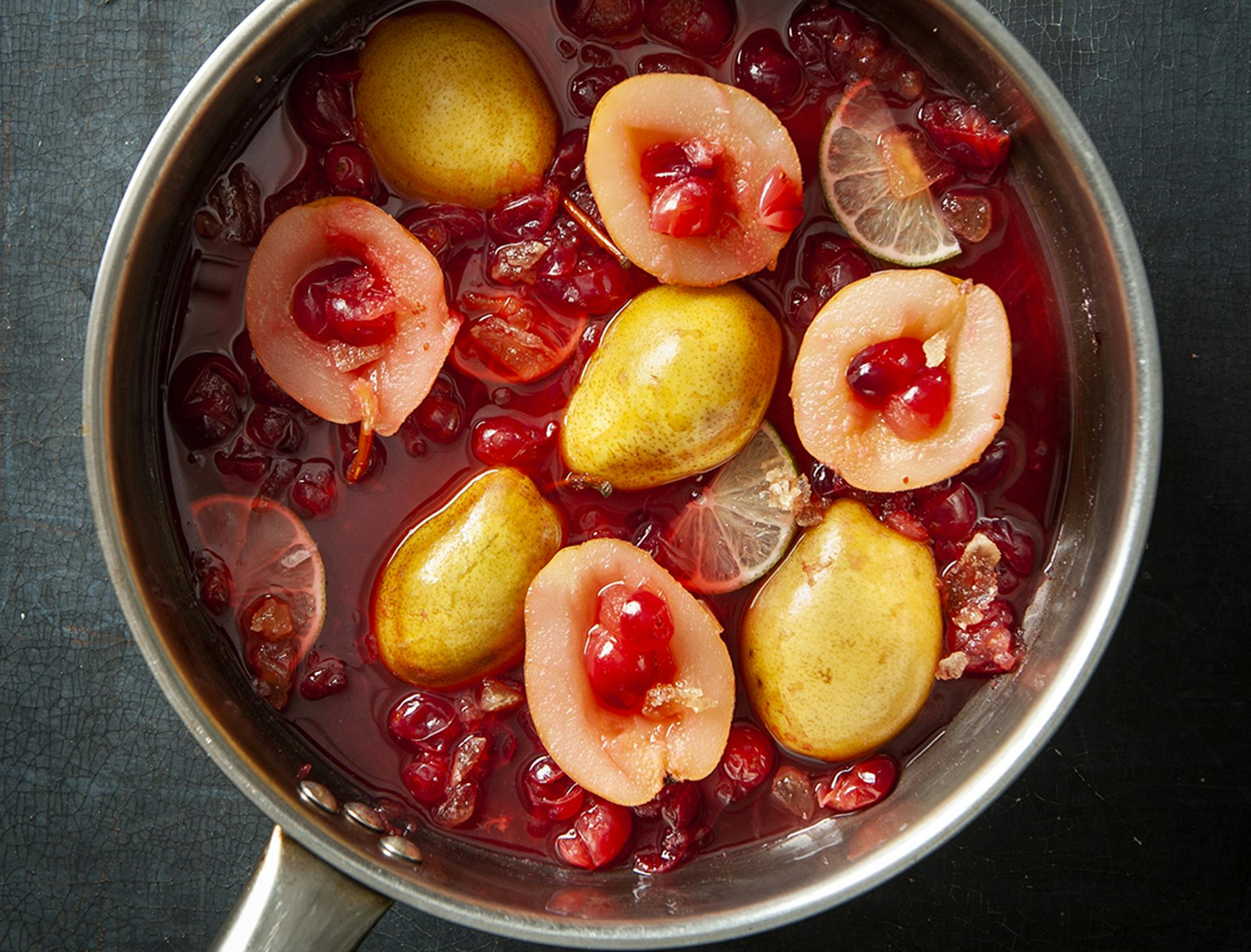
Pears are one of those rare fruits that are as delicious cooked as they are fresh, and poaching is one way to make them last. When poached, pears keep their flavor, stay juicy and become glowingly transparent. They're wonderful on oatmeal, stirred into yogurt, served alongside roast chicken, game and pork, or filled with ice cream and drizzled with chocolate. Stored in their poaching liquid, these pears will keep for a couple of weeks.
While many poached pear recipes call for peeling and cooking the fruit whole, it's easier (and just as pretty) to halve and core it unpeeled. The pears will absorb the flavor of the poaching liquid — wine, fruit juice or, in this recipe, a strong, snappy ginger ale. Once the pears are gone, simmer the leftover poaching liquid into a syrup to make the flavors last even longer.
Beth Dooley is the author of "In Winter's Kitchen." Find her at bethdooleyskitchen.com.


