

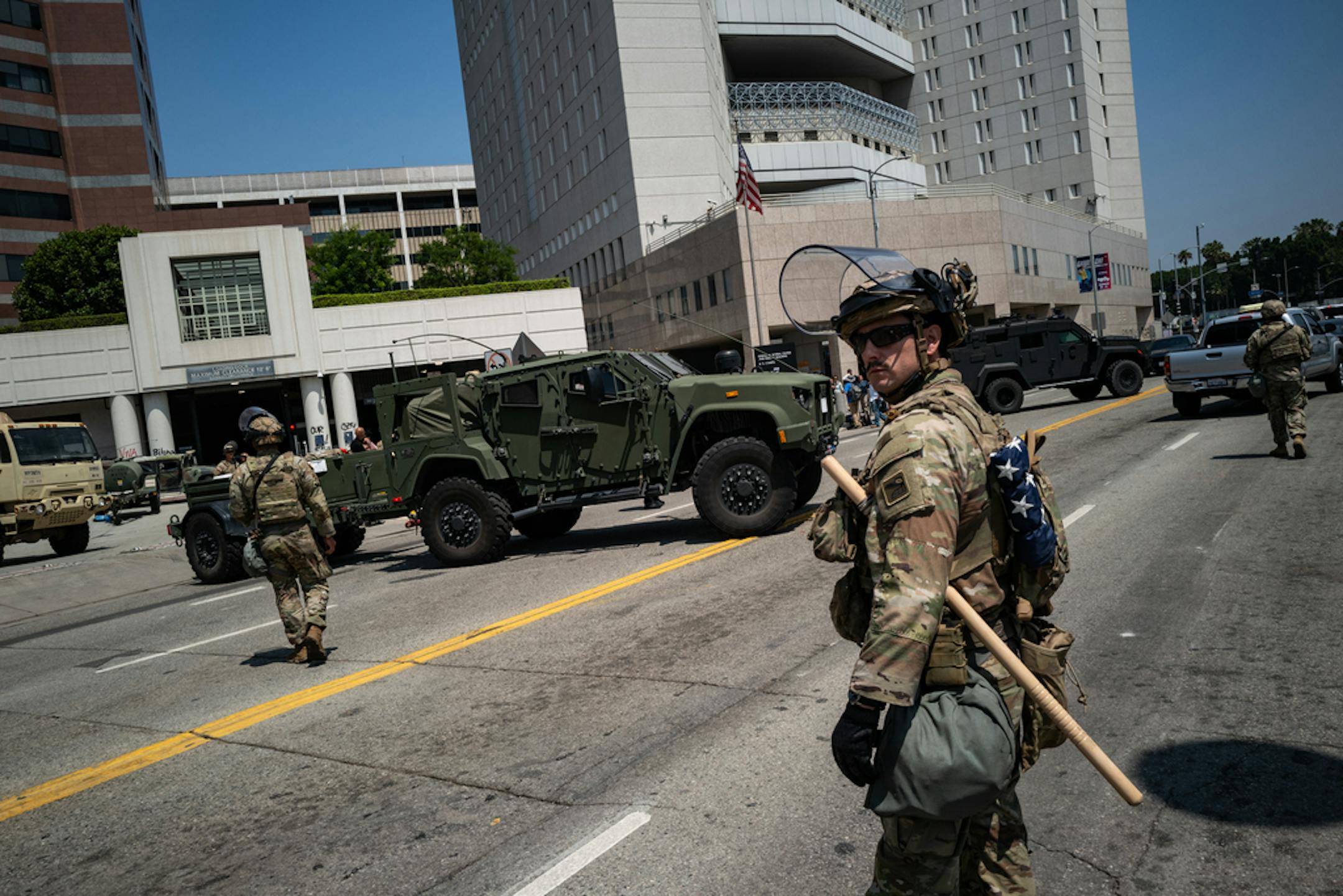
The Trump administration is evaluating plans that would establish a “Domestic Civil Disturbance Quick Reaction Force” composed of hundreds of National Guard troops tasked with rapidly deploying into American cities facing protests or other unrest, according to internal Pentagon documents reviewed by the Washington Post.
The plan calls for 600 troops to be on standby at all times so they can deploy in as little as one hour, the documents say. They would be split into two groups of 300 and stationed at military bases in Alabama and Arizona, with purview of regions east and west of the Mississippi River, respectively.
Cost projections outlined in the documents indicate that such a mission, if the proposal is adopted, could stretch into the hundreds of millions of dollars should military aircraft and aircrews also be required to be ready around-the-clock. Troop transport via commercial airlines would be less expensive, the documents say.
The proposal, which has not been previously reported, represents another potential expansion of President Donald Trump’s willingness to employ the armed forces on American soil. It relies on a section of the U.S. Code that allows the commander in chief to circumvent limitations on the military’s use within the United States.
The documents, marked “predecisional,” are comprehensive and contain extensive discussion about the potential societal implications of establishing such a program. They were compiled by National Guard officials and bear time stamps as recent as late July and early August. Fiscal 2027 is the earliest this program could be created and funded through the Pentagon’s traditional budgetary process, the documents say, leaving unclear whether the initiative could begin sooner through an alternative funding source.
It is also unclear whether the proposal has been shared with Defense Secretary Pete Hegseth.
“The Department of Defense is a planning organization and routinely reviews how the department would respond to a variety of contingencies across the globe,” Kingsley Wilson, a Pentagon spokeswoman, said in a statement. “We will not discuss these plans through leaked documents, pre-decisional or otherwise.”
The National Guard Bureau did not respond to a request for comment.


