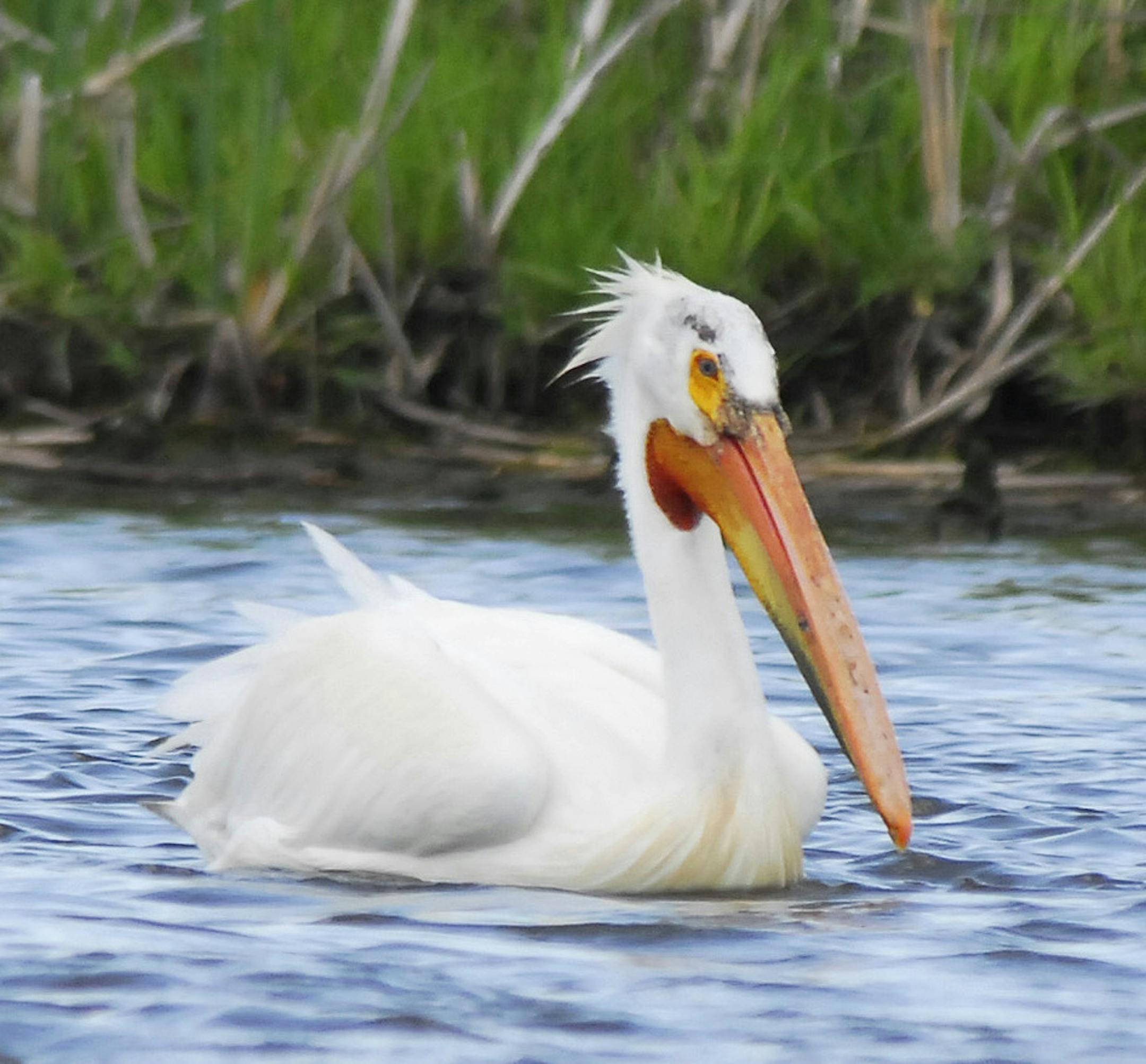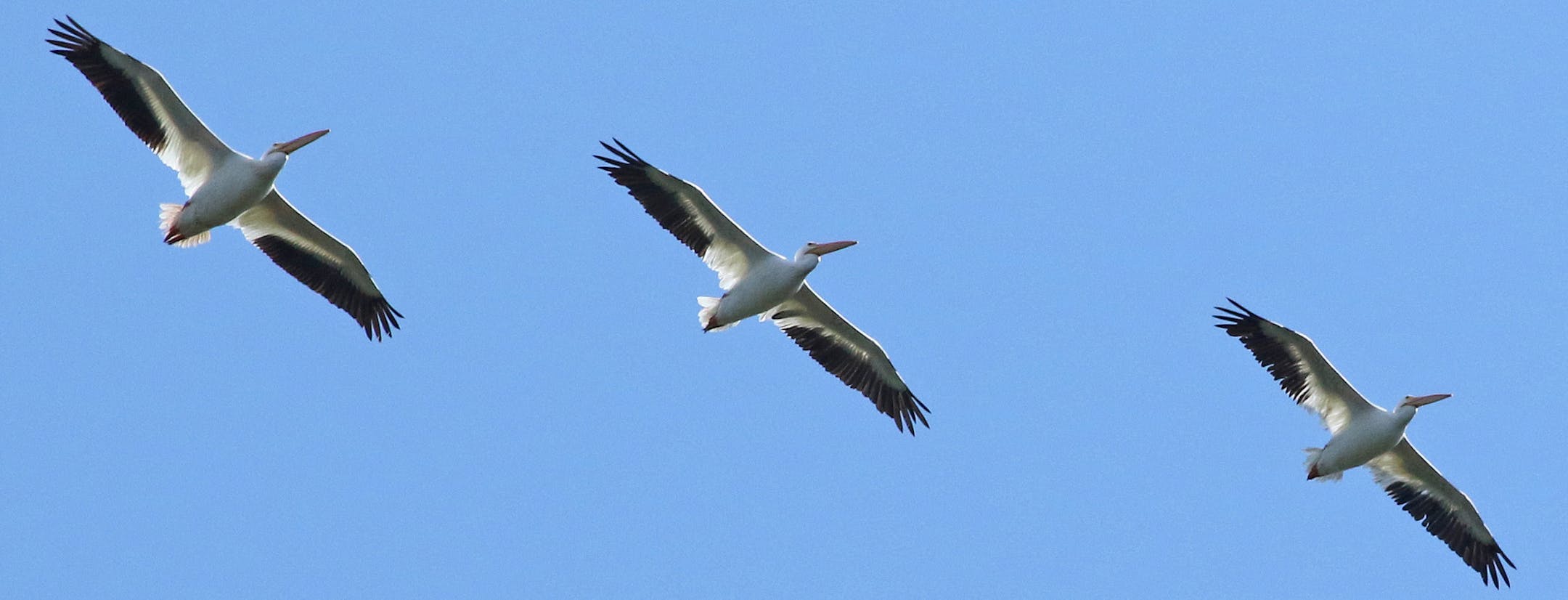
Q: One fall day I observed two flocks of large birds soaring overhead near Hastings. They were mostly white with black on the underside of their wings, and I'm thinking they were snow geese. They seemed to be out for an afternoon float on the air currents. After about 10 minutes they formed a loose V and floated away. It was breathtaking!
A: You painted a lovely image of these big birds, and their lazy, looping flight doesn't sound like snow geese. Instead, they almost certainly were American white pelicans. Although we associate these birds with the coasts, they're increasingly nesting in Minnesota each summer. They often can be seen in the fall, as they get ready to migrate, in just the kinds of silent, soaring flocks you describe. They are a wonderful sight, and the photo you sent later confirmed that these were pelicans.
Putting down roots?
Q: We live along the St. Croix River and have two eagles that return every day to the top of a tall pine beside our house, and sit there for a time. We're wondering whether they will make a nest in that tree. We've never had eagle nests nearby before.
A: It would be exciting to have eagles nesting so close that you could watch all the nesting activity. However, it's more likely that these eagles are appearing each day after finishing up their morning fishing, and are resting in your tree to digest their meals. If they don't nest near your house, you might console yourselves with the thought that living under an eagle nest can be very messy, as bits of fish and other prey regularly drop over the sides.
A rare flycatcher
Q: This fall I saw a pair of birds in Shoreview that I couldn't identify, until I found a picture online of a red-flanked blue tail. Have there been other sightings in this area?
A: No, there have been no sightings in Minnesota of this small flycatcher that lives in northern Europe and western Asia. While it's not unheard of in this country, the rare sightings on record are all from the West Coast. I'd like to suggest a different identification, using the principle of "if you hear hoof beats look for horses, not zebras": Juvenile Eastern bluebirds look very much like the online photos of the red-flanked blue tail, and it's much more likely they're the birds you saw.
Goldfinch youngsters
Q: There's a sizable flock of goldfinches in my neighborhood, and I enjoyed watching them pull apart my profusion of zinnia and cosmos flower heads this summer. Your recent article said the goldfinches we see in winter are youngsters, but how can we tell, since they all look so plain in winter?
A: I'm fascinated by your description of the goldfinches shredding flower petals, not having encountered this behavior myself. These little finches sometimes shred lettuce leaves in the spring, and I'm not sure why, in either case. As for telling young goldfinches from mature birds, the study that concluded that most winter birds in our area are juveniles was based on bird-banding findings: Observers could tell the birds' ages by the color coding of their leg bands. Without the clues from the bands, I don't think that even experienced researchers could tell winter goldfinches apart.