

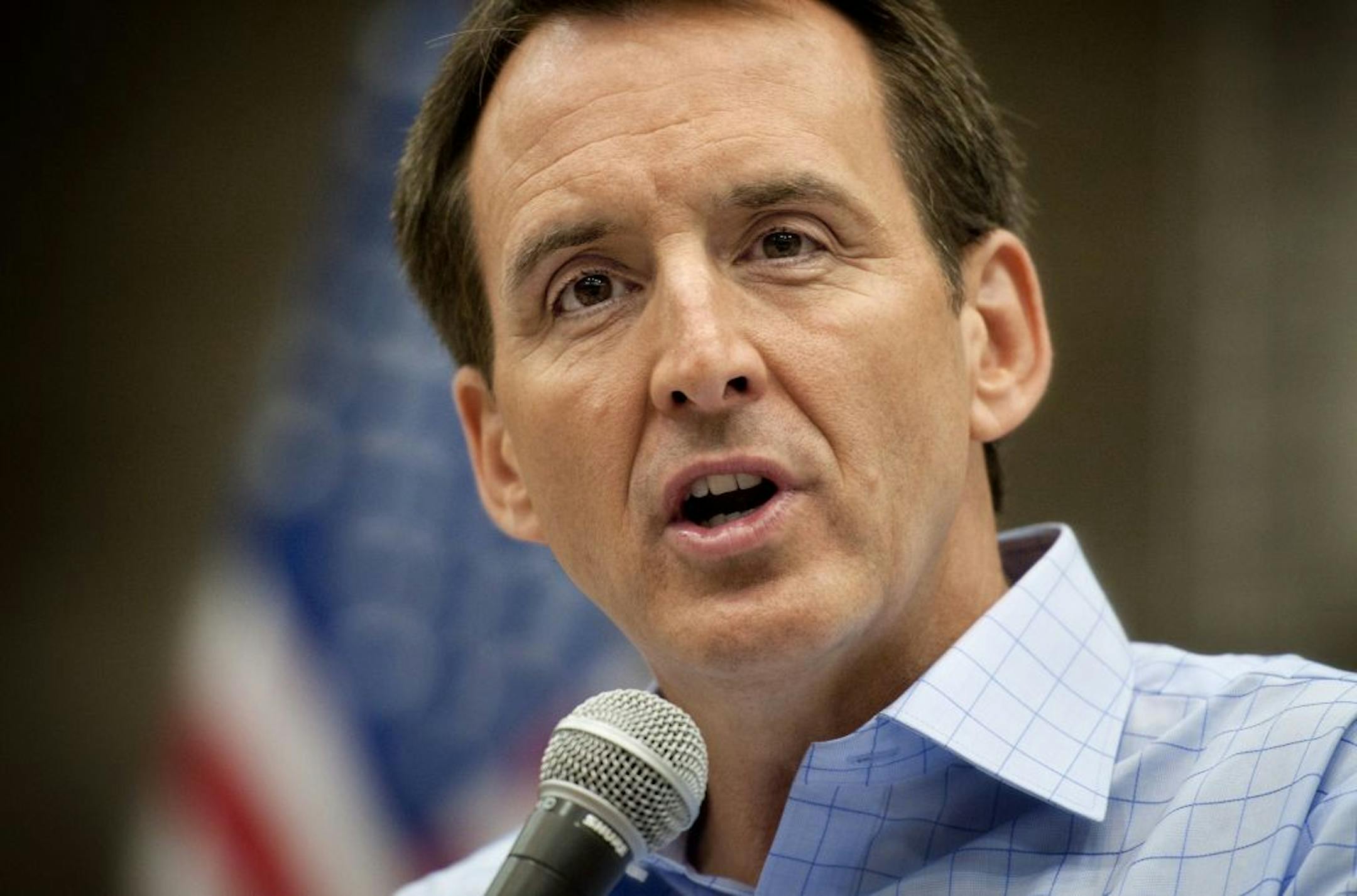
WASHINGTON - In his presidential campaign autobiography, "Courage to Stand," former Minnesota Gov. Tim Pawlenty recalls a man in a wheelchair who approached him at an airport in Mankato.
As Pawlenty knelt to listen, the man explained that he had no money, no job and no family to take care of him. "Please don't cut my health care," the man said in a raspy voice.
"You can't experience a moment like that without being emotionally impacted," Pawlenty wrote, describing some of the wrenching decisions he faced as governor, including his move last year to end a state health program for low-income singles.
Now, as he rails against "Obamacare," the landmark federal health care law, Pawlenty makes a virtue of his eight years as governor of a state with one of the best health care systems in the nation, one that's often held up as a model for market reforms that improve quality, increase efficiency and contain costs.
But to some health care experts -- including some whose counsel he sought as governor -- Pawlenty's critique of Obamacare is a tale of two governors: From one who embraced the goal of universal coverage to one more focused on budgets, costs and what he calls "timeless conservative principles."
Former U.S. Sen. David Durenberger, chairman of Pawlenty's 2004 Citizens Forum on Health Care Costs, describes the former governor as "a guy who didn't ignore the problem."
But Durenberger noted that President Obama's Affordable Care Act contains many of the bipartisan reform ideas pioneered on Pawlenty's watch in Minnesota, including consumer health incentives favoring low-cost insurance and new quality measures for doctors and hospitals.
Pawlenty's new talking points, Durenberger argues, are "unworthy of a governor of a state that has been working hard to create many of the care system and access innovations that the Affordable Care Act will help to fund with federal dollars as an example to the rest of the country."


