

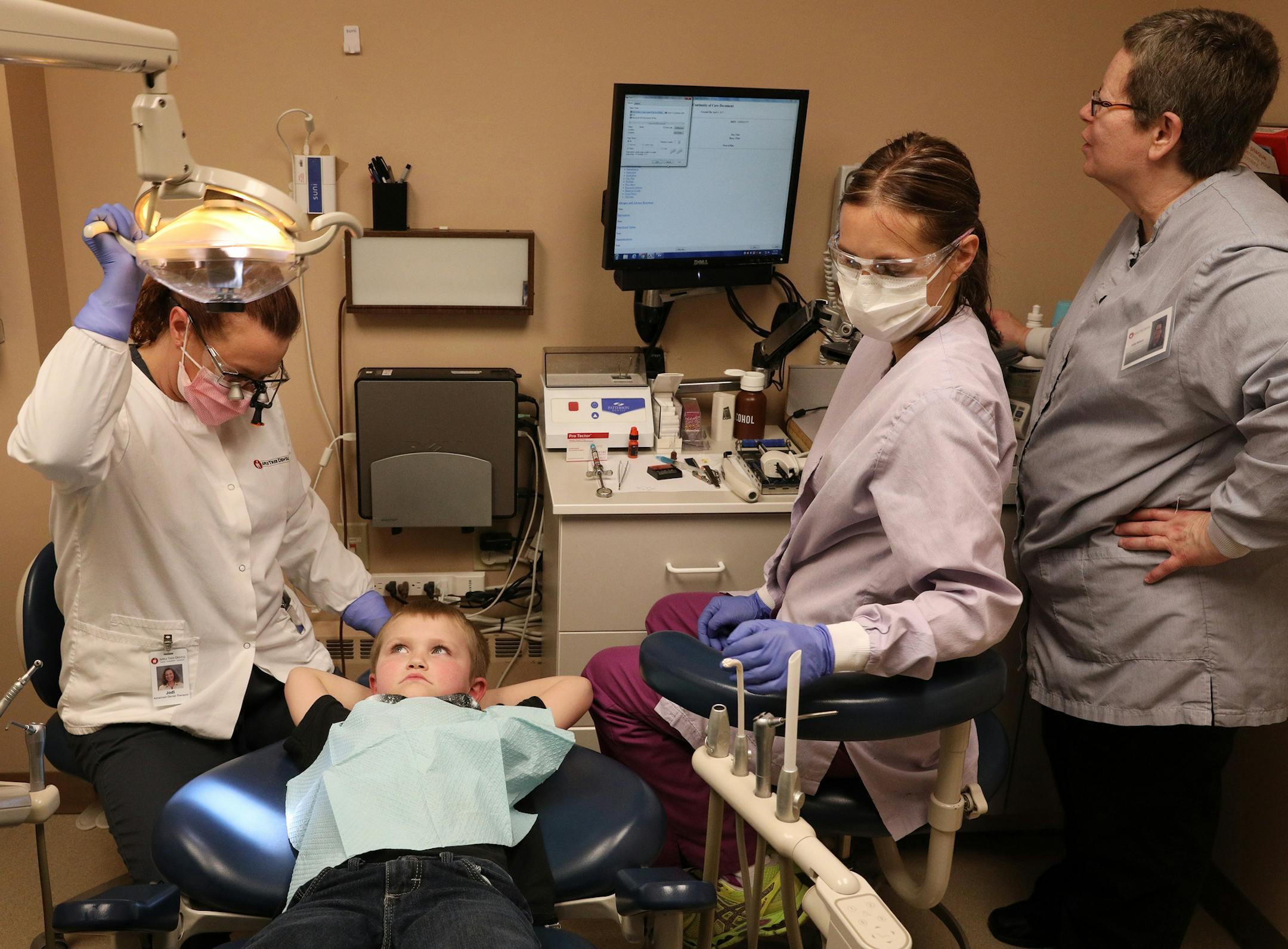
Minnesota covers dental care in its biggest health insurance program for the poor, but hundreds of those families can't actually get an appointment with a dentist — and the crisis is getting worse.
Many dental offices won't accept new patients covered by Medical Assistance — or have dropped out of the program altogether — leaving the state's nonprofit dental clinics overwhelmed with requests. Of the 500,000 children on Medical Assistance, the state estimates that only one-third had seen a dentist in 2015.
In their latest effort to address the chronic problem, Senate Republicans and Gov. Mark Dayton are proposing to raise Medical Assistance payment rates, hoping doing so will attract more dentists into the system. But their approaches differ, and in a year with many other demands on the state budget, it's not clear where lawmakers will come out.
Still, public health advocates say it's time for a solution because the lack of dental care can have serious medical consequences.
"Your teeth are 3 inches from your brain," said Sarah Wovcha, executive director of the nonprofit Children's Dental Services in Minneapolis. "A tooth infection can become systemic and lead to death. And we've seen that."
The problem is especially acute in rural Minnesota, where the number of dentists has shrunk so far that most rural counties are designated as dental workforce shortage areas. That makes it even harder to find a dentist who will accept Medical Assistance, forcing some patients to travel hours to get dental care — if they can get an appointment at all.
The shortage also sends more people with severe dental pain to hospital emergency rooms, which can help only with the symptoms and not the underlying infection causing the pain.
Lowest rates
The growing crisis is widely ascribed to the low reimbursement rates Medical Assistance pays dentists for everything from a routine cleaning to an intensive root canal.


