

SCHWERIN, Germany – In the 25 years since the Berlin Wall fell, historian Ralf Wendt has watched much of his former life vanish.
The museum he curated that tells Schwerin's 1,000-year history was a national treasure in communist East Germany. But after East Germany merged with West Germany, it was just an unprofitable remnant and its exhibits were hauled off to storage.
Change came elsewhere too. The public art that this East German provincial capital had proudly display during 40 years of socialism was deemed uninteresting to a capitalist world. Piece by piece, it was removed and hidden away. In one case, a school janitor decided to bury a statue of Karl Marx, the father of socialism.
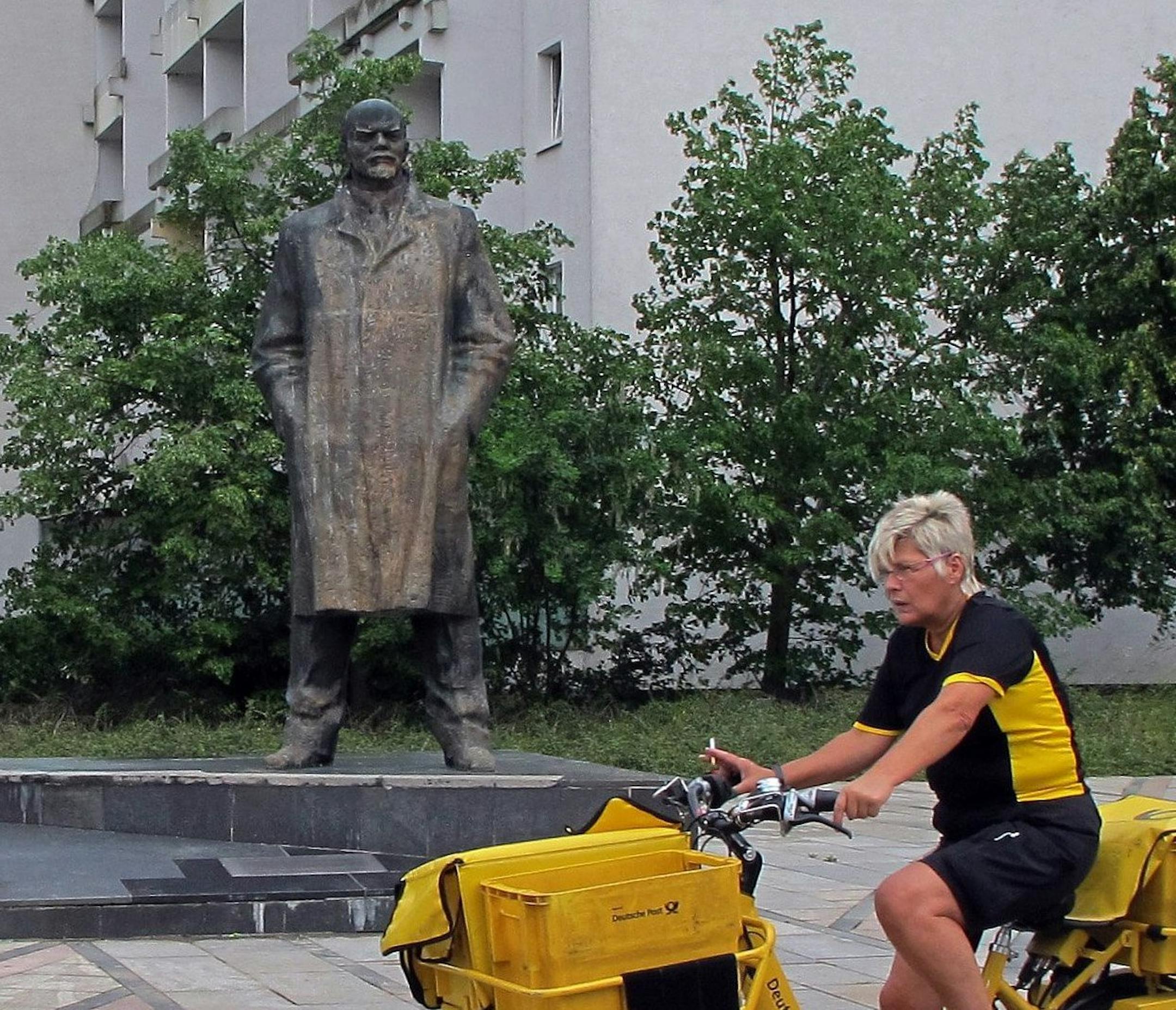
Now Wendt is watching with chagrin as the one of the last markers of the East German era comes under attack: a towering memorial to the founder of Soviet communism, Vladimir Lenin, that stands on a residential square. It may be the last of its kind in Western Europe. A growing movement wants it torn down.
"In this modern world, we are told Lenin plays no role," he said. "But we cannot totally ignore our history. The monument is a document. It says who he was, and that says something about who we were — and are. I don't understand the need to tear it down or cover it."
Many statues dismantled
Since the Berlin Wall came down in November 1989, Lenin statues have been dragged or beaten down in former Soviet states and satellites from Armenia to Romania.
In Berlin, a famous Lenin in granite was hauled away and buried. The burial site is unmarked — to discourage devotees from creating a memorial at the site, in much the same way German authorities refused for decades to mark the spot where Adolf Hitler killed himself. The site now has a multilingual plaque.
All of which lends an air of significance to the discussion in what used to be near the northwestern tip of East Germany of what to do with Schwerin's Lenin.


