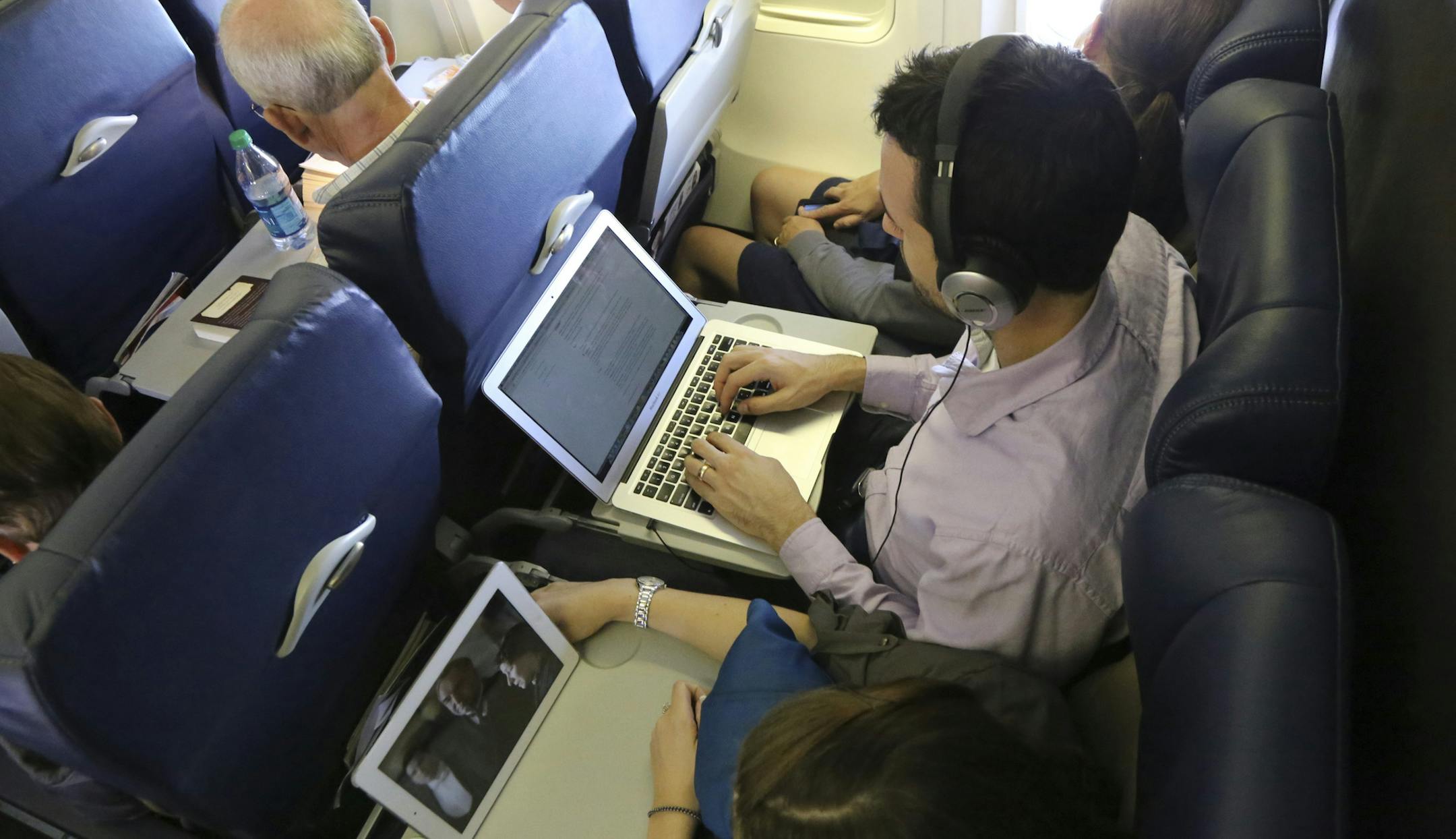
Flying coach can be a bruising experience these days.
Rory Rowland said he was rudely rebuffed after he asked the person in front of him not to recline his seat on a red-eye flight. When he later got up to use the bathroom, and the other passenger had fallen asleep, "I hip-checked his seat like you wouldn't believe," Rowland, a speaker and consultant, said, then feigned innocence when the enraged passenger complained to a flight attendant.
With air travelers increasingly feeling like packed sardines, flying has become a contact sport, nowhere more than over the reclined seat.
Now, it's only getting worse, as airlines re-examine every millimeter of the cabin.
Over the last two decades, the space between seats - hardly roomy before - has fallen about 10 percent, from 34 inches to somewhere between 30 and 32 inches. Today, some airlines are pushing it even further, leaving only a knee-crunching 28 inches.
To gain a little more space, airlines are turning to a new generation of seats that use lighter materials and less padding, moving the magazine pocket above the tray table and even reducing or eliminating the recline in seats. Some are even reducing the number of galleys and bathrooms.
Southwest, the nation's largest domestic carrier, is installing seats with less cushion and thinner materials - a svelte model known in the business as "slim-line." It also is reducing the maximum recline to 2 inches from 3. These new seats allow Southwest to add another row, or six seats, to every flight - and add $200 million a year in newfound revenue.
"In today's environment, the goal is to fit as many seats in the cabin as possible," said Tom Plant, the general manager for seating products at B/E Aerospace, one of the top airplane seat makers. "We would all like more space on an aircraft, but we all like a competitive ticket price."