

The Minneapolis Park and Recreation Board will be asked by its staff to hire a local engineering firm to help it assess its groundwater options at Hiawatha Golf Course.
The board will be asked at its Wednesday meeting to hire Barr Engineering, the firm already providing an assessment to the city of Minneapolis of its stormwater ponds that dot the golf course. The proposed contract would cost up to $100,610, not counting another $10,000 for a peer review of Barr's work.
The Park Board was told recently that Barr's work for the city had estimated the pumping of groundwater, supplemented by stormwater, of up to 270 million gallons per year from one of those connected ponds into Lake Hiawatha.
The Star Tribune reported last week that the Park Board lacks a state water appropriation permit for that pumping, although it is permitted to pump smaller amounts from the ponds to water the golf course. The Park Board confirmed that situation on Tuesday.
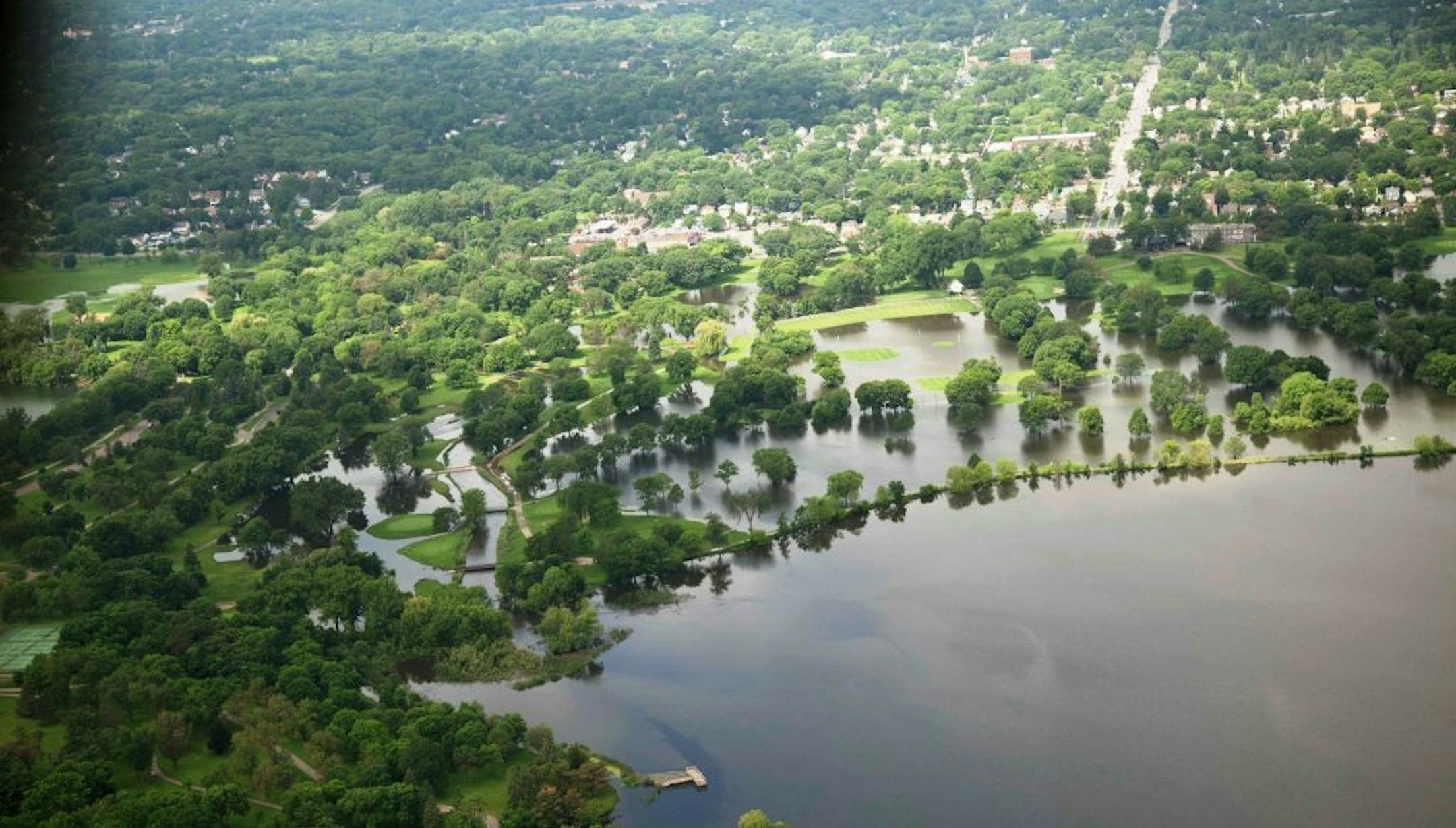
The groundwater situation has major implications for plans to rebuild the 81-year-old golf course that was severely damaged after heavy rains sent nearby Minnehaha Creek over its banks. Substantial areas of turf and other course features were damaged. Park staff need to know what water level they will be able to maintain before deciding whether to rebuild the 18-hole course as it was, reconfigure it in a way that allows it to store more water during flooding, or trim it to a nine-hole course.
The proposed work includes installing flow meters at pumps and pipes to measure movement of water through ponds, pipes that connect them and pumps that maintain the water level in those ponds, as well as monitoring wells and pressure gauges to calculate the volume of water. Ground and pumped water also would be assessed for water quality. The proposed contract would also try to determine the water level if pumping ceases and determine resulting flood zones. The work also involves creating models to determine upstream impacts of different pond elevations.
The board and public are expected to get next month a fuller report of a staff meeting scheduled for Tuesday with Minnesota Department of Natural Resources permitting specialists.


