

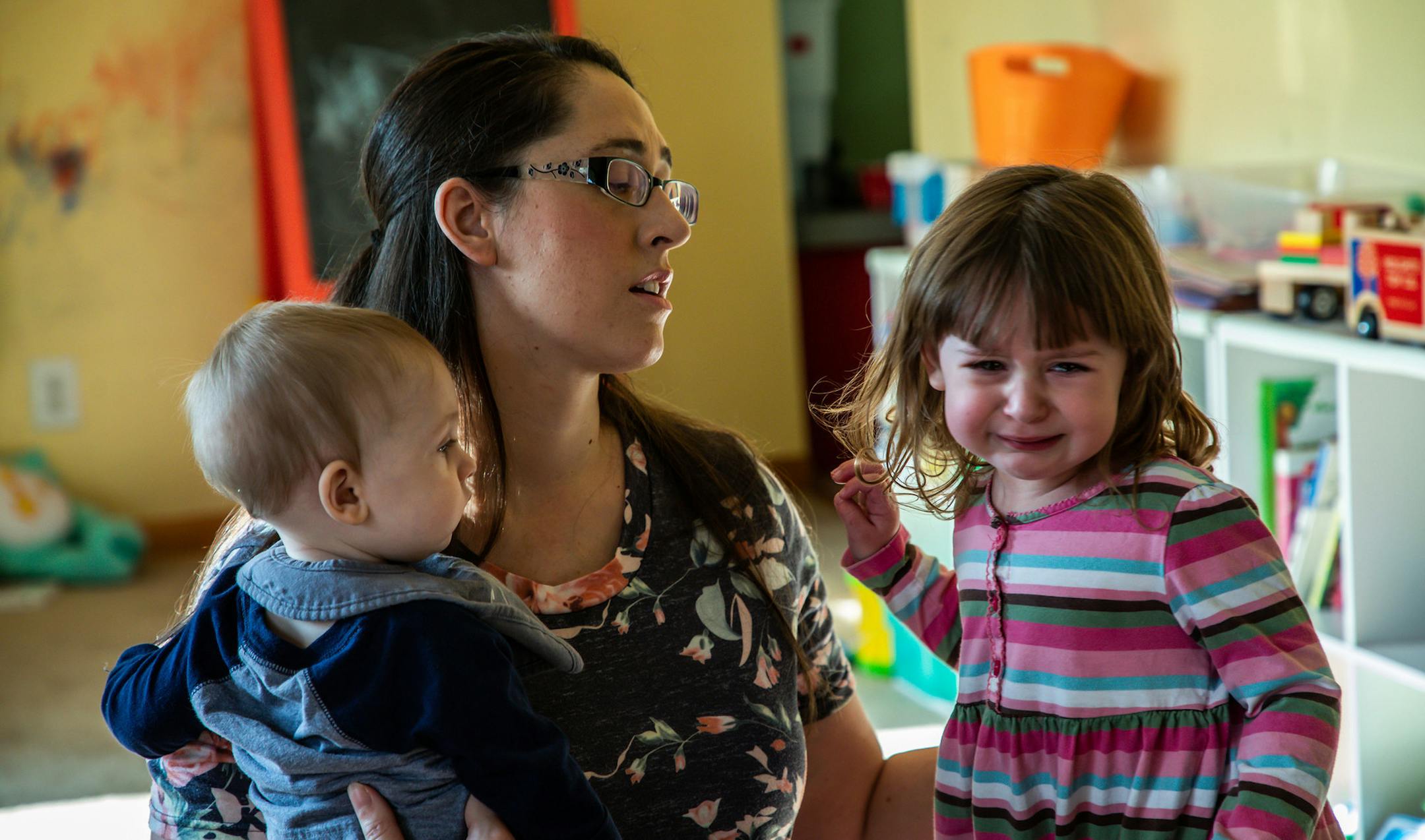
As a nurse, Erin Werley was used to 12-hour shifts sometimes stretching into 15, constantly being on her feet and feeling high levels of stress.
But nothing prepared her for the demands of motherhood.
Before kids, "I got to come home and relax every day, and I had days off," said the resident of Munster, Ind., who is the mother of a 2½-year-old daughter and 8-month-old son. "I'd be burned out at work, but at least I'd know [the shift would end], and then I could go home.
"When you're a mom, you don't know when your next break is coming."
A few months after returning to work from her first maternity leave, she left her job as a nurse to become a stay-at-home mom, but she said the stress she feels now sometimes is greater than when she worked long shifts in a hospital.
The World Health Association describes occupational burnout in part as "a syndrome conceptualized as resulting from chronic workplace stress that has not been successfully managed" and that results in exhaustion and negative feelings toward one's job.
Experts say that parental burnout is on par with occupational burnout — with one major exception: While many workplaces have programs and resources available to help those who are battling the problem, parents are on their own in dealing with it.
Counselors report that while parenthood has never been easy, the role is more pressure-driven in modern times, especially for whoever fills the role of primary parent — typically moms, but dads, too — and it can take a psychological toll. This goes for working and stay-at-home parents alike, and can be magnified in single-parent households.


