

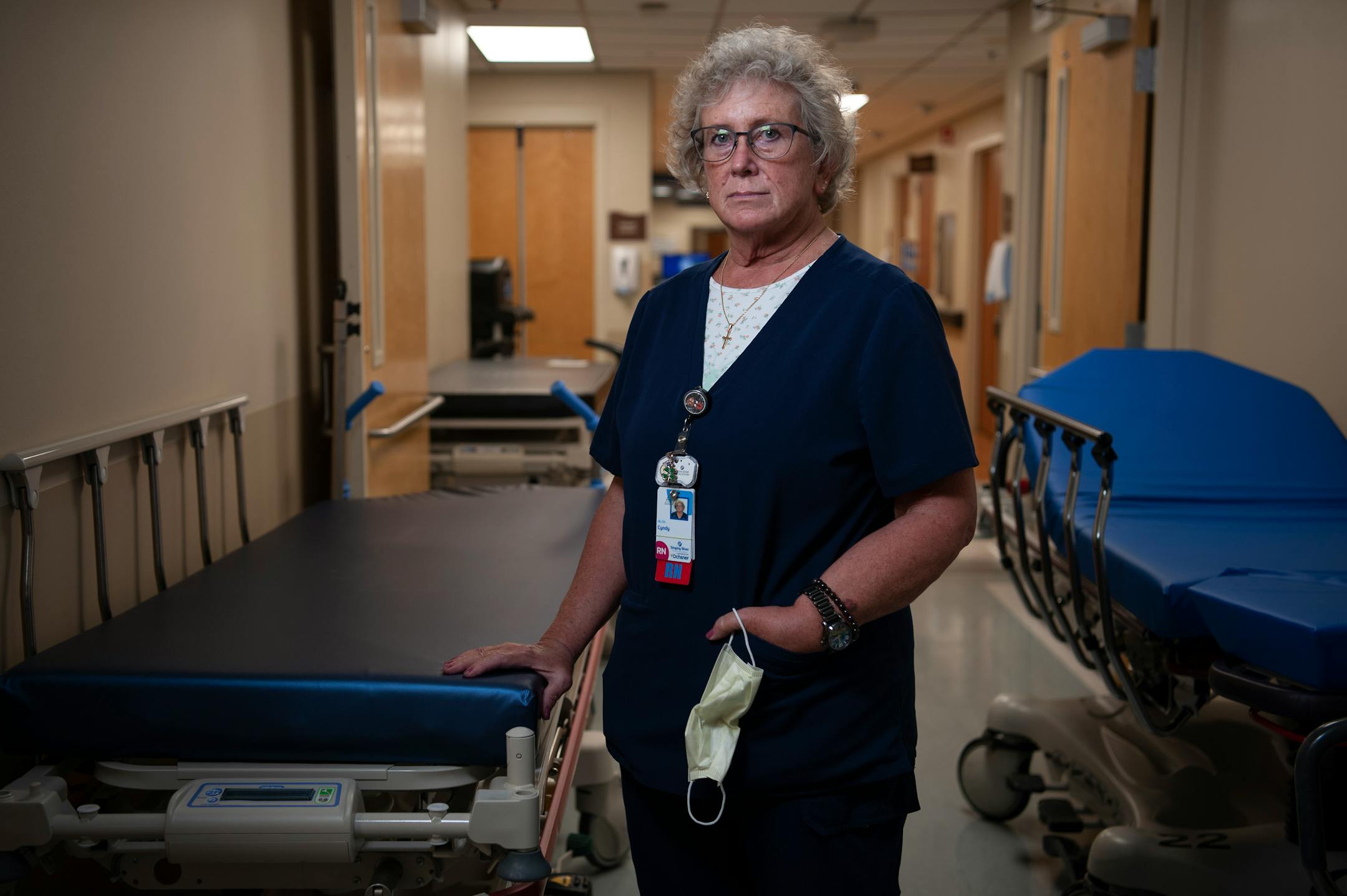
Cyndy O'Brien, an emergency room nurse at Ocean Springs Hospital on the Gulf Coast of Mississippi, could not believe her eyes as she arrived for work. There were people sprawled out in their cars gasping for air as three ambulances with gravely ill patients idled in the parking lot. Just inside the front doors, a crush of anxious people jostled to get the attention of an overwhelmed triage nurse.
"It's like a war zone," said O'Brien, who is the patient care coordinator at Singing River, a small health system near the Alabama border that includes Ocean Springs. "We are just barraged with patients and have nowhere to put them."
The bottleneck, however, has little to do with a lack of space. Nearly 30% of Singing River's 500 beds are empty. With 169 unfilled nursing positions, administrators must keep the beds empty.
Nursing shortages have long vexed hospitals. But in the year and a half since its ferocious debut in the United States, the coronavirus pandemic has stretched the nation's nurses as never before, testing their skills and stamina as desperately ill patients with a poorly understood malady flooded emergency rooms. They remained steadfast amid a calamitous shortage of personal protective equipment; spurred by a sense of duty, they flocked from across the country to the newest hot zones, sometimes working as volunteers. More than 1,200 of them have died from the virus.
Now, as the highly contagious delta variant pummels the United States, bedside nurses, the workhorse of a well-oiled hospital, are depleted and traumatized, their ranks thinned by early retirements or career shifts that traded the emergency room for less stressful nursing jobs at schools, summer camps and private doctors' offices.
"We're exhausted, both physically and emotionally," O'Brien said, choking back tears.
Like hospital leaders across much of the South, Lee Bond, chief executive of Singing River, has been struggling to stanch the loss of nurses over the past year. Burnout and poaching by financially flush health systems have hobbled hospitals during the worst public health crisis in living memory.
With more than one-third of Mississippi residents fully vaccinated, Bond is terrified things will worsen in the coming weeks as schools reopen and Gov. Tate Reeves doubles down on his refusal to reinstate mask mandates. "Our nurses are at their wits' end," Bond said. "They are tired, overburdened, and they feel like forgotten soldiers."


