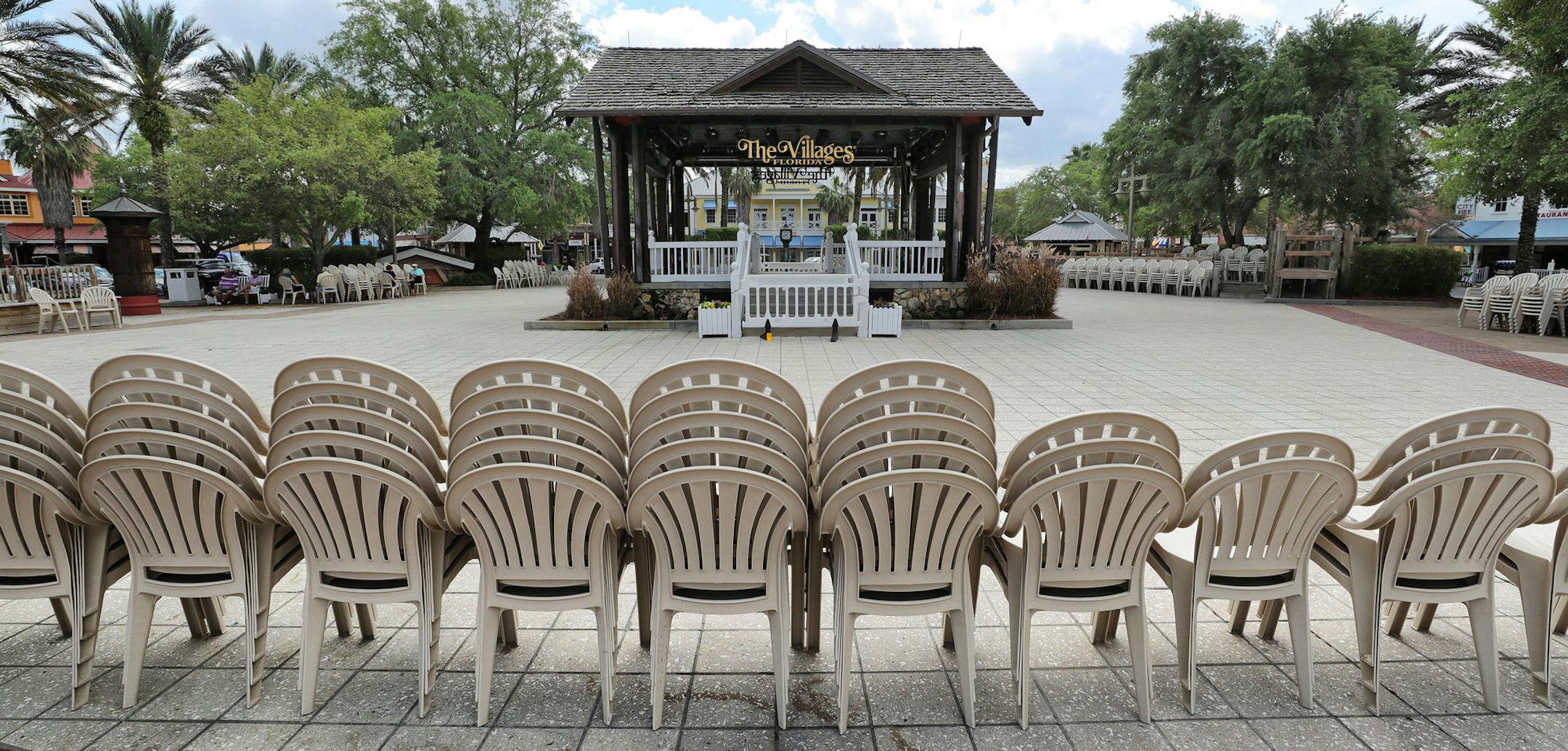
For most of the nation's history, the idea that people over the age of 65 would voluntarily herd themselves into special communities built around their needs would have seemed absurd, even dystopian. Yet a largely voluntary movement toward segregating people by age has reached extreme levels in recent years — and without receiving much attention at all.
The coronavirus outbreak could put an end to it.
In 1850, nearly 70% of individuals age 65 or older lived with their adult children. Most of the rest tended to live in geographical proximity. As a consequence, older people were more or less evenly distributed throughout the country.
This arrangement was highly functional: The elderly needed help as they aged, and children and grandchildren provided it. In return, the elderly took care of young children and otherwise pulled their weight around the house.
Home was not the only place where people of different ages mixed together in ways that are all too rare today. Before the 20th century, it was entirely normal to have a one-room schoolhouse catering to both teens and toddlers. When rural communities held quilting parties, everyone from young girls to elderly matrons participated side by side. Farmworkers of all ages toiled together, and armies in the Civil War threw together young boys, older men and everyone in between.
This was a world with very limited "age consciousness." Almost no one drew attention to their age, even on their birthdays, a ritual that took off in the 20th century. As countries like the U.S. industrialized, new institutions began sorting citizens into different age buckets. Most important, schools began catering to discrete age cohorts — elementary, junior high, senior high.
As historian Howard Chudacoff has shown, much of this shift coincided with the invention of new terms to define and distinguish age groups. The idea of "middle-age," for example, was a product of this shift, as was the invention of "pediatrics" as a field of medicine. It was perhaps inevitable that the elderly would get lumped into their own cohort, with a new field of medicine — geriatrics — invented to tend to their needs.
Several developments fueled this trend. The first was a growing belief that older people couldn't keep up in the fast-paced, modern world of work. Mandatory retirement ages — often coupled with increasingly generous pension benefits — helped push workers out the door at a certain age. When Congress passed the Social Security Act in 1935, it elevated a new threshold to almost totemic significance: 65.