

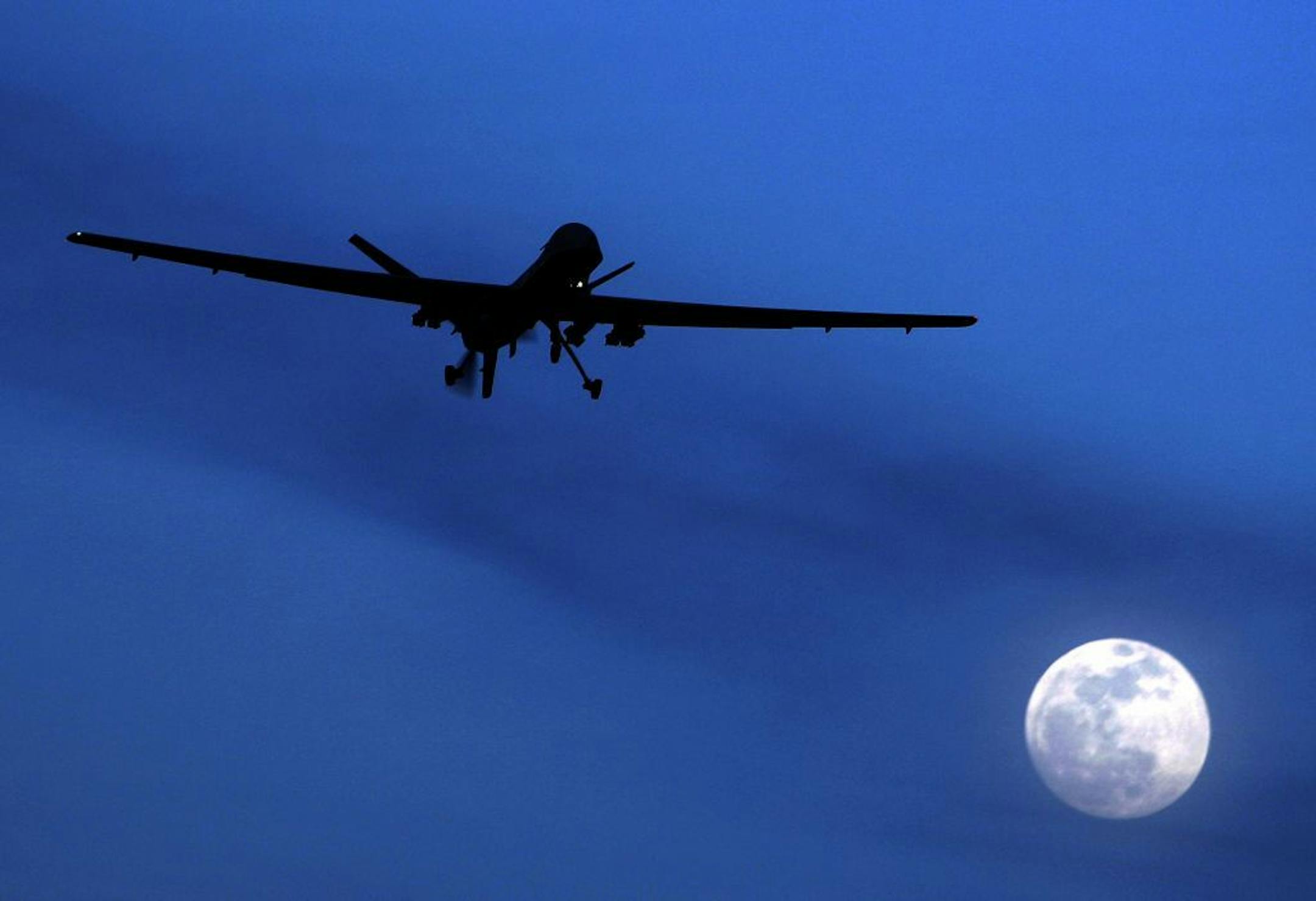
When people talk about shrinking the drone program, as President Obama promised recently, they are mostly concerned with placating Pakistan. But the drone war is alive and well in the remote corners of Pakistan, where strikes have caused the most lasting damage.
Drone strikes like Wednesday's, in Waziristan, are destroying already weak tribal structures and throwing communities into disarray throughout Pakistan's tribal belt along the border with Afghanistan. The chaos and rage they produce endangers the Pakistani government and fuels anti-Americanism. Similar destruction is occurring in other traditional tribal societies like Afghanistan, Somalia and Yemen. The tribes on the periphery of these nations have long struggled for more autonomy from the central government, first under colonial rule and later against the modern state. The war on terror has intensified that conflict.
These tribal societies are organized into clans defined by common descent; they maintain stability through similar structures of authority, and they have defined codes of honor revolving around hospitality to guests and revenge against enemies.
In recent decades, these societies have undergone huge disruptions as the traditional leadership has come under attack by violent groups like the Taliban, Al-Qaida in the Arabian Peninsula and Somalia's Al-Shabab, not to mention full-scale military invasions. America has deployed drones into these power vacuums, causing ferocious backlashes against central governments while destroying any positive image of the United States that may have once existed.
American precision-guided missiles launched into Pakistan's Pashtun tribal areas aim to eliminate what are called, with marvelous imprecision, the "bad guys." Several decades ago I, too, faced the problem of catching a notorious "bad guy" in Waziristan. I was then a government administrator in charge of the area. We were able to get our "bad guy" without firing a single shot by relying on the three pillars of authority that have traditionally provided stability in Pashtun tribal society: elders, religious leaders and the central government.
Over the past few decades, these pillars have weakened. And in 2004, with the Pakistani army's unprecedented assault and American drones' targeting suspected supporters of Al-Qaida in Waziristan, the pillars of authority began to crumble.
In the vacuum that followed, the Pakistani Taliban emerged. Its first targets were tribal authorities. Approximately 400 elders have been killed in Waziristan alone, a near-decapitation of traditional society.
Large segments of the tribal population were displaced to shantytowns surrounding large cities, bringing with them traditional tribal feuds and a desire for revenge against those they saw as responsible for their desperate situation.


