

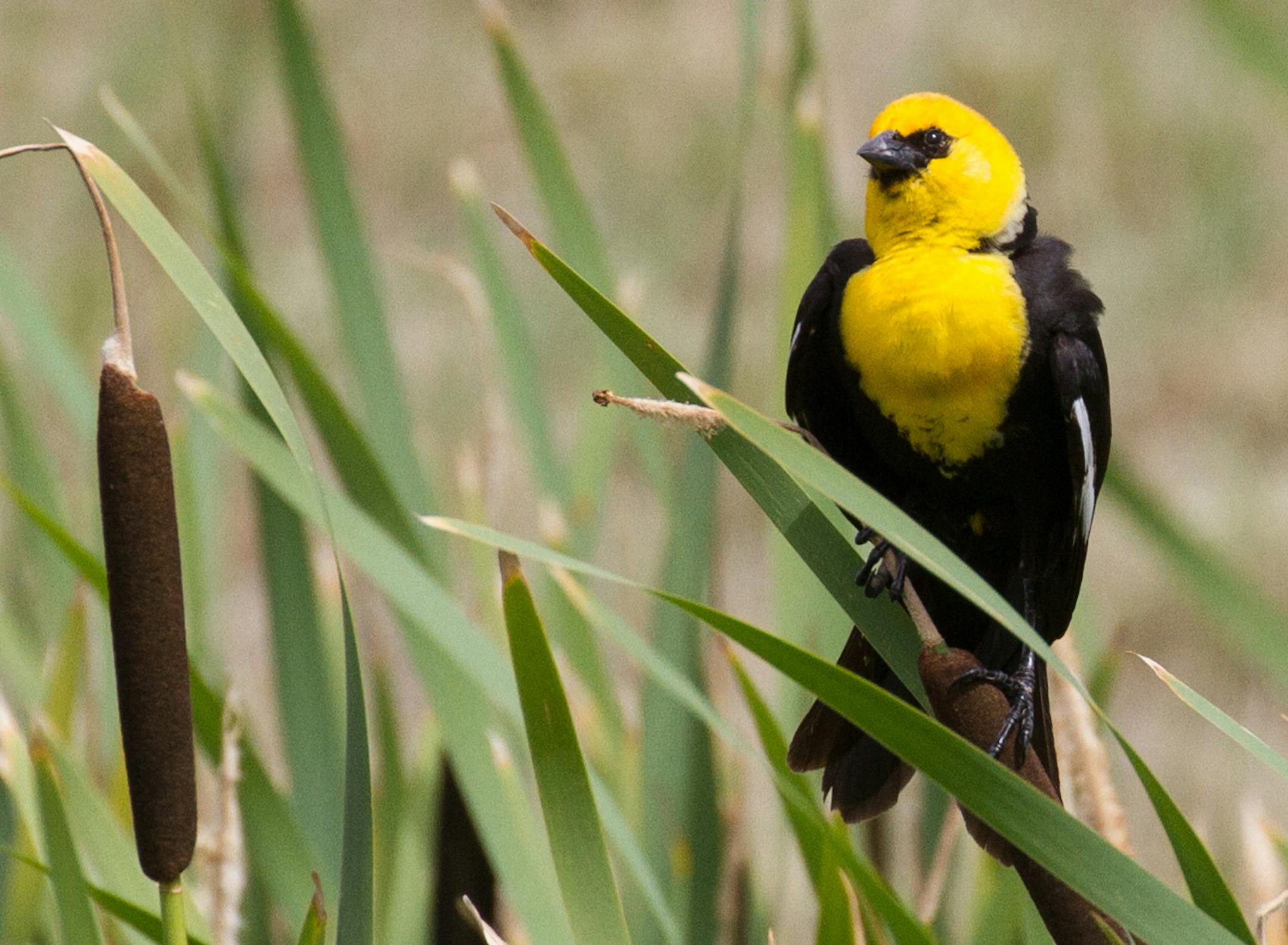
Q: I noticed a bird during a visit to western Minnesota that I've never seen before. It was beautiful, with a bright yellow head and a black body. Now I'm wondering if my eyes were fooling me.
A: You were lucky to spot the aptly named yellow-headed blackbird, whose standout markings make it look as if it fell headfirst into a can of yellow paint. According to the Minnesota Audubon Society, this bird's population is significantly declining in our state, and the primary reason is loss of the wetlands and deep-water marshes they need for breeding.
Noisy owls?
Q: We were walking in the woods in a local park at dusk when we heard loud screeching noises. We'd heard that a great horned owl family had nested there this summer, but why were they calling?
A: I'll bet you were hearing the owl family communicating with each other. They may have been making contact after a day of dozing, letting each know where the others were. At that time, the end of summer, the parents were probably still providing hunting lessons, and the youngsters might have been calling something like, "We're hungry, can we starting hunting now?"
A kingly bird
Q: During a round of golf recently a black robin-sized bird seemed to take offense at our foursome. It chirped at us and flew near our heads, over and over. I'd never seen this bird before and wonder if you know what it was.
A: I can think of only one charcoal-colored bird that would act so aggressively: the eastern kingbird. Its Latin name, Tyrannus tyrannus, hints at how intolerant this species is of any kind of intrusion into what it considers its territory. They've been observed harassing birds as large as red-tailed hawks and great blue herons. They're a handsome flycatcher and help control insects on golf courses and elsewhere. You can find out more here: www.allaboutbirds.org/guide/eastern_kingbird/lifehistory. And they shouldn't bother you this fall because they leave early on migration.
Sore throats?
Q: I had many hummingbirds at my feeders this summer, but two of them seemed sick: They'd stick their beaks into the feeder, then tip their heads back as if trying to swallow, but couldn't. After a couple of days I didn't see them anymore. What could have been wrong with them?
A: This is a sad story, and probably didn't turn out well for the hummingbirds. I suspect that they visited other feeders in your neighborhood, ones that aren't as well maintained as yours, and picked up mold or fungus as the fluid fermented. This led to swelling in their throats, inability to swallow and eventual starvation.


