

Children are counting down the days until the end of the school year, while parents are looking at the calendar and thinking about how to fill that three-month void to the next one. For many families, sending their young people to a summer camp or two is one approach.
Everyone has a different reason for enrolling their children in a summer camp, but parents increasingly seem to be using them as a means to address concerns their children are growing up in an environment that's too sterile, said Tom McDowell, associate superintendent of Three Rivers Park District, at the Minnesota Department of Natural Resources Roundtable event recently in Bloomington.
Parents who think that way, and now are narrowing down their kids' summer plans, have no shortage of options. Environmental learning centers and park districts throughout the state offer a vast array of outdoor-themed programming that not only introduces youth to such activities as hunting and fishing, but also gives them the opportunity to get dirty and, well, act like kids. Some camps are one-shot deals — the Minnesota Waterfowl Association's Woodie Camp, which is held for one week each summer near Fergus Falls, for example. Others, such as the Minnesota Deer Hunters Association's forkhorn camps, are held at locations throughout the state and offer a variety of levels depending on campers' experience. Three levels of forkhorn camps are available (children who attend Forkhorn I receive their firearms safety certificate) and each builds upon the other in terms of what campers learn about hunting and the weapons used in the sport.
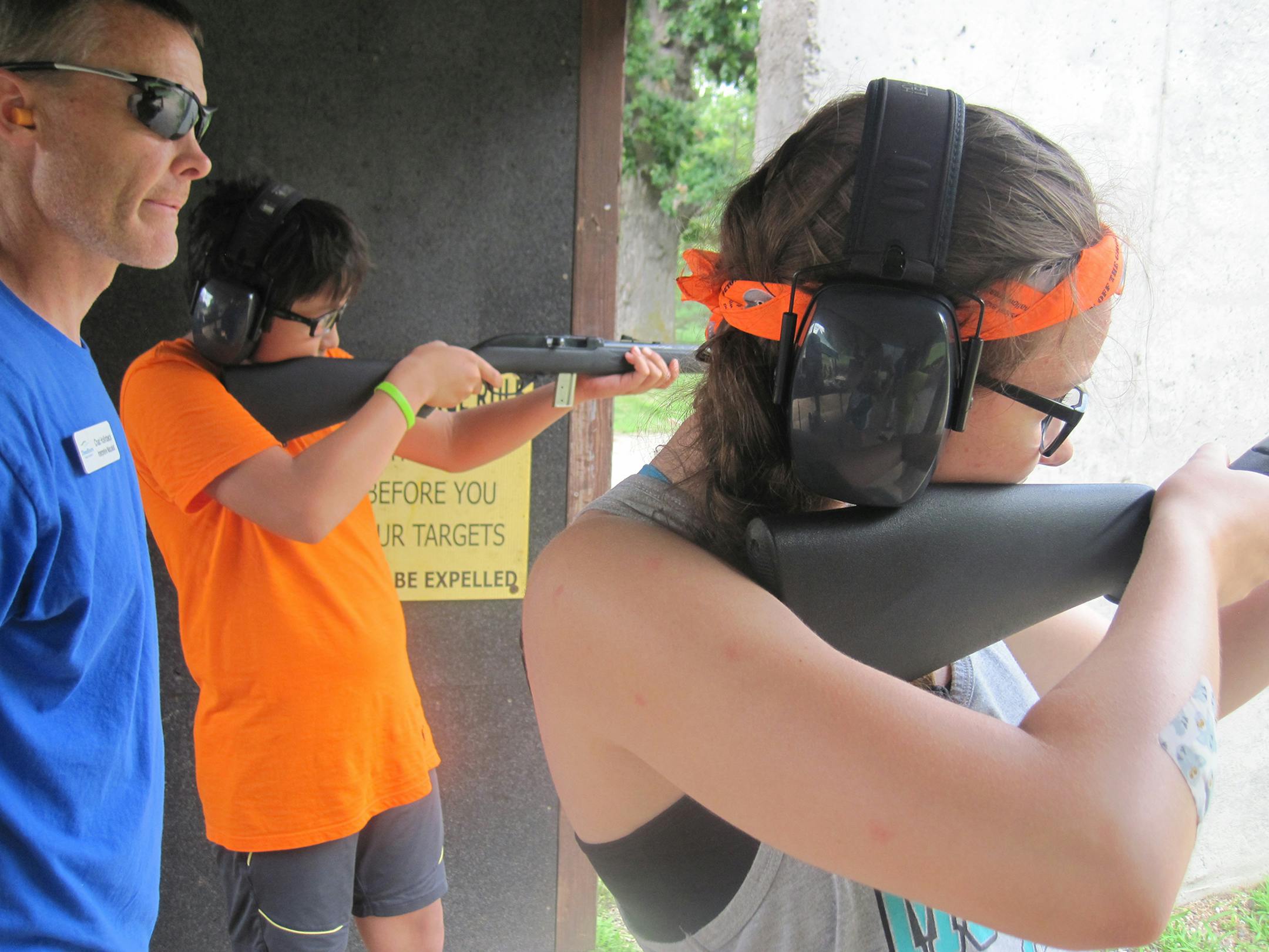
And many camps today pull what amounts to double-duty, an important consideration in a time-crunched society. Not only do the kids learn about the outdoors, but they also earn their firearms safety certificate. Whereas firearms safety classes traditionally have been held on multiple weeknights and culminate with a weekend field day — and that format still exists, to be sure — some camps allow credit in a far more condensed timeframe.
"We really strive to do firearms safety and all these things really hands-on and outdoors," said Ryan Barth, outdoor education supervisor for Three Rivers Park District. "We try to not be boring. We try to have it be as experiential as possible and in a setting where we can literally walk out the back door and do things."
The district's summer camps are for children as young as 4 and as old as 15. The hunting-related camps at Baker Near-Wilderness Settlement generally start at 11 years old; those that include archery and trapshooting are especially popular.
Finding the time
The interest in summer camps is there — overall enrollment in camps through Three Rivers has quadrupled to more than 4,000 in recent years, McDowell said — yet in many instances camp officials are having a more difficult time attracting attendees. Brad Nylin, executive director of the Minnesota waterfowl group, admitted feeling a bit of heartburn about how the association, which has held Woodie Camp on an annual basis for more than 25 years, is just barely filling the cost-free camp. And officials at Three Rivers, who have similar concerns, have decided they need to market their camps more to get the word out.
"I think the biggest thing in our society — it's time. People are scheduled to the gills," Barth said. "Parents both work and then kids are in multiple activities, plus maybe a band or choir. Finding the time is challenging. But they can miss a Tuesday practice or a Thursday game of baseball and still be fine. (A summer camp) is worth it to get that experience."


