

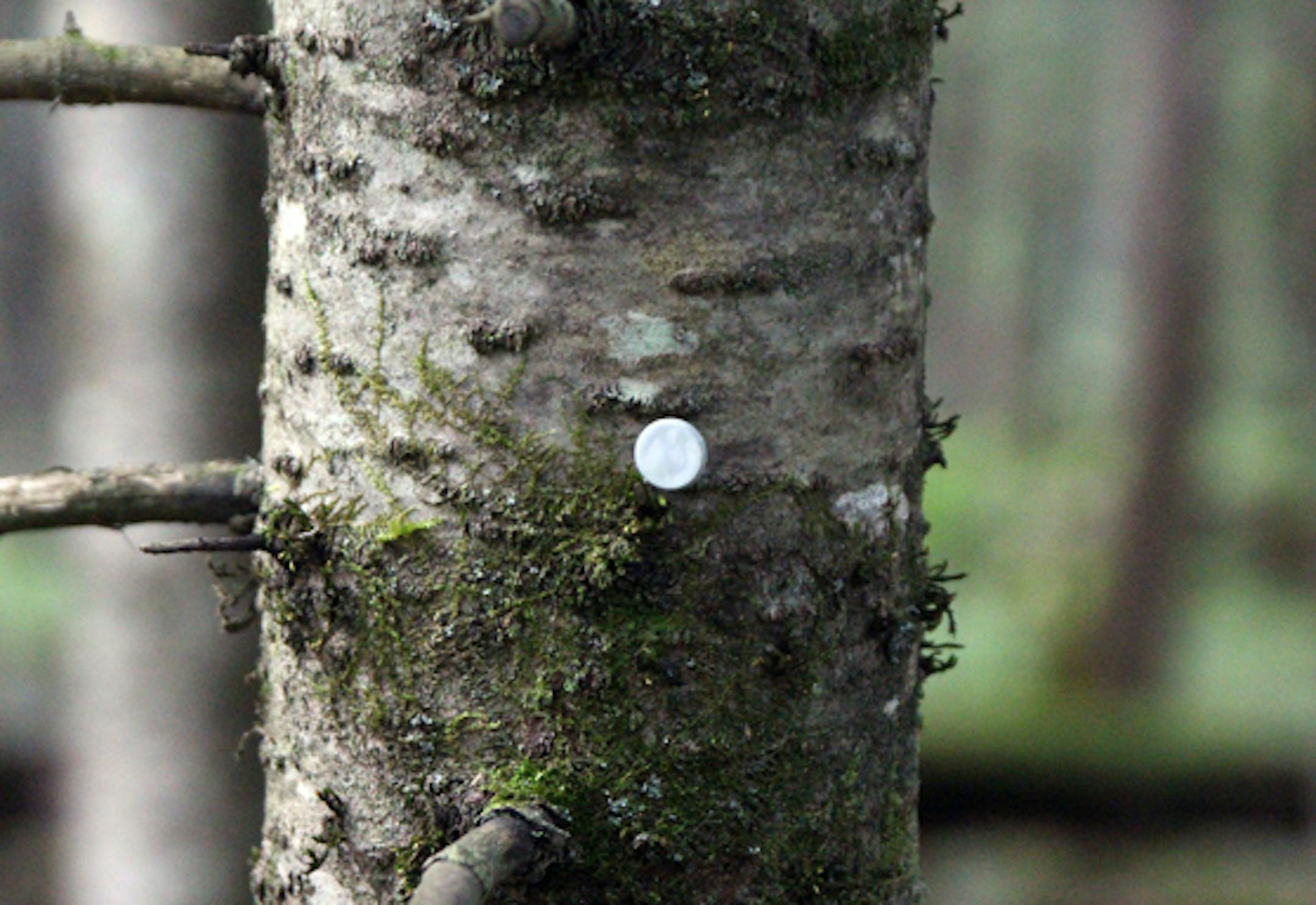
If there was an all-star team of global positioning system (GPS) devices, reflector tacks would be in the starting lineup.
They're the fingernail-size thumbtacks covered with reflective sticky-dots. Push them into tree bark and they're perfect for marking trails. I've relied on them for years to guide my clumsy duff in and out of the woods during darkness. At a time when GPS technology is all the rage, a simple light beam on those unsung trail markers outshines high tech for ease of travel in dense timber. If they were available by the pound, I'd buy them like nails at the hardware store.
But reflector tacks are about more than geographic survival. They nurture both a literal and magical closeness to the natural world. They slow me down, force me to observe, ask for quiet contemplation, call up creativity and help me see the forest in ways I might have otherwise missed. They guide me safely home so I can tell stories around the campfire about my experiences.
Though I use reflector tacks primarily for traveling to and from deer stands, they're also useful trail markers for overnight camping, hiking, and wading or boating to duck blinds in swampland.
No doubt, reflector tacks collaborate with a GPS and a compass. The tacks are the Hansel and Gretel element after the high tech has done its work determining destinations. Keep the GPS handy until an entire trail has been marked. Then put that pricey gizmo into energy-saver mode, and reflector tacks will take you from there.
The method
The short, quarter-inch shank on reflector tacks doesn't damage trees, but they can be prickly to humans. I had a friend in Boy Scouts who once used his pants pocket as a tackle box for a half-dozen Rapalas. It took a while to detach him from his pocket and the same principle applies here. Before I enter the woods, I store a cluster of tacks in a plastic bottle that travels comfortably in my clothing. The bottle has a large opening and the lid comes off easily — when I want it to — but otherwise stays fastened.
Trail marking requires layers of repetition, particularly for longer-distance destinations. I start by pushing two tacks into a relatively healthy tree. However, sometimes I have to accept the tree I'm offered. The double tacks become my trailhead anchor and let me know I've arrived at the same tree when I return. It's helpful during times when I come in from an unfamiliar direction.
From there, I take the path of least resistance in the general direction of my tree stand and place single tacks in trees of an initial section. While standing beside any of those trees, I look for an unobstructed view of the next tack down the trail. The distance between each depends on brush density. I work as far along a trail as I can without losing sight of the first tree in a section. I also don't want to tack too many, especially on public land. Illuminating the forest like Minneapolis reflecting on the Mississippi defeats the purpose of being out there. Minimalism takes precedent, and removing them at the end of the season on public land.

