

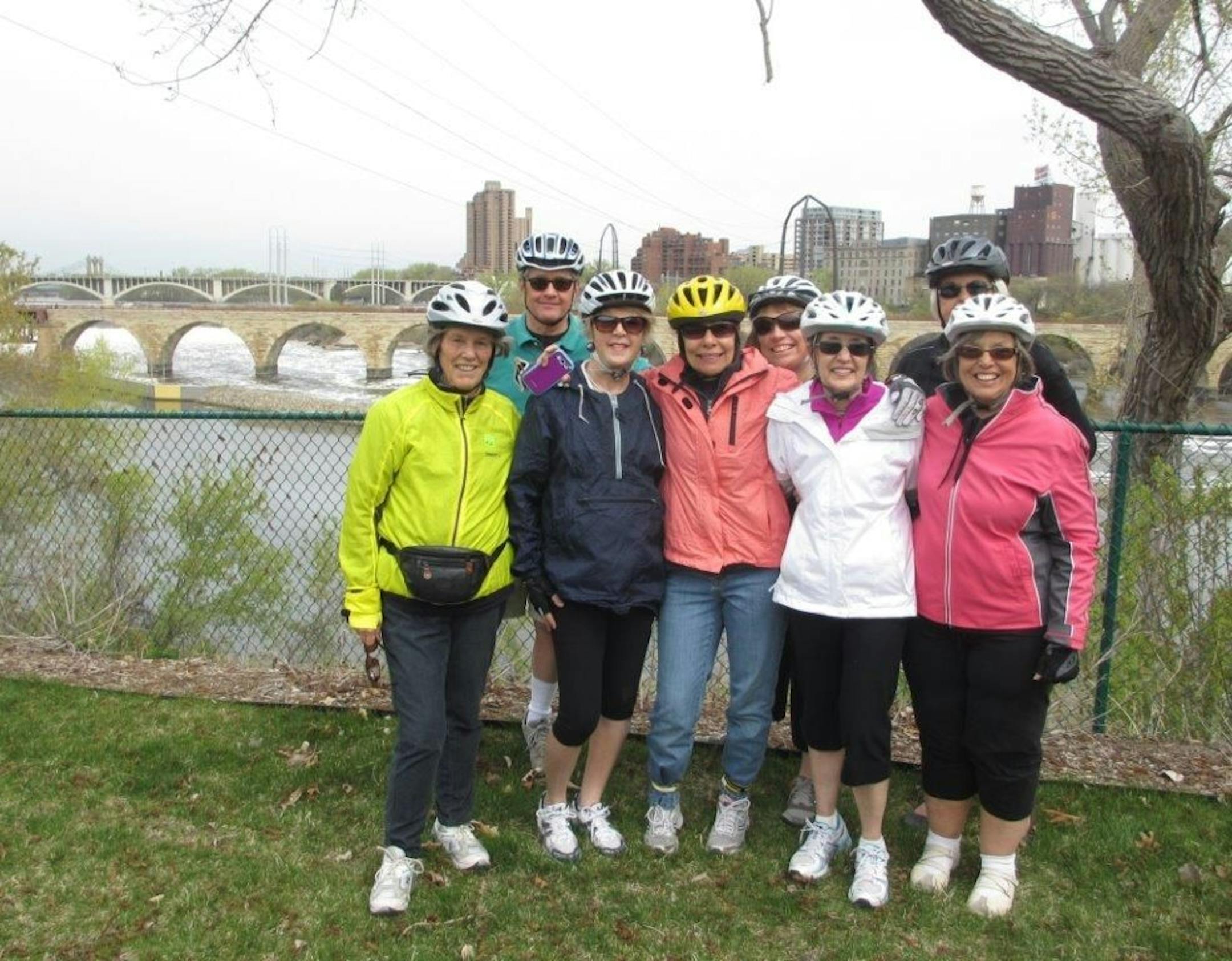
"People who have been active in the outdoors all their lives don't want to stop, just because they are older," said Jeanne Lutgen, age 70. "We're the tip of the iceberg, the baby boomers, and we're setting a new pace."
The retired teacher sets the pace on regular long-distance rides as part of Minnetonka Bike Club, organized through the city's Senior Center. The club pedals city, regional and outstate trails several times a week. On one October outing, her group pedaled 35 miles on the Lake Wobegon Trail in north-central Minnesota, but most trips are 10 to 20 miles.
Minnetonka's senior programs are light on the bingo and heavy on the great outdoors. "Our residents seem to really like spending time outside in nature, and that doesn't change as they get older, so we make sure we can help keep them active," says Steve Pieh, the city's senior services and activities manager. The senior center also offers canoe trips, a 70-plus softball league and moonlight hikes.
Lutgen has loved nature all her life. During her teaching career, she even taught teenagers at a Lake of the Woods wilderness camp. So spending time outdoors comes naturally to her. She just does it with a lot of speed and distance.
"I'm a cancer survivor, and heavy exercise is the best way to avoid more cancer," said Lutgen. She's stronger and fitter than she was in younger years — her doctors say she moves like a 30- or 40-year-old. She also says spending time outside helps her sleep well. In addition to the physical benefits, she says group outdoor recreation is an antidote to the social isolation that affects many seniors.
"We bike together, then we stop and have a beer together, and talk and laugh," she said. "How could you spend a better day in beautiful Minnesota?"
Nature is good for children. We know this intuitively and science backs it up. But we don't often hear about the ways nature benefits older adults. All the same things that grow healthy children — fresh air, sunshine, exercise and the beauty of natural places — keep us strong and even slow down the aging process.
There's also a brain benefit: A recent study by the Cleveland Clinic in Ohio found that moderate exercise can help protect our brains from Alzheimer's disease. But the benefits of getting that exercise in nature, as opposed to at a health club, can be even more profound.

