
Out There show from Japan mixes surreal effects with Freudian themes

Freud meets Dali via Japan in an Out There show by a former psychotherapist about two brothers.

January 17, 2014 at 5:11PM
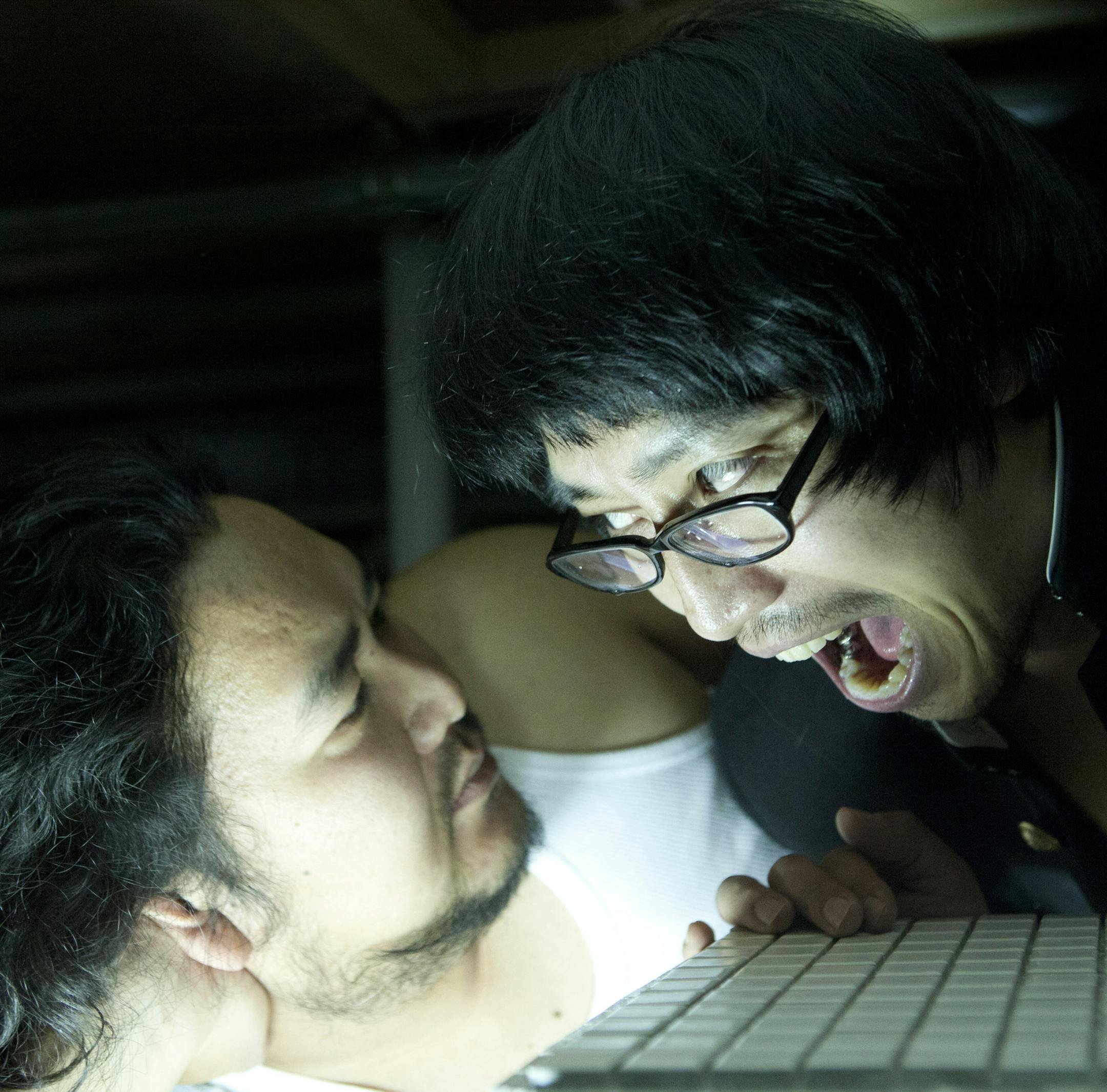
Out There at the Walker 2014 The spirit of Out There is alive and well in this demented yet inspired piece by Japan’s Kuro Tanino of Niwa Gekidan Penino, a psychotherapist turned director and one of the most original artistic voices in theater today. Equally enigmatic and erotic, The Room Nobody Knows is a dreamlike, psychologically twisted tale of two brothers and their secret desires. Photo ©Shinsuke Suginou
Two brothers interact in a twisted tale of love and envy in “The Room Nobody Knows” at Walker Art Center. Photo ¬©Shinsuke Suginou (The Minnesota Star Tribune)

Call it a penis festival in miniature.

"The Room Nobody Knows," Kuro Tanino's strange yet captivating show that opened Thursday in Minneapolis, is laden with phallic images. The chairs and desk are priapic. So are the nubby sconces. And, too, the bodies of oversized dolls that are central to a story posited as coming from a dream.

The show, in Japanese with English surtitles, has telltale signs of Tanino's former profession. He was a psychotherapist in Japan before he was fired from his practice after his bosses found out that he had been encouraging his patients' delusions and fantasies instead of treating them.

The stage is clearly a better outlet for his fascination with the images and desires that populate his subconscious. In 2000, he founded a theater company, Niwa Gekidan Penino, dispensing works that marry the surreal with the Freudian.

"Room" plumbs Salvador Dali-esque images from the erotic subconscious. And like a dream, this 60-minute one-act teems with mysterious, improbable imagery and a captivating, propulsive energy.

"Room" is a chamber piece, staged in an intimate configuration at the Walker. The two-story miniature set, designed by Tanino, is cramped, and the four actors can barely stand up in it. As a result, the often crouch and crawl.

The story centers on two brothers. The elder one, played by Ichigo Iida, is a successful doctor while the younger (Ikuma Yamada) has yet to achieve much. He is a perpetual student who has been studying for 27 years to take his entrance exams.

Kenji, the younger brother, so idolizes his sibling, he wants to tease him, please him and become him. The brothers are rivals even though the competition first manifests itself as seeming incestuous attraction. They make out passionately until their tender kisses turn to rough wrestling. Kenji, pinned, concedes.

The rivalry continues as Kenji seemingly plans a birthday celebration for his brother. The show also features fables and a parable involving an infinite chessboard that has a lone king atop it and the devil below.

"Room" ends with a fusion of sorts as Kenji appropriates his brother's head and genitals, becoming a Freudian chimera.

There is a lot to chew on. It is at once random and yet quite logical, if you go by dream logic. If you love something so much, you want to become it, or have it become a part of you, right?

It's like the notion of taking sacrament by eating the body of a savior. "Room" is a rich offering that leaves much to think about.

Rohan Preston • rohan.preston@startribune.com

about the writer

about the writer

More from No Section

See More
FILE -- A rent deposit slot at an apartment complex in Tucker, Ga., on July 21, 2020. As an eviction crisis has seemed increasingly likely this summer, everyone in the housing market has made the same plea to Washington: Send money — lots of it — that would keep renters in their homes and landlords afloat. (Melissa Golden/The New York Times) ORG XMIT: XNYT58
Melissa Golden/The New York Times

It’s too soon to tell how much the immigration crackdown is to blame.