

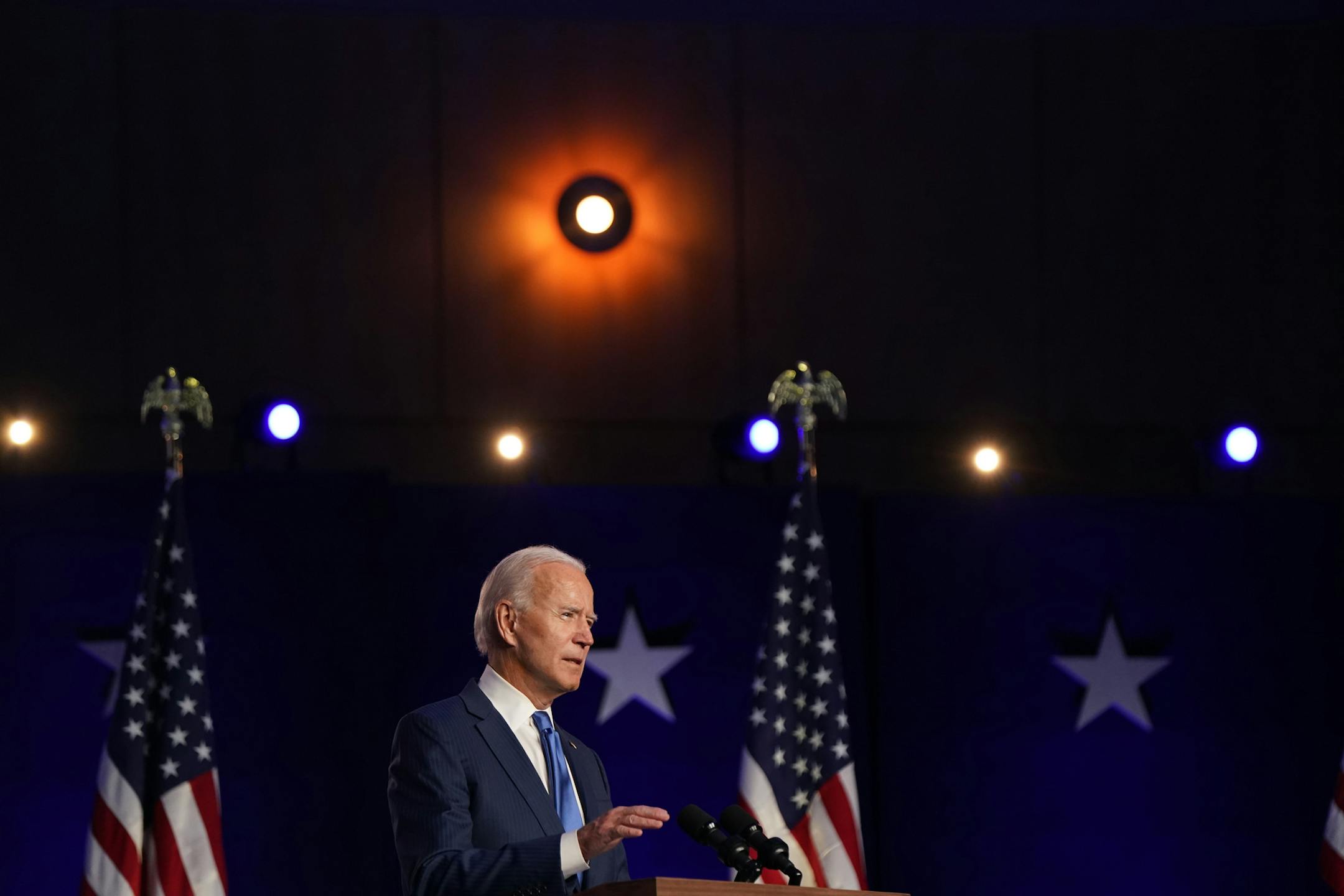
Last week, amid the ongoing counting of the votes for the presidential election, Joe Biden tweeted: "To make progress, we have to stop treating our opponents as enemies. We are not enemies." The response from many was harsh and swift, the sentiment of many captured in the following reply: "I love you, Joe, but you're wrong. Every Trumpian deplorable is the enemy of democracy & decency, and they will never find comfort from me." But Biden is right.
Biden's tweet echoes a theme that will only become more prominent in political discourse over the coming weeks: A call for unity among a divided country. Put differently, this is a call for political reconciliation, a call to repair our damaged political relationships.
Worries about pursuing reconciliation or unity are often twofold: that it requires us to "shake hands with the devil," and that unity requires us to silence our disagreements and therefore inhibits reform and change. To respond to these worries, we have to look more carefully at what kind of reconciliation or unity it is morally defensible to demand.
As I argue in my work, political reconciliation that is morally defensible may require us to shake hands with the devil. For many Biden supporters, the devil is every "Trumper," or Trump voter, who comprise 70 million voters at the time of this writing. For many Trump supporters, the devil is "the left" or "libs" who support Biden, comprising 74 million voters.
In the United States, we have no choice but to figure out how to live together, and the sooner we collectively acknowledge this the better. The alternatives are simply morally unacceptable: expulsion of our enemies through ideological (as opposed to ethnic) cleansing, secession or the undermining our democratic institutions and processes by a refusal to recognize and engage those with whom we disagree as fellow citizens. In a democracy, all members have a say, not simply those whose voices you want to hear.
What is key is determining what it means to engage with integrity and on a morally defensible basis. Here it is central to understand how our relationships are damaged and what is needed for them to be repaired. In my work on political reconciliation, I identify three main areas of damage that processes of reconciliation aim to repair, all of which are present in the United States at this moment.
Rule of law. The first is an erosion of the rule of law, where the rule of law specifies a set of requirements legal rules must satisfy if they are to be able to govern conduct — and ensures declared legal rules actually govern the conduct of officials and citizens. Throughout the Trump presidency, concerns have been consistently voiced about the erosion of the rule of law. As the counting of ballots continues, Trump's tweets erroneously "claim" certain states as his, cast doubts on the integrity of the electoral process and demand a stop to the vote. Reinforcing the rule-governed manner in which presidents are decided in the U.S., by both Republican and Democratic officials, is necessary to ensure that this election is decided in a manner that comports with our rules.
Trust. The second is grounds for an attitude of trust of fellow citizens and officials to be reasonable. Trust refers to a presumption of lack of ill will and competence in fulfilling role-related responsibilities as an official or citizen. Deep distrust across political divides characterizes political relationships in the present moment. While in some cases distrust is based on demonstrably false information or conspiracy theories, in other cases deep distrust is reasonable. The presumptive distrust among many Black men and women toward the police is a consequence of being disproportionately targeted by police violence and killing. Making trust reasonable requires determining methods for effectively countering disinformation promoted by conspiracies. It also requires the kind of institutional reform of police that would make a presumption of lack of ill will reasonable.


