

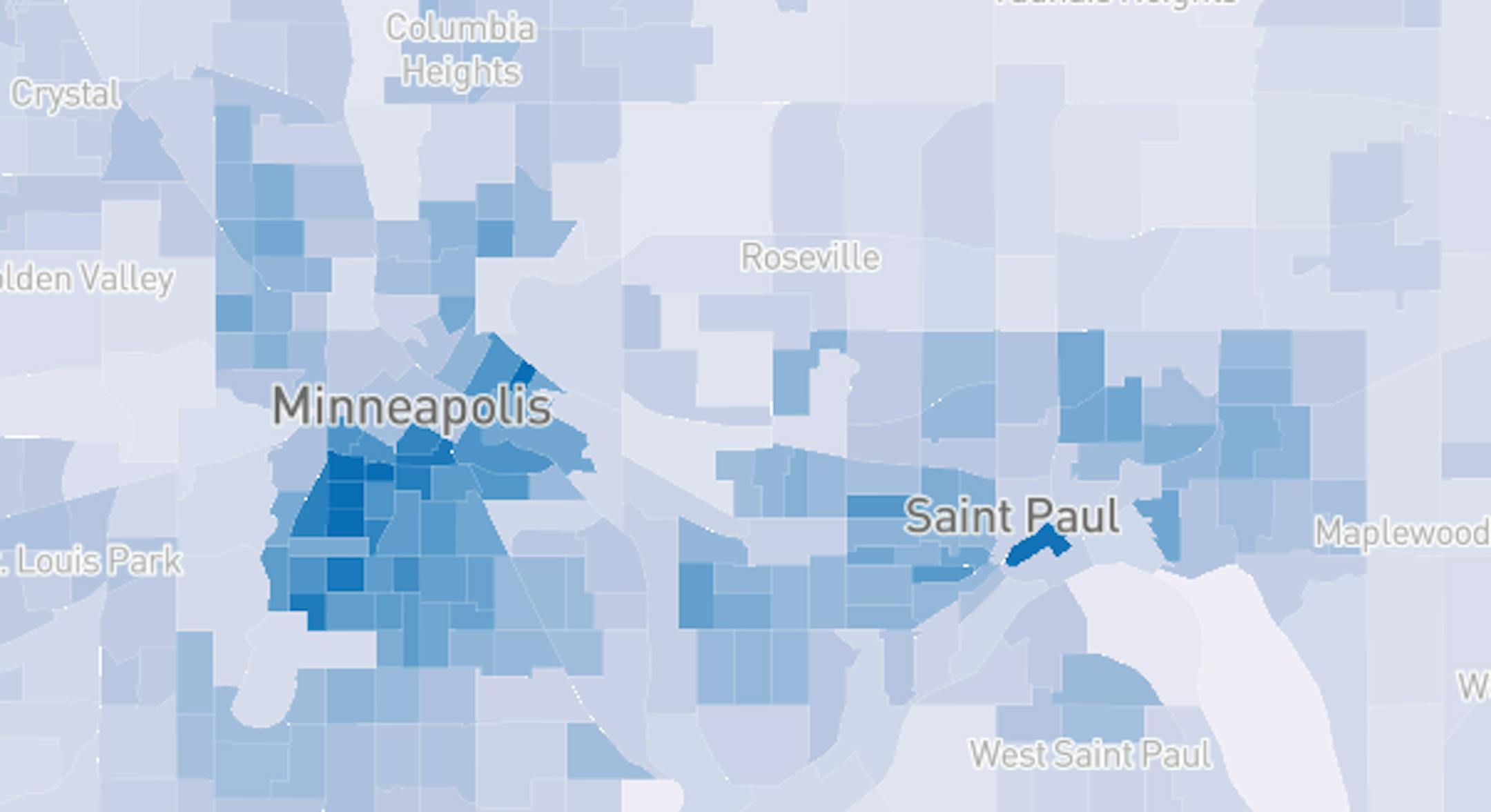
The Twin Cities has changed dramatically since the founding of the Met Council 50 years ago. The metro area's population now exceeds 3 million, about a million more than before -- though short of our 1960s expectation of 4 million. About 75 percent of the region lives outside the two central cities, compared with about 60 percent in 1970. And the amount of developed land has about doubled.
Swipe the map slider to the left to see census tract population density in 1970. Move it right to see 2010 population data, which shows increased suburban density.
Notes: Median household income over time is from the U.S. Census and isn't adjusted for inflation. Poverty statistics reflect the percentage of those considered to be below the poverty line at the time. College degrees represent adults aged 25 and older with a bachelor's degrees or higher. Minorities represent the population percentage that is non-white.
Sources: Metropolitan Council, Minnesota Population Center, U.S. Census Bureau, University of Minnesota U-Spatial


