

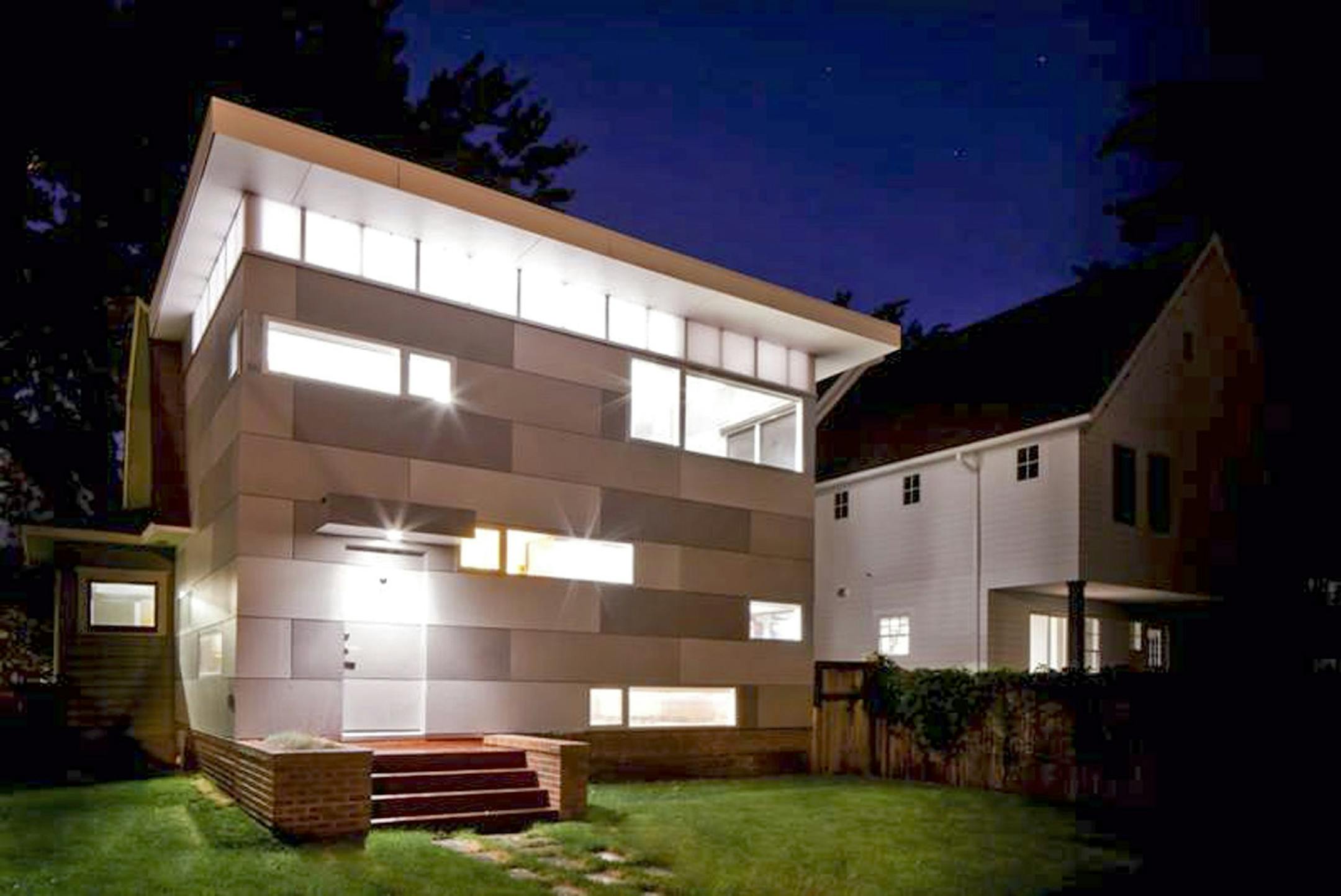
Jennifer and Thomas Bohmbach would live in Walker Art Center if they could. That's what the Minneapolis couple told designer Kurt Gough from Shelter Architecture as they began to explore building an addition to their home in the Bryn Mawr neighborhood.
"We wanted it to be modern and have walls to show my photographs and our art," said Jennifer. "That statement solidified the direction we ended up going."
And they didn't let their home's architectural style -- an early 1900s Dutch Colonial -- stop them.
"We attached our version of the Walker Art Center to the back of their house," said Gough. The street view is classic Dutch Colonial. But in the back, the home morphs into a two-story flat-roofed box.
The Bohmbachs call it "the mullet house" because of its conventional facade in front and its edgy style in back. Their neighbors like it, too. At a recent neighborhood garage sale, "We got nothing but compliments," Jennifer said. "Tons of people said it was stunning."
Emerging trend
A new modern addition attached to an older traditional home is clearly not for everyone. Most homeowners simply extend the original architectural style with similar materials, form and design to create a seamless blend of old and new.
But architects are detecting a gradual wave of clients inquiring about creative, out-of-the-box ideas for home additions inside and out. They attribute it to more exposure of projects that successfully fuse traditional and modern design on TV shows, the Internet and in their neighborhoods, as well as influences from European architecture, where modern structures are added to buildings hundreds of years old. Architects say that a focus on sustainability, functionality and green materials and products also contributes to more modern design solutions.


