

Opinion editor’s note: Strib Voices publishes a mix of guest commentaries online and in print each day. To contribute, click here.
•••
President Donald Trump’s military raid on Jan. 3 to remove President Nicolás Maduro of Venezuela from power has been widely criticized. Former Vice President Kamala Harris blasted the decision as “unlawful and unwise.” U.S. Rep. Gregory Meeks, the ranking member of the House Foreign Affairs Committee, called it “a violation of international law” that “risks entangling the United States in an open-ended conflict in Venezuela.” And Secretary General António Guterres of the United Nations said the attack set a “dangerous precedent.”
In fact, Trump was right to do it.
Some of the key justifications are well known: Maduro was charged with trafficking narcotics into the U.S. (he pleaded not guilty at his arraignment in New York on Monday). His governance drove millions of Venezuelans out of the country, fueling a migration crisis at America’s southern border. He gave American rivals — China, Russia and Iran — a foothold in our backyard. The security of the U.S., Latin America and the world stand to benefit now that Maduro is out of power.
But the potential benefits of Maduro’s removal run much deeper, particularly in Venezuela itself. Maduro was an odious and incompetent leader who engaged in human rights violations and badly mismanaged his country’s economy. While he was in office, Venezuela’s gross domestic product contracted by 80%, the poverty rate rose to 90% and hyperinflation peaked at 130,000%.
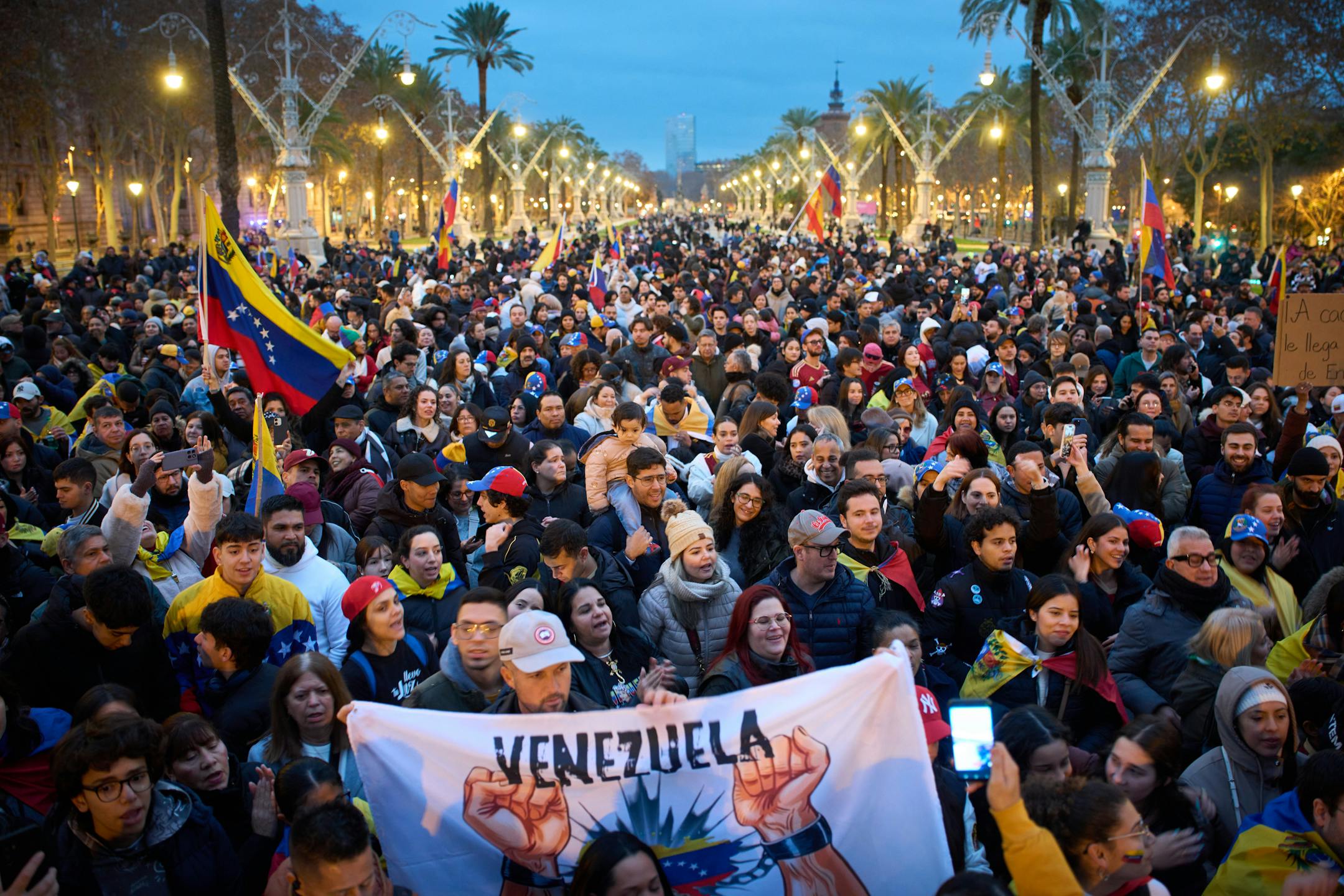
To be sure, many unanswered questions about the future of governance in Caracas remain, but it is hard to imagine that the next or future leaders will be worse than Maduro. His vice president and the country’s new acting leader, Delcy Rodríguez, has a reputation as a technocrat intent on reforming Venezuela’s oil industry. María Corina Machado, the exiled opposition leader and Nobel Peace Prize winner, is beloved by the Venezuelan people, despite Trump’s comment that she lacks popular support; tallies gathered by volunteers showed her party won 70% of the popular vote in the 2024 presidential election. Maduro held on to power anyway. The promise of a better future is already prompting exiled Venezuelans to imagine a return home.
Many have drawn comparisons between this American military operation and President George H.W. Bush’s 1989 invasion of Panama to remove the dictator Manuel Noriega. There is one commonality, however, that has been largely overlooked: Bush seemed to be motivated in part by the desire for a military win to help the nation — both the public and the armed forces — regain confidence and get over the trauma and failures of the Vietnam War. Only about 50% of Americans expressed a great deal of confidence in the military in 1980, compared with more than 80% in the early 1990s.


