

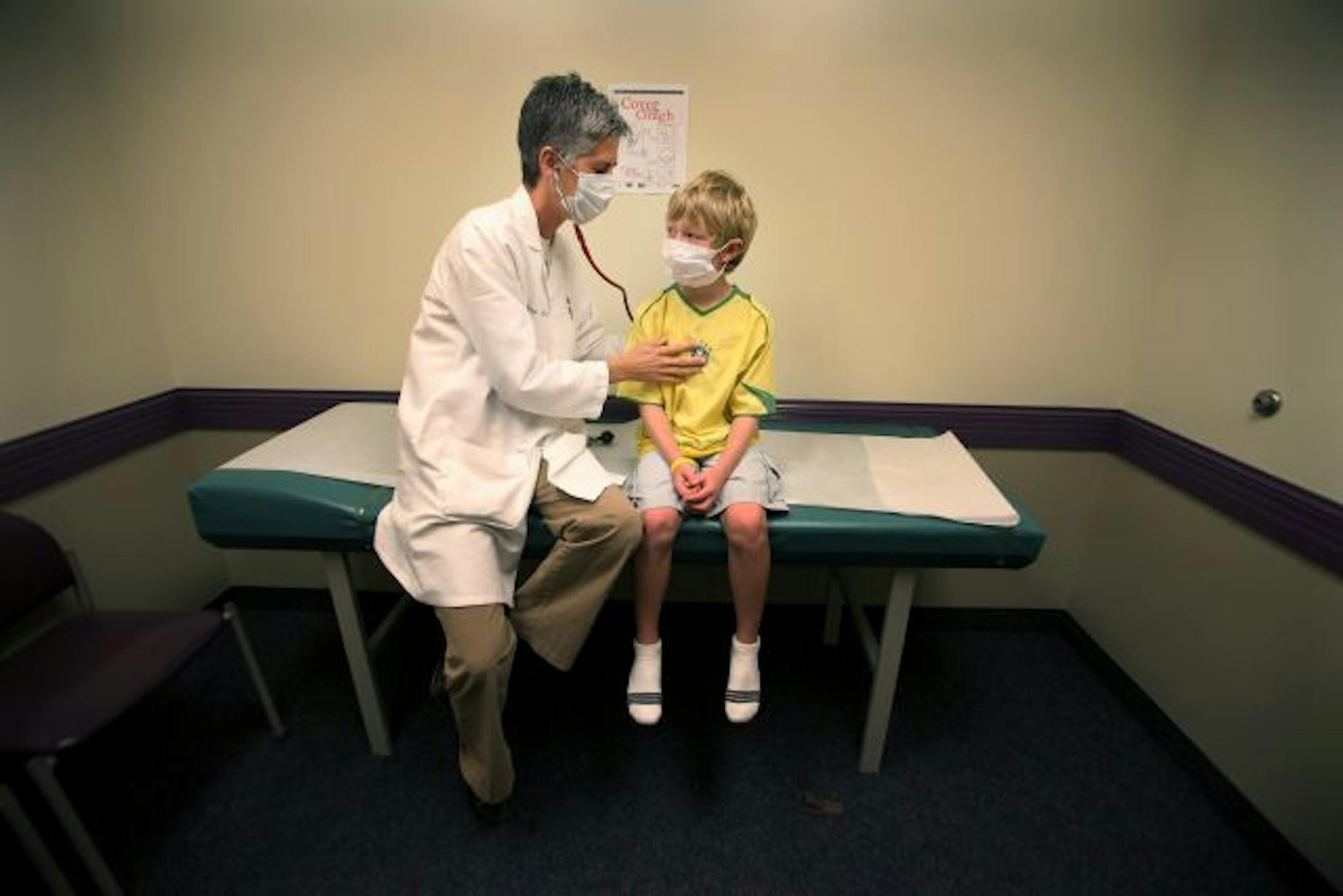
Twin Cities medical clinics have a message for flu patients: Unless you're really, really sick, don't come in.
Facing a flu pandemic that could infect as many as a quarter of all Americans this fall, primary care clinics are gearing up for big crowds and a supreme exercise in logistics: how to treat the sick while keeping them from infecting the healthy.
As a result, they're asking people with mild flu symptoms to stay home. Patients who want to talk with a doctor or nurse, they say, should phone in.
"Don't come in unless it's a particularly severe illness, with fever for more than 48 to 72 hours, or wheezing or respiratory problems," said Dr. James Breitenbucher, who oversees H1N1 planning at Fairview Health Services. "For otherwise healthy people, there is little or no value in coming in."
The exceptions are the very young and the very old, as well as people with underlying conditions such as asthma, diabetes or heart disease. For them, the new flu strain can be deadly.
As they prepare for an autumn surge in cases, many clinics are already taking steps to stop the virus from spreading from one patient to another. Some are slapping masks on any feverish, coughing patients who show up and rushing them into exam rooms to minimize contact with others in the waiting room.
Last spring, Allina Hospitals and Clinics reserved side entrances, marked with signs and cones, at several clinics, where patients with flu symptoms were met by masked and gowned health workers. It may do so again this fall.
HealthPartners recently authorized its hot line nurses to prescribe antivirals for those in high-risk groups so patients can go directly to the pharmacy.

