
Online education must improve before financial aid given

Obama has hinted these students should be eligible. That's not a good ideal just yet.

Bloomberg News
February 28, 2013 at 6:54PM
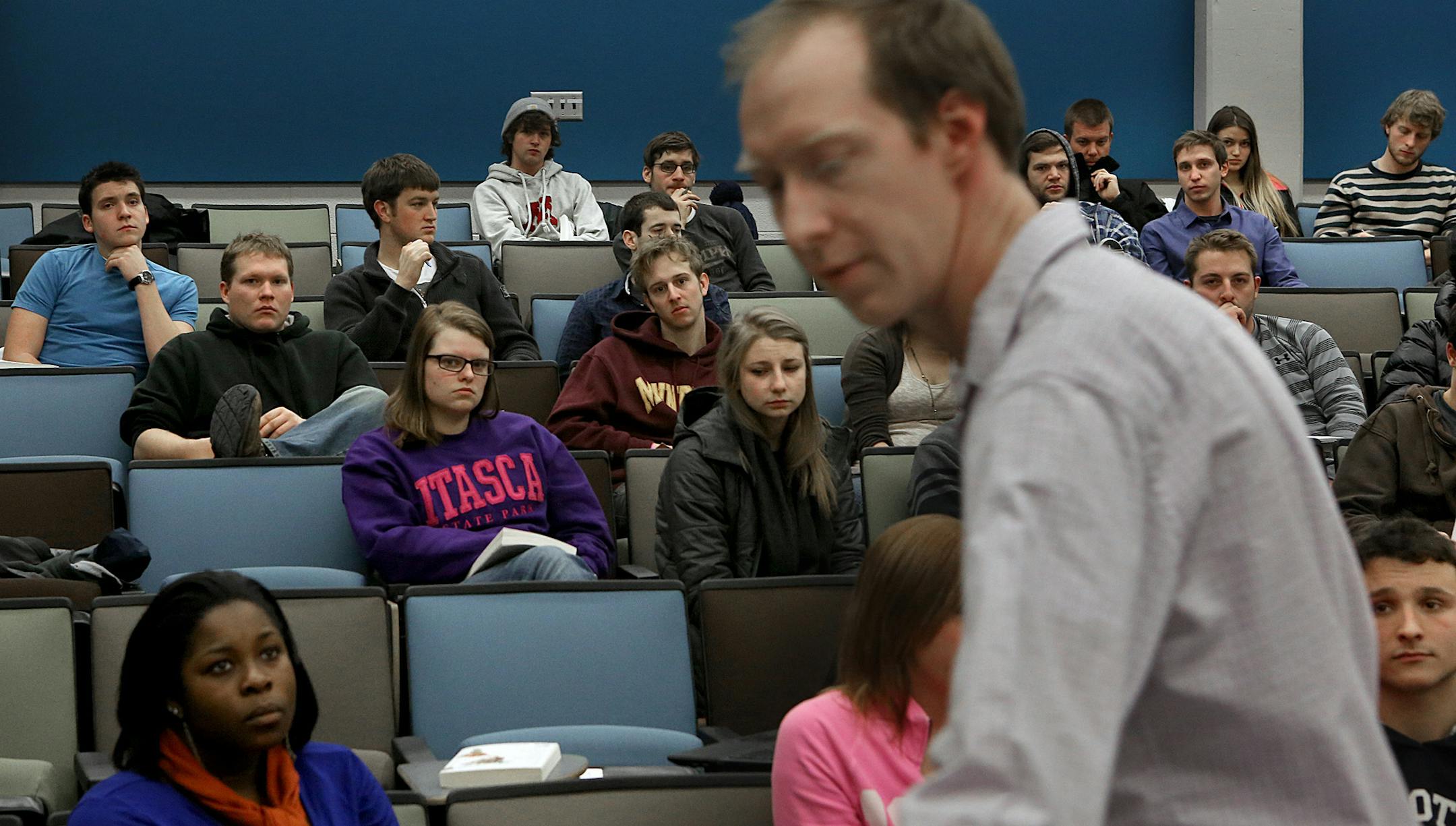
Professor Jason Hill, who teaches at the University of Minnesota, will be offering an online course.
Professor Jason Hill, who teaches at the University of Minnesota, will be offering an online course. (Star Tribune/The Minnesota Star Tribune)

The growth of free online college classes has set off a wave of excitement about changes in higher education. "MOOCs" (massive open online courses) have been celebrated by some as a revolution and pooh-poohed by others as canned educational materials.

Now President Barack Obama has hinted that students who take these classes should be eligible for federal financial aid. In the policy agenda released with his State of the Union address this month, Obama proposed an option for overhauling college accreditation that could allow MOOCs to charge tuition and accept federal money.

That would bring more competition to higher education. Unfortunately, it would also warp MOOCs into subsidy-driven enterprises before they had time to mature, short-circuiting the kind of experimentation that could reveal whether they can be good models for education.

Federal support should wait until MOOCs, now only a niche service, develop ways to address higher education's fundamental economic problem: the high cost of labor-intensive attention and feedback from professors.

Smart, intellectually curious go-getters who fill Davos panels or work in Silicon Valley are excited about MOOCs because they imagine how great the courses could be for people like them, only less geographically and economically privileged. What's unclear, however, is how MOOCs can be more than the latest twist on correspondence courses, educational television, language-learning CDs and other useful but limited alternatives to regular classroom instruction.

Today's primary online learners include working adults in search of job-related skills or credentials and people who are hungry for intellectual stimulation. Both are highly motivated, unlike the typical college student who needs the discipline imposed by attending a regularly scheduled class. For more typical students, professors are like personal trainers, who make sure you show up and do the exercises.

In MOOCs, students help other students. It's a cheaper alternative that can work only in a highly motivated class.

Even so, for most students, a teacher's feedback - whether questions during class discussions, comments on papers or red- pencil grading - is crucial. This is why professors get paid as much to grade as to teach.

Grading is also the part of the job most professors hate, because it can be so time-consuming, tedious and demoralizing. To save time, instructors in large lecture classes at state universities often use machine-graded, multiple-choice exams. These are an option for MOOCs - if someone can figure out how to avoid rampant cheating. But automated grading merely provides a check to see what students have learned; it doesn't give them comments and criticisms they can build on. Nobody has figured out how to effectively automate feedback on the essays and in- class discussions that hone critical thinking.

There are also worrisome signs that MOOCs won't tolerate professors who are too conscientious and demanding. This month, Richard McKenzie of the University of California at Irvine told his online microeconomics students that he had "agreed to disengage" from his course, provided via the Coursera company, because of "disagreements over how to conduct" it. According to the Chronicle of Higher Education, only about 2 percent of the 37,000 people registered for the course were actively engaged in class discussions, and some students had criticized McKenzie for assigning too much work and for using a textbook that they had to pay for. In one of many lengthy memos to students, McKenzie said he would "not give on standards."

New online institutions will undoubtedly emerge in higher education, as they have in news, entertainment and retailing. But they won't be in a form anyone anticipates today. Real improvements will require much trial and error. It would be a mistake to bring MOOCs into the federal aid system before we find out what they can do well.

------

A Bloomberg News editorial.

about the writer

about the writer

More from Commentaries

See More
card image
Carlos Gonzalez/The Minnesota Star Tribune

It seems like we’re now heading in the right direction under the leadership of White House border czar Tom Homan.

Opinion | What happens after our shock fades?

card image
card image