

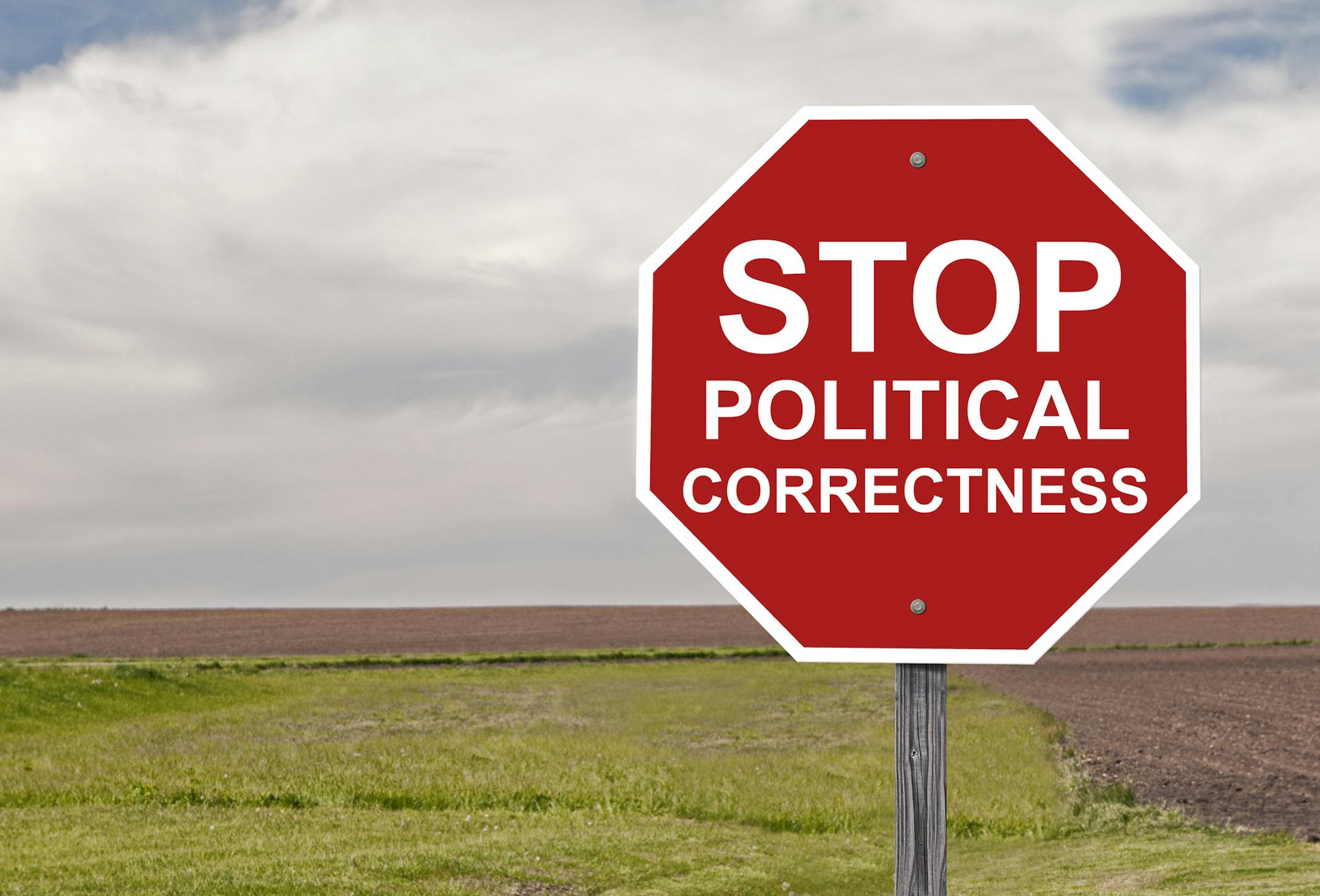
Last month, the University of Chicago appeared to pick sides in the latest iteration of America's culture wars. But it was really announcing just how silly those culture wars are — and how to get past them.
The school informed incoming students that its "commitment to academic freedom means that we do not support so-called 'trigger warnings,' we do not cancel invited speakers because their topics might prove controversial, and we do not condone the creation of intellectual 'safe spaces' where individuals can retreat from ideas and perspectives at odds with their own."
Conservatives saw the letter as a political intervention, a courageous stand against "political correctness" — as if the University of Chicago shared the concern of Donald Trump, Ben Carson and others about left-wing orthodoxy on campus, in the media and political debates. But the letter's real lesson lies elsewhere. It's a political intervention that doesn't involve contemporary political issues at all.
In my 27 years as a faculty member at the University of Chicago, I heard all sorts of discomfiting and even shocking arguments. Distinguished professors argued that the great civil rights laws of the 1960s are unconstitutional; that insider trading should be freely permitted; that the Federal Communications Commission should be abolished; that nothing in the Constitution forbids racial segregation, and that the government should be allowed to censor speech whenever the benefits of censorship exceed the costs.
I also heard distinguished professors contend that the Constitution requires affirmative action programs; that reparations for African-Americans would be an excellent idea; that federal law should forbid employers from discriminating against gays and lesbians; that judges do not, and should not, follow the text of the Constitution, and that Karl Marx was fundamentally right on the deepest questions in political philosophy.
These wildly disparate arguments had a unifying feature. Even if they turned out to be quite preposterous, their advocates defended them with careful arguments — and you couldn't easily dismiss them.
You might think that the civil rights laws are self-evidently constitutional, but at the University of Chicago, people feel free to press a legitimate question: Where does Congress get the authority to forbid small companies in (say) Indiana from hiring the people they want to hire?
You might think it's obvious that judges must follow the text of the Constitution. But at the University of Chicago, some professors emphasize that with respect to freedom of speech — perhaps the most fundamental right of all — they just don't. The Constitution bans Congress, and not the president, from abridging the freedom of speech, and yet everyone agrees that if the president restricts free speech, he's violating the Constitution. That raises the question: Are judges really bound by the Constitution's text?


